Information
Landmark: Bay of Bones MuseumCity: Ohrid
Country: North Macedonia
Continent: Europe
Bay of Bones Museum, Ohrid, North Macedonia, Europe
The Bay of Bones Museum is an archaeological complex and reconstructed pile-dwelling settlement located on the eastern shore of Lake Ohrid, near the village of Gradishte. It functions as an open-air museum showcasing prehistoric life from the Late Bronze Age and Early Iron Age.
Visual Characteristics
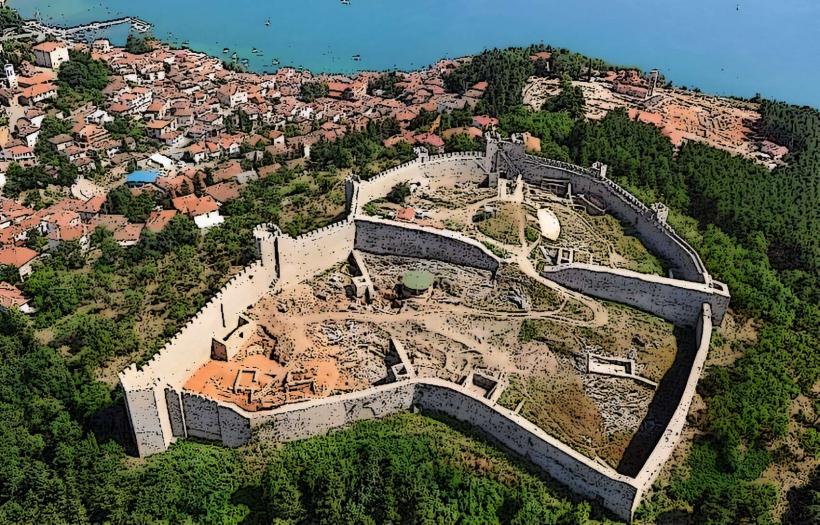
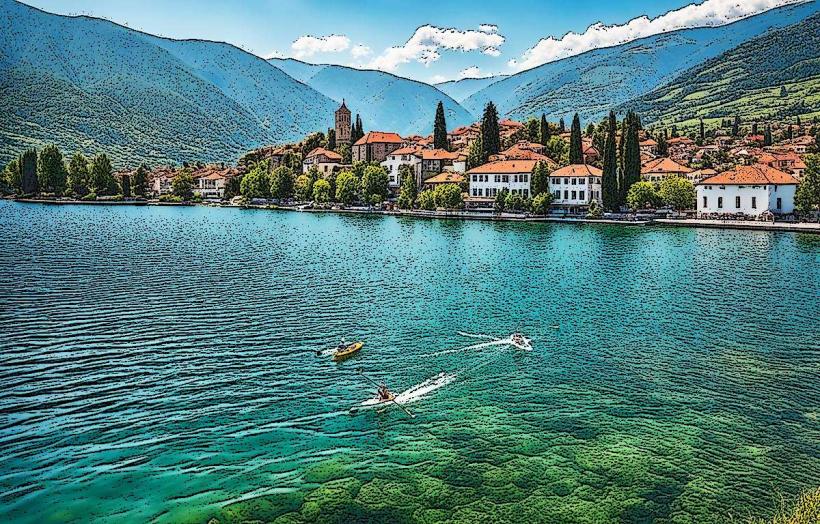
The museum consists of a reconstructed prehistoric village built on a platform over the water, supported by approximately 24,000 wooden piles. The structures are primarily made of wood, reeds, and mud, replicating ancient dwellings. An adjacent land-based Roman military fortification, Gradishte, features stone walls and foundations. The lake water beneath the pile dwellings is clear, revealing the submerged pile bases.
Location & Access Logistics
The Bay of Bones Museum is situated approximately 13 kilometers south of Ohrid city center, along the R1301 regional road. Driving south from Ohrid, follow signs towards Sveti Naum. A dedicated parking lot is available directly at the site entrance. Public transport is accessible via local bus lines operating between Ohrid and Sveti Naum; disembark at the "Bay of Bones" stop. Boat tours from Ohrid also offer direct access to the museum's pier.
Historical & Ecological Origin
The site reconstructs a pile-dwelling settlement from the period between 1200 and 700 BC, discovered during underwater archaeological excavations between 1997 and 2005. The original settlement was built on wooden piles driven into the lakebed. The adjacent Roman military fortification, Gradishte, dates from the 2nd to 4th centuries AD, serving as a defensive outpost. The museum opened in 2008.
Key Highlights & Activities
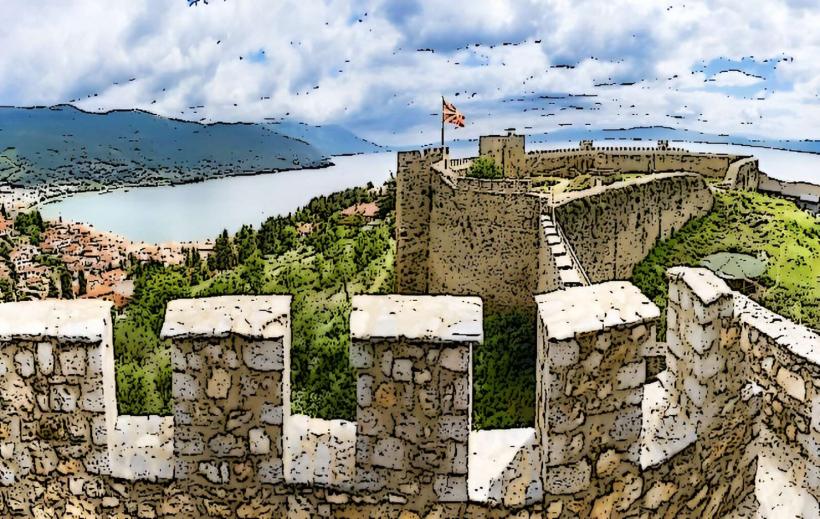
Visitors can walk across the reconstructed wooden platform to explore the pile dwellings, observing the interiors furnished with replicas of prehistoric tools and artifacts. Diving activities are offered to explore the underwater archaeological park, which includes original wooden piles and pottery fragments. The land-based Roman fortification offers views of the lake and surrounding area.
Infrastructure & Amenities
Restrooms are available on-site near the entrance. Limited shade is provided by the reconstructed dwellings and a small cafe area. Cell phone signal (4G/5G) is generally reliable. A small cafe and souvenir shop are located at the entrance, offering beverages and light snacks.
Best Time to Visit
The museum is best visited during the late spring (May-June) and early autumn (September-October) for mild weather and fewer crowds. Morning hours, specifically between 9:00 AM and 11:00 AM, offer optimal lighting for photography of the lake and reconstructed village. The site is accessible regardless of lake levels.
Facts & Legends
The name "Bay of Bones" originates from the numerous animal bones and pottery fragments discovered during underwater excavations, indicating a rich prehistoric settlement. A local legend suggests that the lakebed around the settlement holds ancient secrets, with some believing it to be a portal to another dimension due to the unusual clarity and depth of the water.
Nearby Landmarks
- Monastery of Saint Naum: 17 km South
- Church of Saint John at Kaneo: 14 km North
- Ohrid Old Town: 13 km North
- Galicica National Park: Adjacent, East