Information
Landmark: Church of St. John at KaneoCity: Ohrid
Country: North Macedonia
Continent: Europe
Church of St. John at Kaneo, Ohrid, North Macedonia, Europe
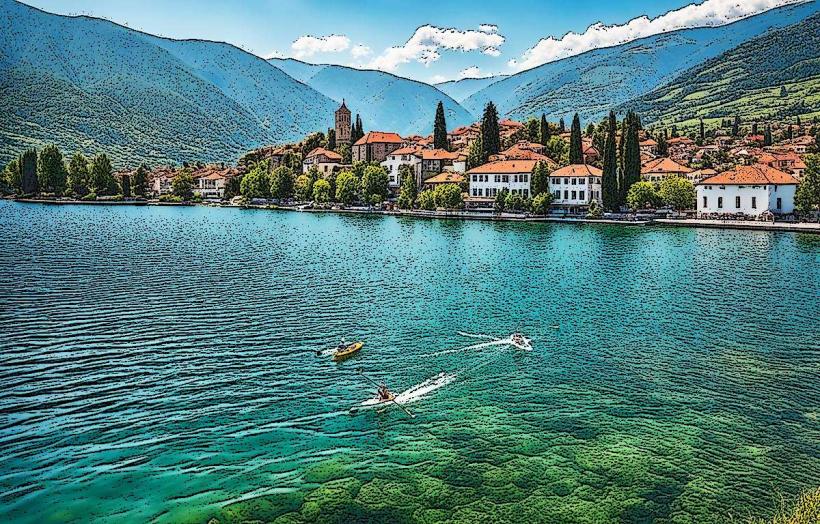
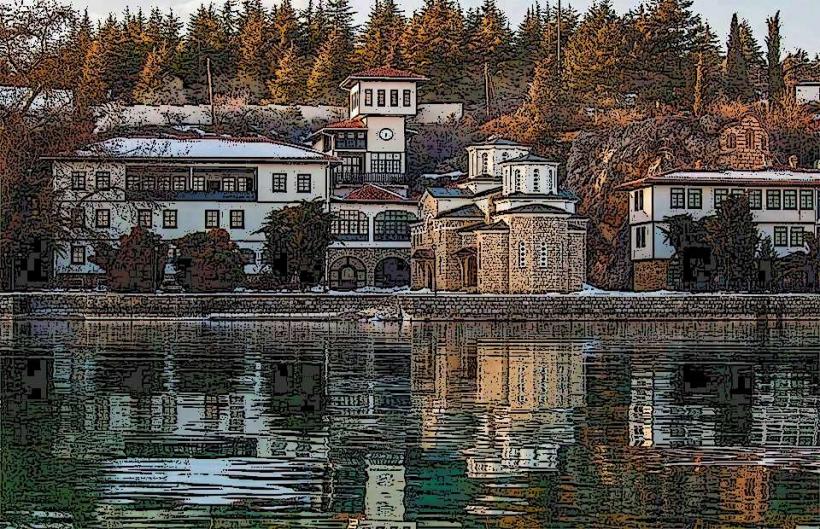
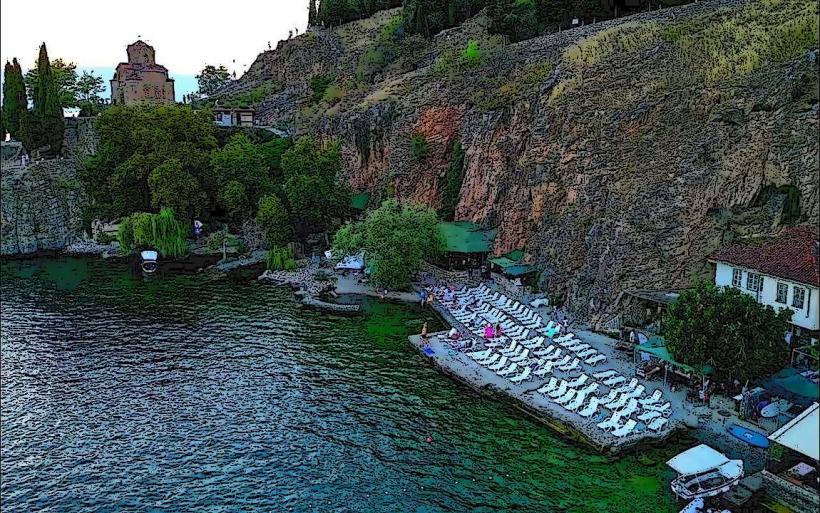
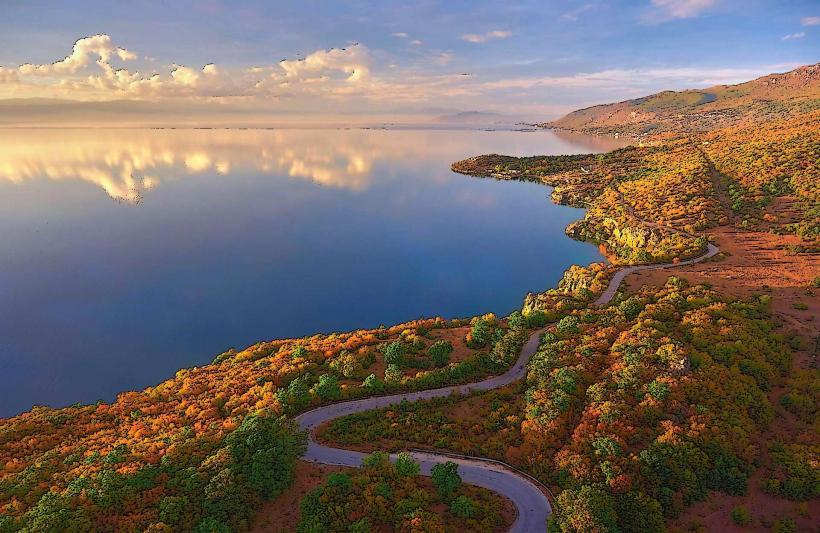
The Church of St. John at Kaneo is a medieval Orthodox church situated on a cliffside promontory overlooking Kaneo Beach and Lake Ohrid in Ohrid, North Macedonia. Dedicated to John of Patmos, it is one of the most photographed landmarks in the Balkan region due to its prominent position on a rocky outcrop.
Visual Characteristics
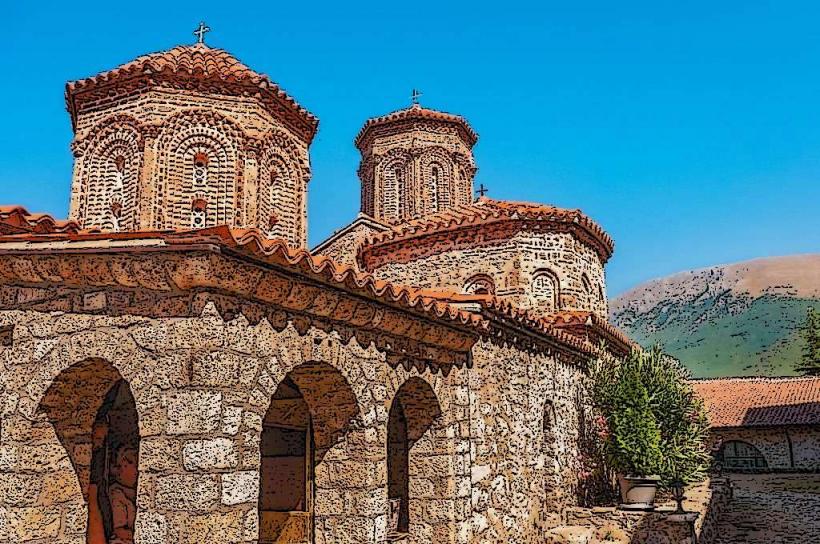
The church is a cross-in-square structure featuring a rectangular base and an octagonal dome supported by squinches. The exterior masonry utilizes a decorative Byzantine technique of alternating orange-red brick and light-colored limestone, creating intricate geometric patterns and blind arches. The roof is covered in traditional terracotta tiles, and the interior contains partially preserved 14th-century frescoes, including depictions of the Communion of the Apostles and various saints.
Location & Access Logistics
The site is located at the southwestern tip of the Ohrid peninsula. Access is primarily pedestrian via a scenic 15-minute walk along the cliffside path from Ohrid Port or via a steep staircase descending from Samuel's Fortress. Alternatively, visitors can reach the base of the cliff by small taxi boats departing from the central harbor. There is no direct vehicle access or public bus service to the church entrance; the nearest parking is located 0.8km away at the Upper Gate.
Historical & Ecological Origin
The exact date of construction is unrecorded, but architectural and fresco styles indicate it was built in the late 13th century, shortly before the rise of the Ottoman Empire. The church sits on a vertical limestone cliff characterized by karst formations and sparse Mediterranean vegetation. This high-oxygen, high-exposure environment has required several modern structural reinforcements to prevent erosion of the rocky foundation.
Key Highlights & Activities
The primary activity is the observation of the panoramic view where the church architecture aligns with the horizon of Lake Ohrid. Visitors can enter the small interior to view the 14th-century frescoes and a reconstructed wooden iconostasis. The surrounding plateau is a frequent site for landscape photography and serves as a trailhead for the path leading up toward Plaoshnik.
Infrastructure & Amenities
Infrastructure is minimal to preserve the site's historical integrity. There are no public restrooms or indoor facilities within the church perimeter; the nearest amenities are located at the restaurants on Kaneo Beach, a 5-minute walk down the cliffside path. 4G and 5G cellular signals are reliable at the site. Shade is limited to the small interior of the church and a single tree on the western ledge.
Best Time to Visit
Optimal photography conditions occur during the "golden hour" before sunset, as the sun sets directly over the lake, illuminating the brickwork with orange light. The site is open daily from 09:00 to 18:00. Early morning visits (before 10:00) are recommended to avoid the high volume of tourist boat traffic and pedestrian crowds.
Facts & Legends
While the church is widely considered a masterpiece of medieval architecture, the identity of its architect and its original donor remains a historical mystery. A local "secret" tip is that the best view of the church’s symmetry is not from the plateau itself, but from the higher elevation trail leading toward the Fortress, which reveals the perfect cross-shape of the roof.
Nearby Landmarks
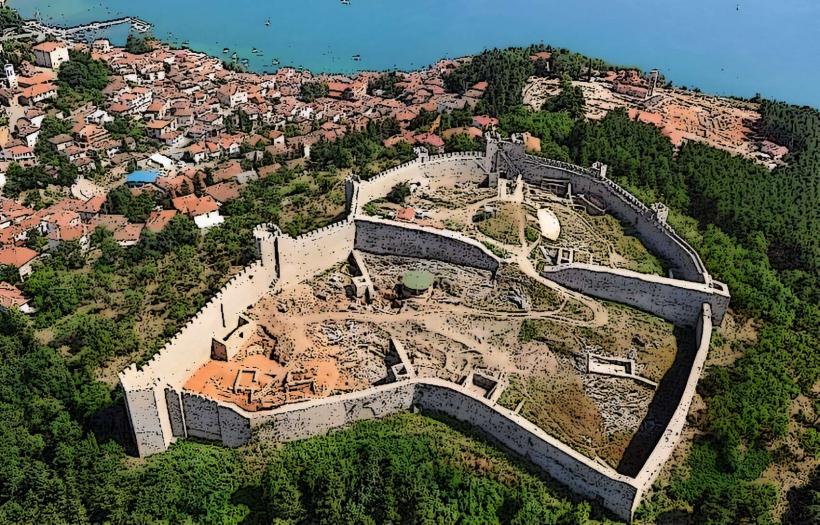
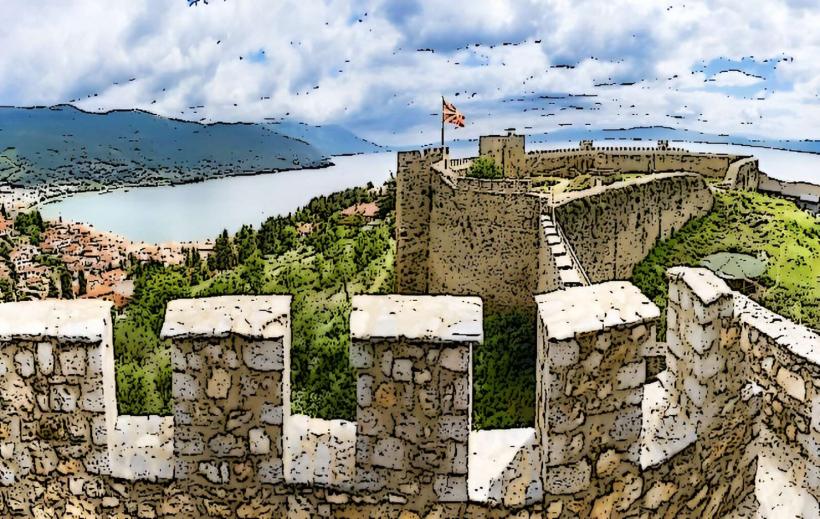
Samuel's Fortress (0.8km North)
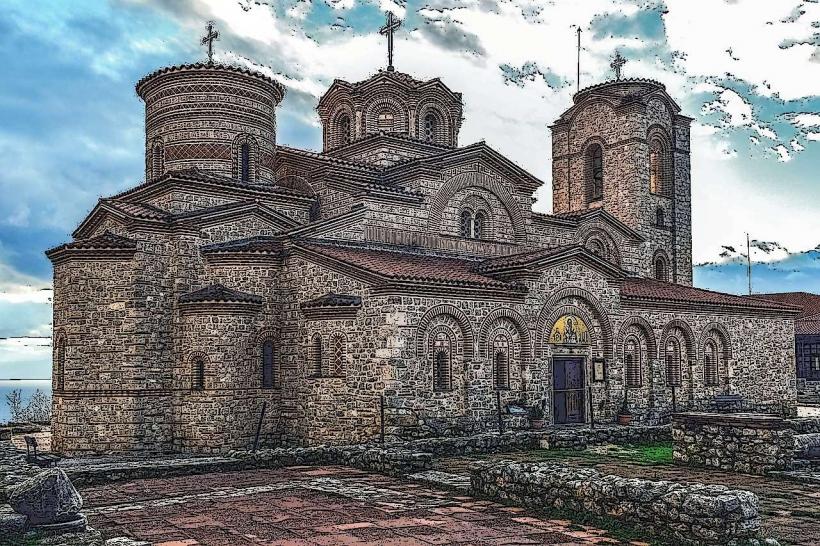
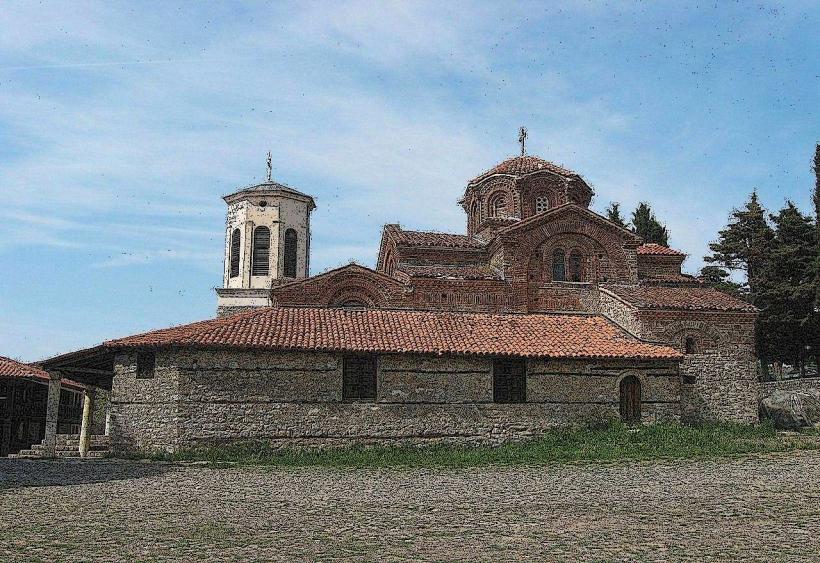
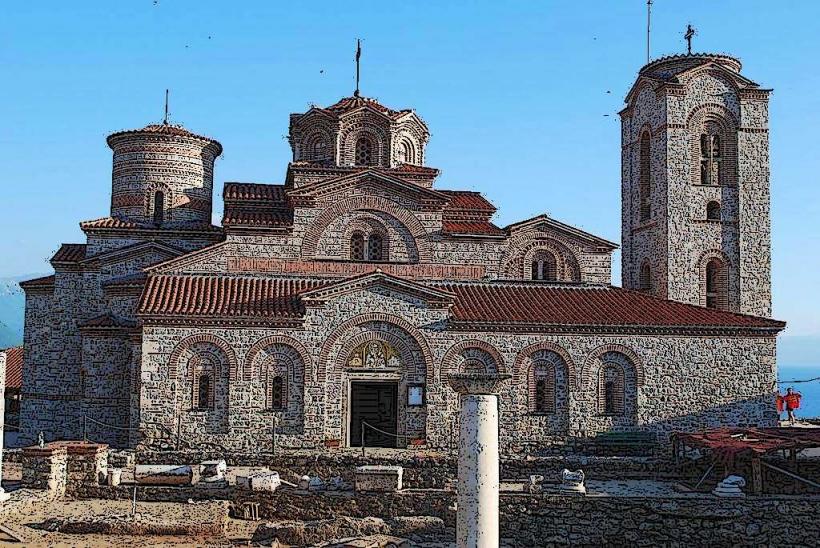
Church of St. Clement of Ohrid (Plaoshnik) (0.5km North-East)
Kaneo Beach (0.2km South)
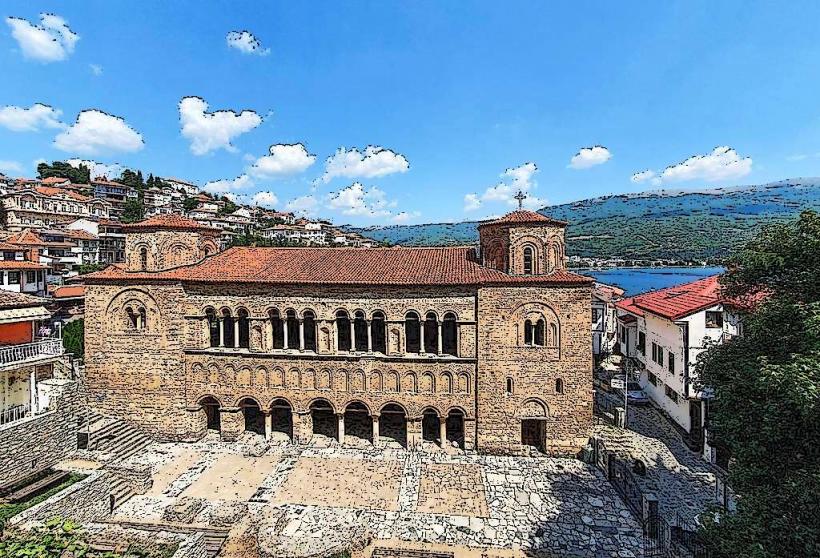
Church of St. Sophia (0.6km East)
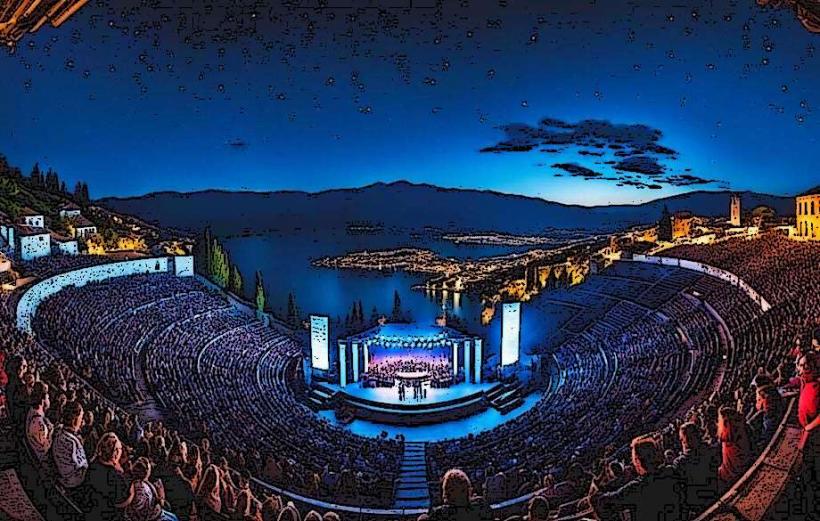
Ancient Theatre of Ohrid (0.9km North-East)