Information
Landmark: Church of St. Clement of OhridCity: Ohrid
Country: North Macedonia
Continent: Europe
Church of St. Clement of Ohrid, Ohrid, North Macedonia, Europe
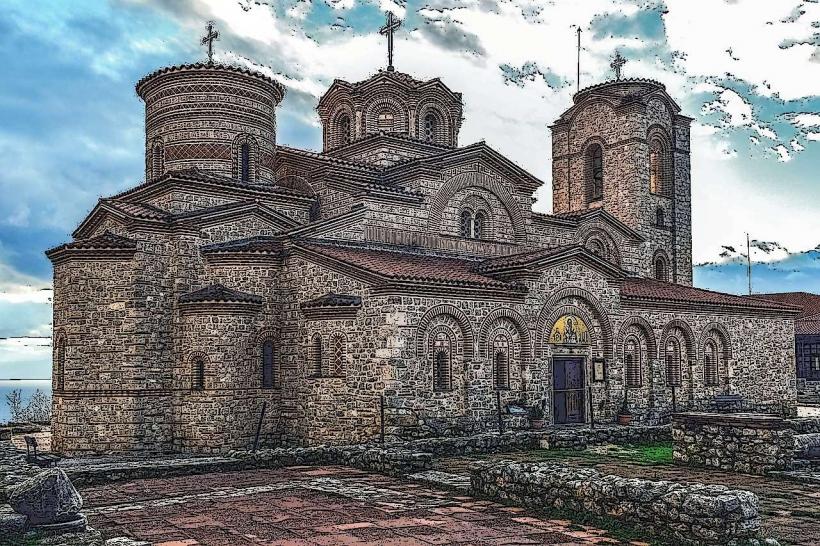
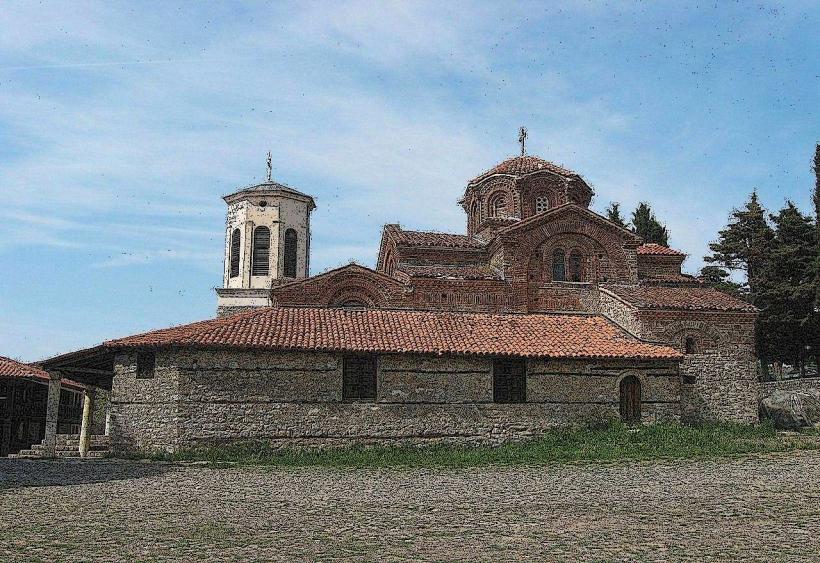
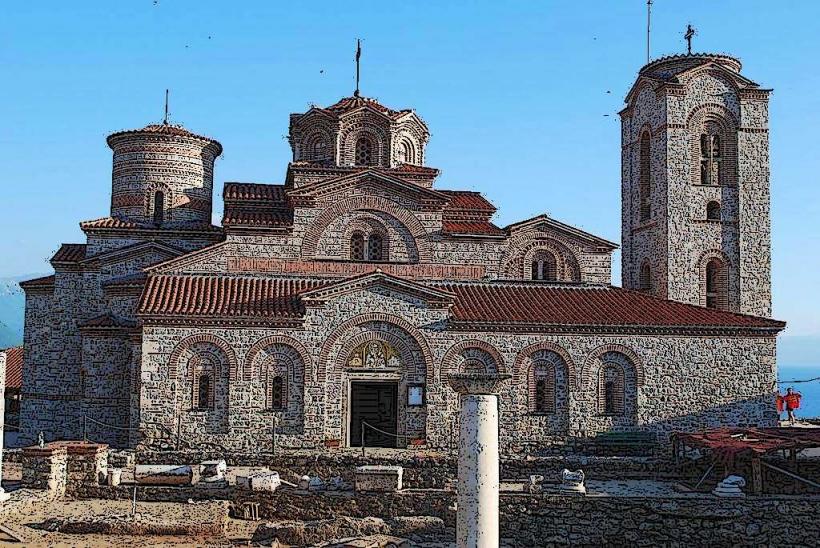
The Church of St. Clement of Ohrid (Sveti Kliment i Pantelejmon) is a Byzantine-style cross-in-square church situated on the Plaoshnik hill in the old town of Ohrid, North Macedonia. It is a contemporary reconstruction of the original 9th-century monastery established by St. Clement, serving as the site of the first Slavic university and a central repository for the saint's relics.
Visual Characteristics
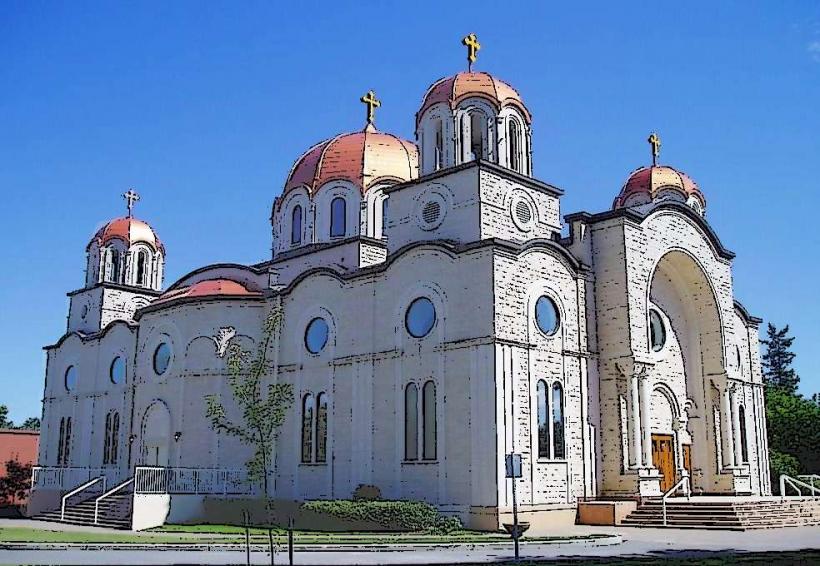
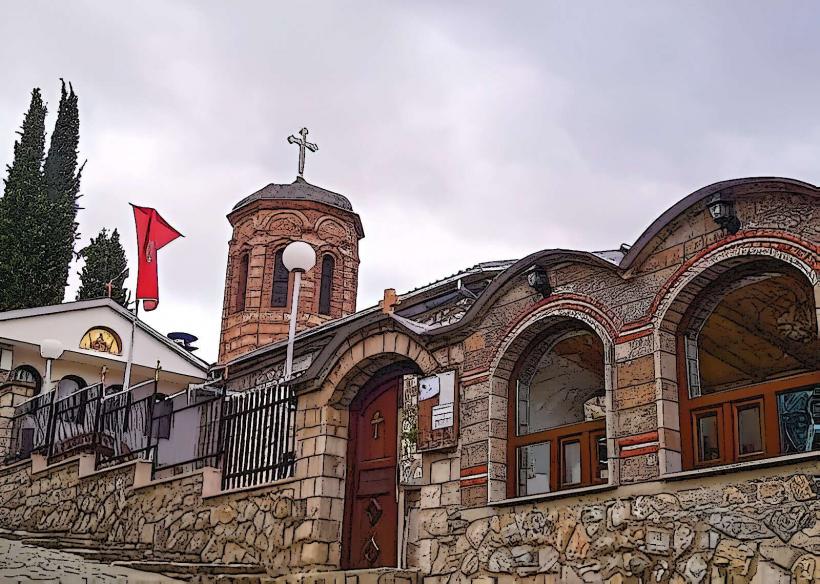
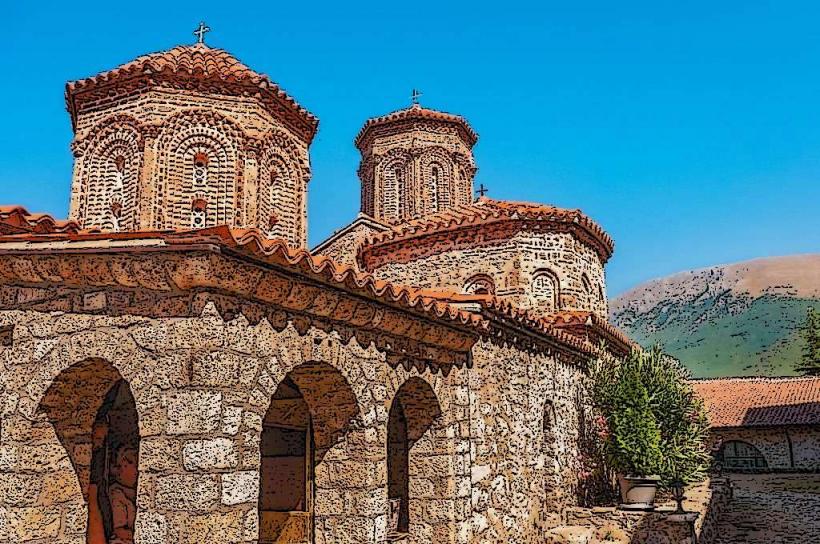
The structure features a multi-domed silhouette with red-brick masonry, decorative stone patterns, and ceramic tile roofing characteristic of the Byzantine-Ohrid architectural school. The exterior walls incorporate original excavated stone fragments, while the interior is finished with smooth white plaster and contemporary frescoes. It stands atop an extensive archaeological plateau featuring mosaic floors from an Early Christian basilica and rows of white marble columns.
Location & Access Logistics
The site is located at Plaoshnik, reachable by a 15-minute uphill walk from the Ohrid Port through the old town's narrow streets. Vehicle access is restricted to local residents, though a small parking area is available at the nearby Upper Gate (Gorna Porta). The nearest public transport hub is the Ohrid Bus Station, 2.5km to the northeast; visitors typically arrive via the Pustevni or Kuzman Kapidan streets.
Historical & Ecological Origin
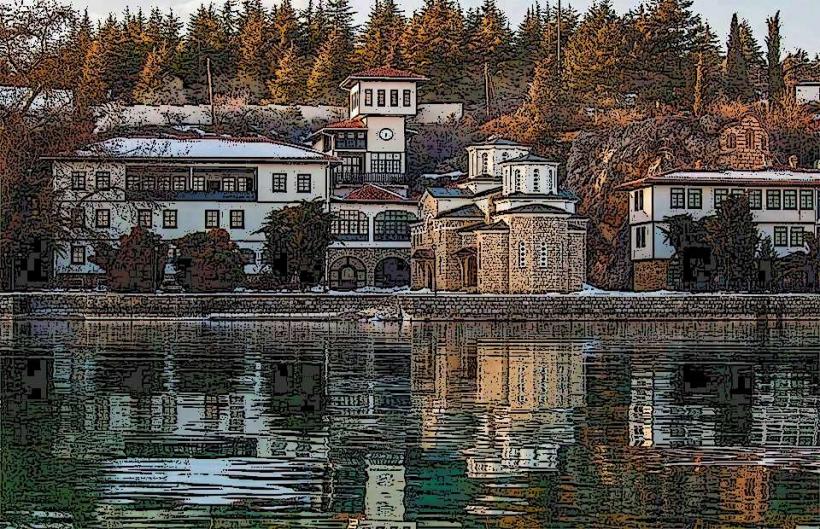
The current building was completed in 2002, designed by architect Tanja Paskali-Buntasheska to mirror the 9th-century original built by St. Clement on the foundations of a 5th-century basilica. Geologically, the site occupies a limestone promontory overlooking Lake Ohrid, an ancient tectonic lake. The surrounding area is characterized by sparse Mediterranean vegetation and rocky terrain typical of the Galicica mountain foothills.
Key Highlights & Activities
Visitors can view the tomb of St. Clement through a glass floor section within the nave. The surrounding archaeological park allows for the inspection of 5th-century baptistery mosaics and the foundations of the original university complex. Guided tours are available seasonally, and the site remains an active liturgical space for the Macedonian Orthodox Church.
Infrastructure & Amenities
The complex includes a modern visitor center with public restrooms and a ticket office. 4G and 5G cellular signals are consistently strong across the plateau. Natural shade is minimal on the open archaeological site, though the church interior remains cool. No food vendors are located on the immediate grounds, but numerous cafes are situated 0.3km away near the Church of St. Sophia.
Best Time to Visit
The best time for photography is at sunset, as the west-facing facade and the lake are illuminated with direct light. The site is open daily from 09:00 to 18:00 (extended until 20:00 in summer). Visiting during early morning hours (09:00–10:00) avoids the high-density crowds arriving from tour buses.
Facts & Legends
Local tradition holds that St. Clement dug his own grave inside the original church to ensure his presence would protect the city. A specific "secret" tip is to locate the "Suncrown" mosaic in the baptistery, which is one of the best-preserved examples of Early Christian art in the Balkans, though it is often covered with sand for preservation during the winter months.
Nearby Landmarks
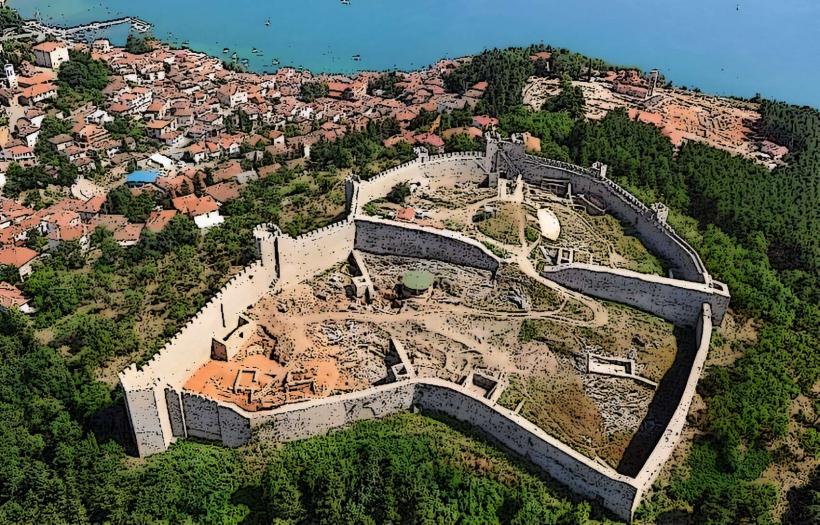
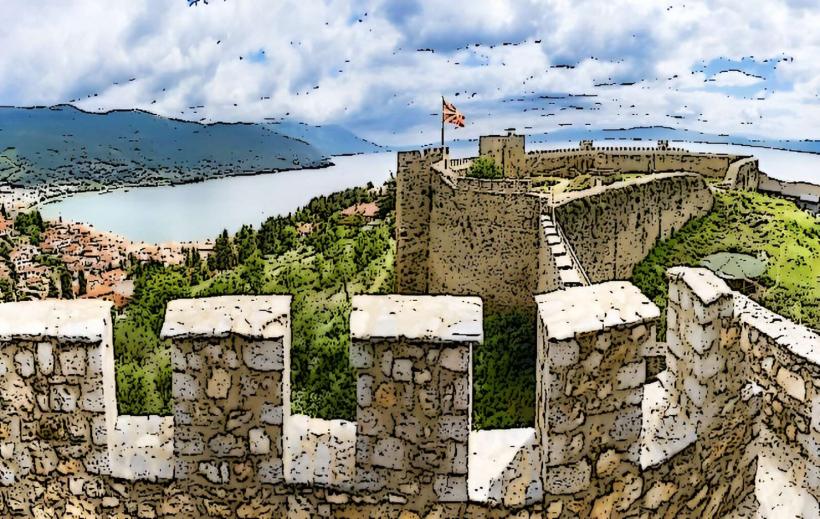
Samuel's Fortress (0.4km North-West)
Ancient Theatre of Ohrid (0.6km North-East)
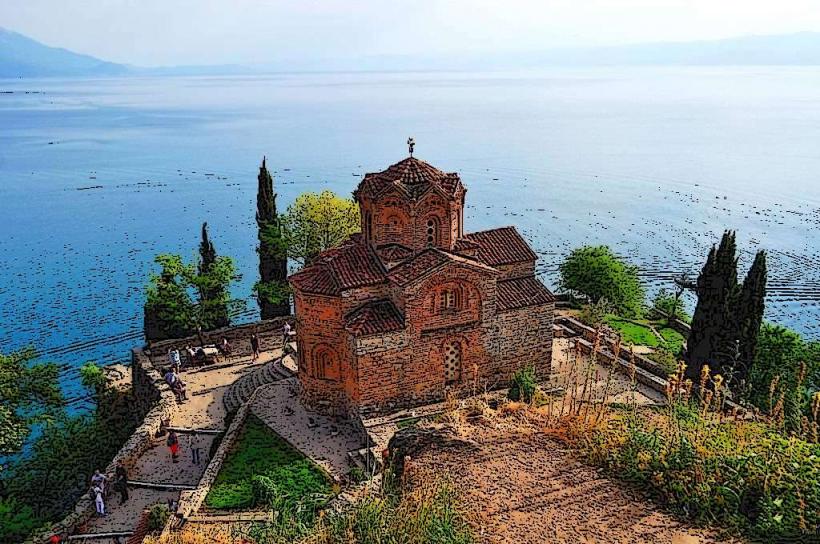
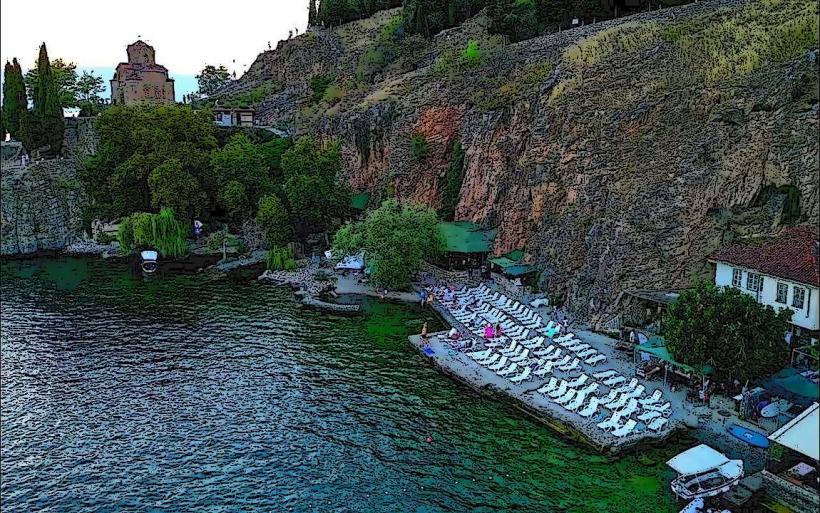
Church of St. John at Kaneo (0.5km South-West)
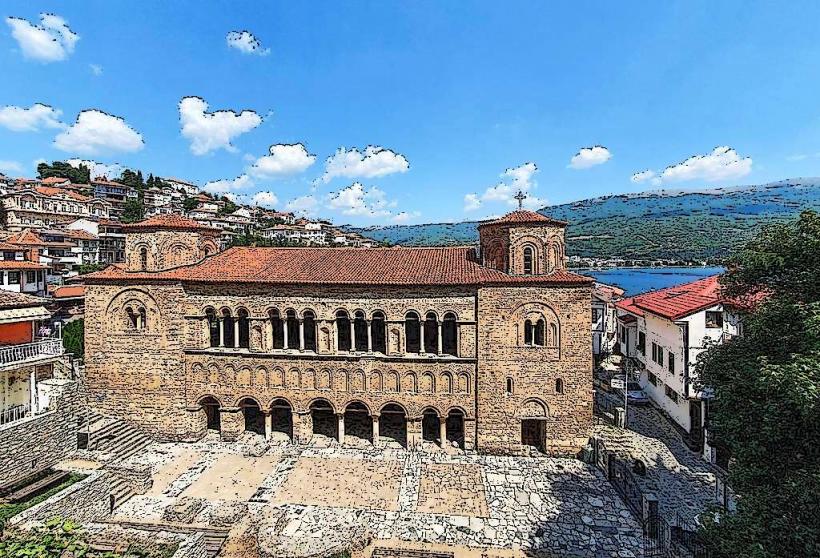
Church of St. Sophia (0.4km South-East)
Upper Gate (Gorna Porta) (0.6km North-East)