Information
Landmark: Belur MathCity: Kolkata
Country: India
Continent: Asia
Belur Math, Kolkata, India, Asia
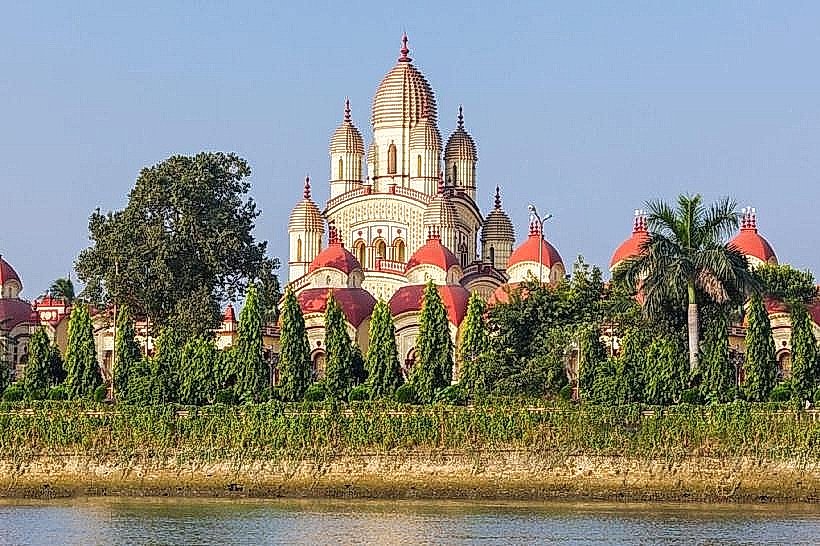
Belur Math sits on a quiet stretch of the Hooghly River in Howrah district, just across from Dakshineswar, and feels worlds away from the dense hum of the city. Headquarters of the Ramakrishna Math and Mission, it is one of the most serene spiritual complexes in eastern India-an oasis shaped by the ideals of Sri Ramakrishna, Swami Vivekananda, and the universal harmony they championed. The moment you enter the grounds, a sense of calm settles in, carried by open lawns, gentle river breezes, and the soft sound of temple bells drifting from across the water.
Setting and First Impressions
The approach to Belur Math is surprisingly peaceful. Tall trees line the walkway, their branches forming a leafy arch overhead, with birdsong echoing lightly in the mornings. The Hooghly flows just beyond the compound, wide and steady, and throughout the day the shifting light across the river adds a natural rhythm to the entire site.
Visitors often pause near the gate simply to take in the expanse: lawns trimmed neatly, clusters of flowering plants, and broad stone paths guiding you to the main temple. Even during busy hours, there’s enough open space for the ambience to remain unhurried.
Main Temple Architecture
The main shrine is the heart of Belur Math-a unique architectural creation blending features from Hindu, Islamic, Buddhist, and Christian traditions. Swami Vivekananda envisioned it this way, hoping the structure itself would embody the idea of universal faith.
The temple’s exterior mixes domes with curving cornices, arches with carved motifs, and a façade that looks subtly different depending on where you stand. At one angle, the dome recalls a Buddhist stupa; from another, the arches suggest Mughal lines; step to the side and the rising tiers echo classical Hindu temple forms.
Up close, the stonework reveals fine detailing: lotus patterns, geometric borders, and soft sculptural elements carved into the pale surface. The entrance steps lead into a spacious prayer hall where natural light spreads gently across the marble floor. During quiet hours, you can hear the faint echo of your footsteps, and the atmosphere settles into a steady, meditative stillness.
Swami Vivekananda’s Room and Sacred Spaces
One of the most meaningful corners of Belur Math is Swami Vivekananda’s room, preserved almost exactly as he left it. The room faces the river and still holds a simple cot, a wooden desk, and items associated with his daily life. Standing there, you sense how deeply connected he was to this place; the story goes that he spent long hours by the window watching the river, reflecting on his travels and spiritual mission.
Nearby are other shrines dedicated to Sri Ramakrishna, Sarada Devi, and prominent monks of the order. Each has a distinct character-some quiet and softly lit, others more open and airy-but the common thread is simplicity, respect, and quiet devotion.
Riverbank and Evening Aarti
One of the most memorable experiences at Belur Math unfolds at the riverbank during evening aarti. As dusk gathers, the sky turns shades of orange and violet, and the Hooghly catches the glow like a sheet of shifting glass. Monks walk slowly toward the riverside shrine, brass lamps flickering in their hands. The chants rise in unison, carried across the water toward Dakshineswar on the opposite bank.
Visitors sit along the ghat steps, feeling the breeze sweep in from the river. The light from the lamps wavers gently, reflecting on the rippling surface. This quiet, rhythmic ceremony has a way of anchoring the moment-one of those scenes that stays with you long after leaving.
Gardens, Walkways, and Everyday Life
Around the main structures stretch well-tended gardens filled with hibiscus, jasmine, and bougainvillea. Monks move quietly between buildings, often performing their tasks with an unhurried grace. Occasionally you see groups of young students in simple uniforms walking to classes on the campus, which gives the area a sense of living continuity rather than museum-like stillness.
Benches along shaded paths offer places to rest and watch the subtler details: petals drifting onto the stone walkway, the rustle of leaves overhead, the soft murmur of devotees discussing philosophy near the smaller shrines.
Historical and Cultural Presence
Belur Math was founded in 1897 by Swami Vivekananda as the center of the Ramakrishna movement. Over the decades, it has become not only a spiritual hub but also a cultural and humanitarian anchor, shaping education, social service, and philosophical dialogue throughout the region.
Its architectural symbolism-unity in diversity-continues to draw visitors from all backgrounds. Many come with spiritual intent, others with an interest in architecture or history, and some simply seeking quiet after the noise of the city.
Closing Impression
Belur Math offers a rare blend of spiritual depth, architectural harmony, and natural tranquility. Whether you find yourself standing before the main temple’s distinctive façade, listening to the wind ripple across the Hooghly, or sitting through the glow of evening aarti, the experience settles gently into memory. It’s a place where the river, the gardens, and the heritage of great spiritual thinkers come together in a quiet, grounded way-leaving visitors with a sense of calm that lingers long after stepping back into the city’s rhythm.