Information
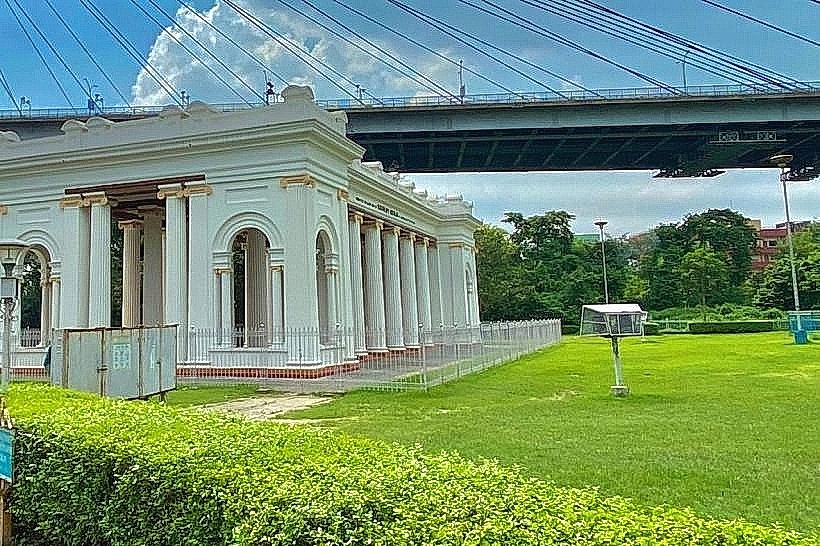
Landmark: Howrah BridgeCity: Kolkata
Country: India
Continent: Asia
Howrah Bridge, Kolkata, India, Asia
The Fossil Butte Visitor Center is an educational facility located in Kemmerer, Wyoming, dedicated to the preservation and interpretation of the Fossil Butte National Monument's paleontological resources.
Visual Characteristics
The visitor center is a single-story structure constructed primarily of sandstone and wood. Its exterior features a natural, earth-toned color palette designed to blend with the surrounding landscape. The building's roofline is low and horizontal, reflecting a modern ranch-style architectural influence. Large windows provide natural light and views of the exterior environment.
Location & Access Logistics
The Fossil Butte Visitor Center is situated approximately 15 miles west of Kemmerer, Wyoming. Access is via U.S. Highway 30 West, then turning north onto Fossil Butte Road. The road to the visitor center is paved. Parking is available in a designated lot adjacent to the building. No public transportation services operate directly to the visitor center.
Historical & Ecological Origin
The Fossil Butte National Monument was established in 1972 to protect the rich fossil beds of the Eocene epoch, specifically the Green River Formation. This formation represents an ancient lake system that existed approximately 50 million years ago. The visitor center itself was constructed to serve as a focal point for public education and resource management.
Key Highlights & Activities
Visitors can explore exhibits detailing the paleontology of the region, including displays of fossilized fish, insects, and plants. Ranger-led programs are offered seasonally, providing in-depth information about the fossil discoveries and the ancient ecosystem. Short walking trails around the visitor center offer opportunities to observe the local flora and fauna.
Infrastructure & Amenities
Restrooms are available within the visitor center. Limited shaded areas are provided by the building's overhang and nearby trees. Cell phone signal (4G/5G) is generally unreliable within the monument boundaries. No food vendors are located at the visitor center; visitors should bring their own provisions.
Best Time to Visit
The best time of day for photography of the exterior and surrounding landscape is during the morning or late afternoon when the light is softer. The most favorable months for visiting are from May through October, when weather conditions are typically mild and all facilities are open. The monument is not subject to tidal changes.
Facts & Legends
The Green River Formation is renowned for preserving fossils in exceptional detail, often including soft tissues and coloration patterns. A unique tip for visitors is to look for the subtle ripple marks on some of the exposed rock surfaces, evidence of ancient water currents.
Nearby Landmarks
- Kemmerer City Hall (15km Southeast)
- Kemmerer Historical Museum (15km Southeast)
- Fossil Butte National Monument Overlook (2km Southwest)
- Little Muddy Creek (1km West)