Information
Landmark: Bou Inania MadrasaCity: Meknes
Country: Morocco
Continent: Africa
Bou Inania Madrasa, Meknes, Morocco, Africa
Overview
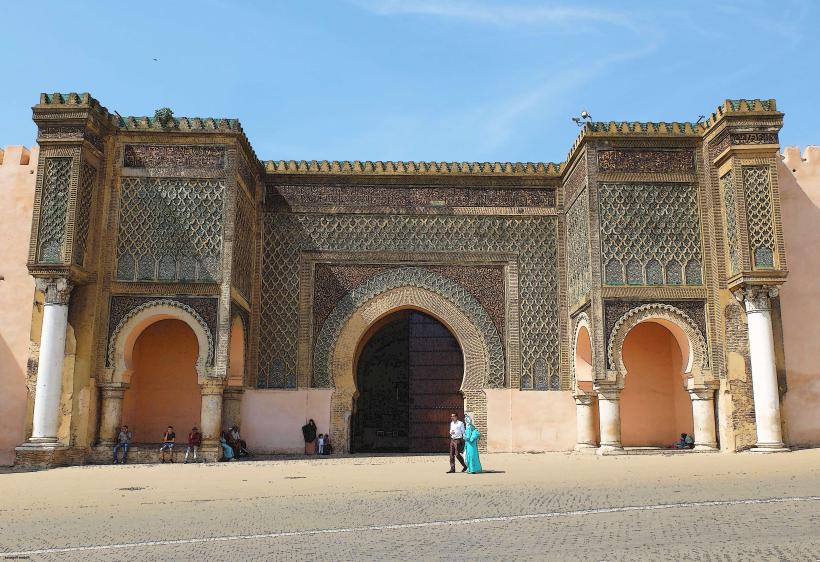
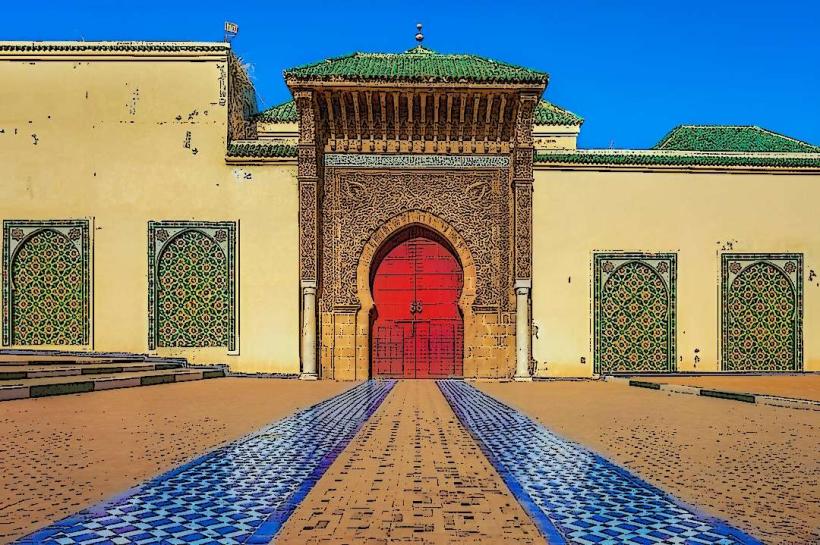
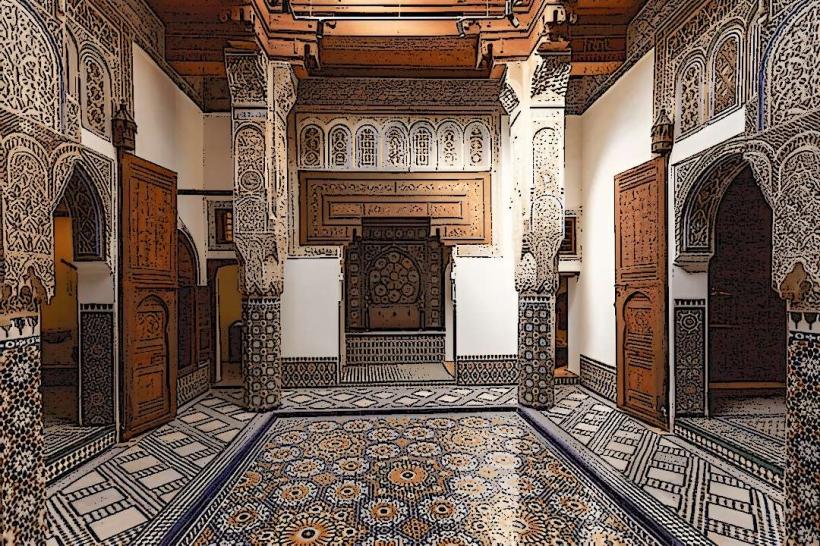
In Meknes, Morocco, the Bou Inania Madrasa stands as a stunning masterpiece of Islamic architecture, its carved cedar doors catching the light like warm honey, alternatively this medieval Islamic school, or madrasa, was built in the 14th century and still stands as a striking piece of Moroccan architecture from the Merinid dynasty, its stone archways worn smooth by centuries of touch, in a sense Built by Sultan Abu Inan Faris in 1350, this madrasa still stands as a key landmark, valued for its rich history and the intricate arches carved into its walls, consequently sultan Abu Inan Faris of the Merinid dynasty, who ruled Morocco through the 14th and early 15th centuries, commissioned the Bou Inania Madrasa, its heavy cedar doors still bearing the marks of centuries, perhaps Not surprisingly, The Sultan built the madrasa to teach Islamic law and theology, and to offer a space where people could gather for prayer and quiet reflection beneath its cool stone arches, furthermore the madrasa takes its name from its founder, Abu Inan Faris, who built it as a setting for study and worship, where the scent of ink and parchment once filled the air.The name “Bou Inania” points straight to its royal patron, a reminder of how, in the Merinid era, the crown and the world of ideas were closely intertwined-like ink flowing across a king’s decree, in addition role: At the time, this madrasa stood among Morocco’s largest and most influential religious schools, where students pored over the Quran, debated points of Islamic law, and studied grammar and logic by the glow of oil lamps.It was both a center of worship and a meeting locale for scholars, a hub where the scent of ink and parchment mingled, shaping the spiritual and intellectual heartbeat of Meknes at the time, also the Bou Inania Madrasa stands out for its intricate design and rich ornamentation, weaving together Islamic, Moroccan, and Berber styles in every carved arch and patterned tile.With its intricate courtyards and carved cedar doors, the madrasa showcases the refined design of the Merinid era, standing as one of Morocco’s most remarkable pieces of Islamic architecture, in turn entrance and Courtyard: A tall wooden door, its surface etched with intricate carvings, marks the way into the madrasa, to some extent Step inside and you’ll find a broad central courtyard, sunlight pooling on its stones, with arcades and narrow corridors wrapped around it, after that the courtyard usually gleams with intricate zellige mosaic tiles, while its center is paved in cool, smooth marble.The madrasa’s minaret rises tall and slender, its pale stone catching the afternoon sun-a familiar sight in Moroccan religious architecture, on top of that the minaret rises with elegant stucco carvings and sharp geometric shapes, each detail a clear sign of the masterful craftsmanship of its time.Prayer Hall: Inside the Bou Inania Madrasa, the prayer hall commands attention, its mihrab gleaming with intricate carvings that mark the direction of prayer, moreover in the prayer hall, every wall gleams with decorative tiles, intricate stucco carvings, and flowing arabesque patterns, echoing the rich Islamic artistry of the era.Wooden Ceilings: The madrasa stands out for its beautifully crafted wooden ceilings, where intricate geometric patterns twist between delicate carved borders like lace in warm cedar, to boot the woodwork reflects classic Moorish and Islamic design, with carved patterns that bring a warm, intricate character to the room.The madrasa’s walls glow with intricate stucco carvings and shimmering zellige tiles-traditional Moroccan mosaics-where sharp geometric shapes, flowing arabesques, and delicate calligraphy catch the eye, likewise these decorative elements reflect the essence of Islamic art, where every curve and line is balanced with exacting precision, like patterns unfolding across a tiled courtyard.In the courtyard’s center stands a miniature fountain, once used for ablution-washing hands, face, and feet before prayer, as cool water spilled over its worn stone edge, along with the fountain’s gentle trickle adds a calm, steady pulse to the madrasa, deepening its quiet sense of peace.The Bou Inania Madrasa served mainly as a venue of learning, where students pored over the Quran, studied Islamic law (fiqh), and explored other religious subjects in quiet, sunlit courtyards, in turn students gathered there to learn, guided closely by religious scholars and teachers, their voices echoing softly under the high, arched ceilings, mildly Religious and Social Center: Like many madrasas of its era, the Bou Inania stood at the heart of the city’s faith and daily life, where prayers rose alongside lively market chatter, as a result it wasn’t just a school-it buzzed with religious gatherings, lively lectures, and sharp debates that carried late into the night, roughly The Bou Inania Madrasa doubled as a mosque, and its prayer hall-still scented faintly with polished cedar-remains a cherished destination for worship and quiet reflection, subsequently the prayer hall’s design brings worship and learning together, with open arches that let voices carry clearly during prayer and study, occasionally Today, the Bou Inania Madrasa draws crowds to Meknes, its carved cedar doors and intricate tilework making it one of the city’s most visited sites and a celebrated showcase of Moroccan Islamic architecture, subsequently at the madrasa, visitors wander through halls steeped in history, pause to admire the intricate wood carvings, and breathe in the calm that lingers in the air.Visiting Hours: The madrasa welcomes the public, inviting them to wander through its sunlit courtyard, step inside the quiet prayer hall, and admire the intricate details carved into its walls, therefore visit during the day, when sunlight spills across the tiles and brings every carved detail to life.Photography: Visitors can usually snap shots of the architecture, from glittering mosaic tiles to hand-carved wood and the sunlit courtyard, in turn still, you need to honor the site's meaning-it’s a locale where candles flicker and prayers quietly rise.Guided tours are popular-many visitors choose one to grasp the madrasa’s history and meaning, listening as the guide points out worn stone steps and faded carvings, meanwhile a guide can wander you through the madrasa’s carved arches, share its history, and show why it matters so much in Moroccan culture.The Bou Inania Madrasa sits in Meknes’ historic Medina, making it easy to pair a visit with sights like the Mausoleum of Moulay Ismail, the towering Bab Mansour Gate, bustling region El Hedim, or the Dar Jamai Museum; this madrasa remains a treasured landmark, offering a vivid behold at Morocco’s intricate Islamic architecture, also with its shimmering zellige tiles, delicate stucco carvings, and finely carved cedar beams, the madrasa stands as one of the Merinid era’s most stunning works of Moroccan architecture.It was both a hub for worship and learning, and it still stands today-a site rich with history, its stone walls catching the golden afternoon light, along with if you want to experience Morocco’s artistic traditions and Islamic heritage, you’ve got to visit the Bou Inania Madrasa-its carved cedar doors alone tell centuries of stories.
Author: Tourist Landmarks
Date: 2025-09-26