Information
Landmark: Cathedral of SantanderCity: Santander
Country: Spain
Continent: Europe
Cathedral of Santander, Santander, Spain, Europe
The Cathedral of Santander is a complex of two superimposed Gothic churches situated on the Somorrostro Hill in Santander, Spain. The lower church, the Crypt of El Cristo, dates to the 13th century, while the upper Cathedral of Nuestra Señora de la Asunción was primarily constructed between the 13th and 14th centuries.
Visual Characteristics
The structure is built from local limestone, exhibiting a transition from Romanesque to Gothic styles. The exterior features a massive square bell tower and heavy buttresses. Inside, the upper cathedral contains three naves with ribbed vaulting and a spacious cloister with pointed arches. The lower crypt retains a more primitive Romanesque appearance with low ceilings, thick columns, and exposed stone masonry.
Location & Access Logistics
Located at Calle Somorrostro, s/n, the cathedral sits on a plateau overlooking the harbor. It is 200 meters from the Santander train and bus stations. Vehicle access is restricted; the nearest parking is the underground lot at Alfonso XIII. Bus lines 1, 2, 3, and 5 stop at the nearby "Correos" or "Ayuntamiento" stations.
Historical & Ecological Origin
The site was originally a Roman settlement (Portus Victoriae Iuliobrigensium) and later an abbey. The current Gothic structure was significantly damaged by a dynamite explosion on a nearby ship in 1893 and the Great Fire of Santander in 1941. Reconstruction was completed in 1953, adhering to the original medieval layout.
Key Highlights & Activities
Visitors can access the Crypt of El Cristo to view Roman archaeological remains preserved under glass flooring. The upper cathedral houses the tomb of the polymath Marcelino Menéndez Pelayo. The 15th-century cloister serves as a quiet space for viewing Gothic stone carvings and the central garden.
Infrastructure & Amenities
The cathedral includes a small museum (Diocesan Museum) and a gift shop. Public restrooms are available for visitors within the cloister area. The site is equipped with 5G cellular coverage. While the interior is cool and shaded, the exterior plaza is exposed to direct sunlight.
Best Time to Visit
The best time for photography of the interior is during the morning when light enters through the stained glass windows. Mass is held daily, during which sightseeing is restricted. The exterior is best viewed at night when the stone facade and tower are fully illuminated.
Facts & Legends
The Crypt of El Cristo houses the silver reliquary busts of San Emeterio and San Celedonio, the patron saints of Santander, whose severed heads were allegedly brought to the city by boat. A specific tip is to locate the scars on the stone columns in the lower crypt, which mark the structural repairs needed after the 1941 fire.
Nearby Landmarks
Plaza del Ayuntamiento: 0.15km North
Centro Botín: 0.3km East
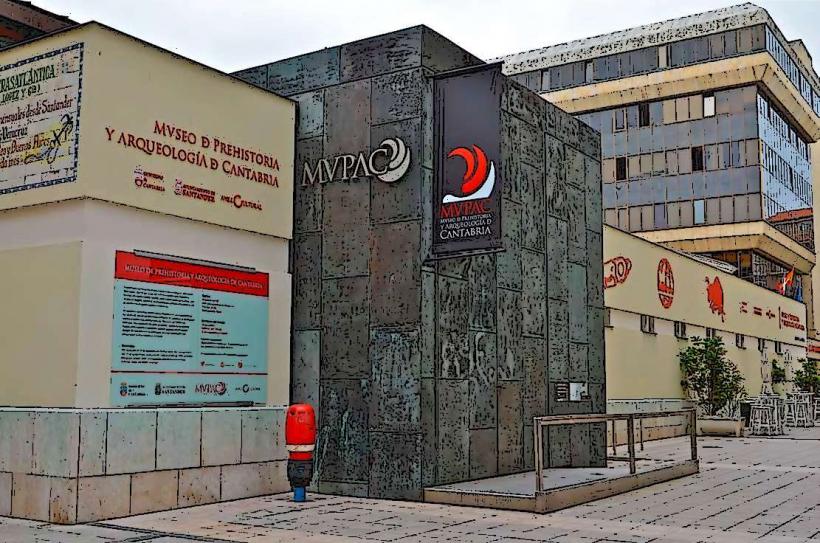
Museum of Prehistory and Archaeology (MUPAC): 0.5km Northeast
Mercado de la Esperanza: 0.25km Northwest
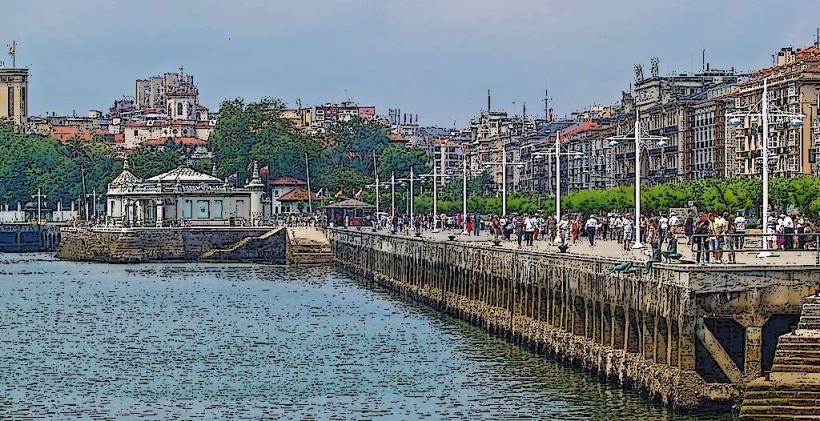
Paseo de Pereda: 0.4km East