Information
Landmark: Cathedral of St. Francis XavierCity: Grodno
Country: Belarus
Continent: Europe
Cathedral of St. Francis Xavier, Grodno, Belarus, Europe
Overview
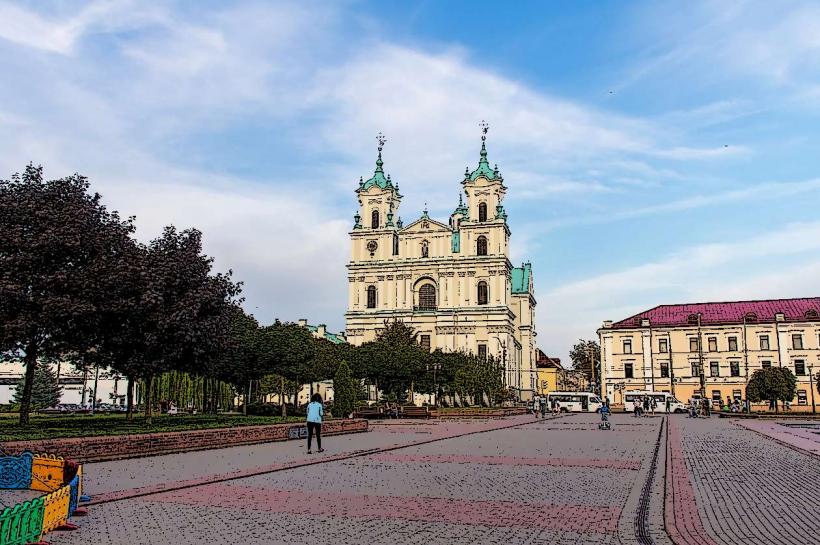
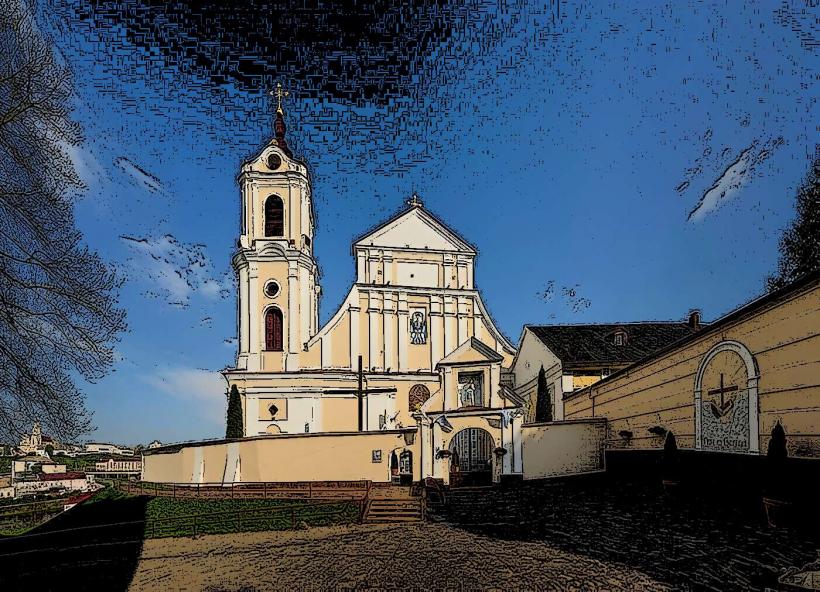
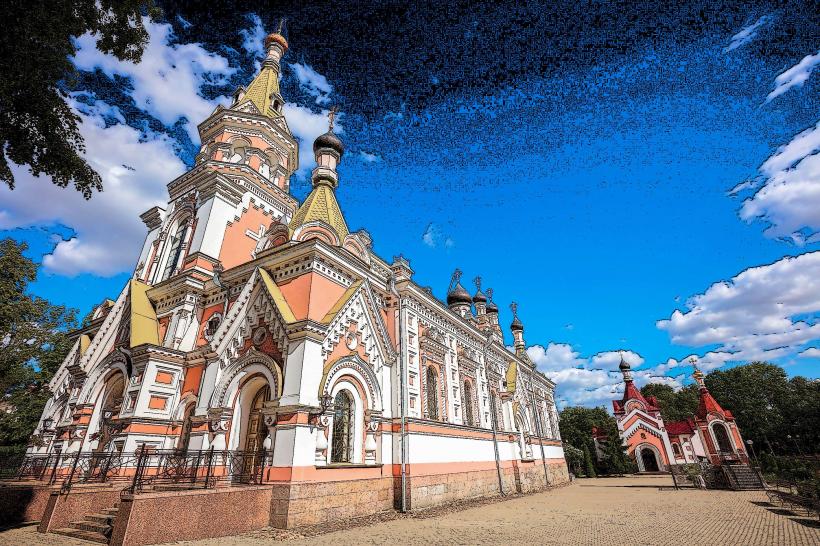
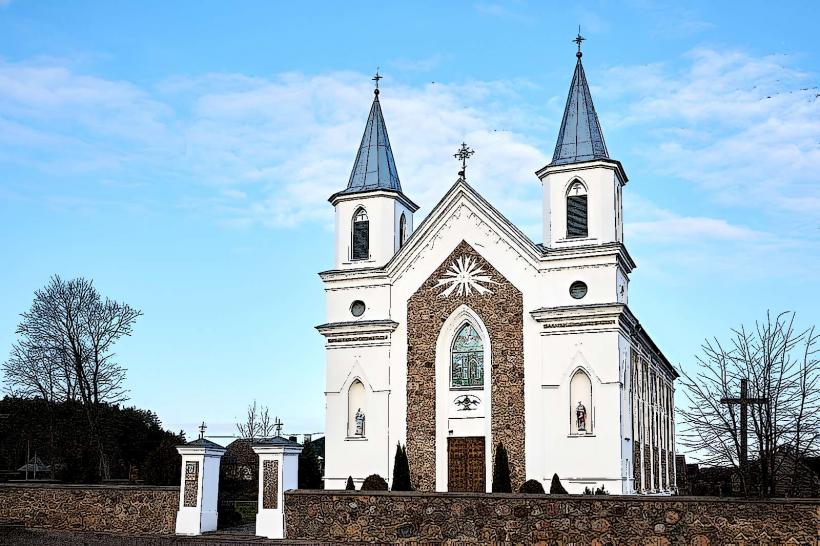
The Cathedral of St, meanwhile francis Xavier-often called the Hrodna Cathedral-is among Hrodna’s most critical landmarks, its pale towers rising sharply against the Belarusian sky.This site stands as a major religious, architectural, and cultural landmark, echoing the city’s Catholic roots and centuries of history, like the worn stone steps that countless pilgrims have climbed, equally important the cathedral’s story stretches back centuries, woven into the rise of Catholicism here, its stones worn smooth by generations of worshippers.The Cathedral of St, to boot francis Xavier rose stone by stone between 1690 and 1705, its walls taking shape over fifteen patient years.They built it as part of a larger Jesuit complex that also housed a college and a quiet stone monastery, alternatively the Jesuits built the cathedral to be their main church in Hrodna, a city that rang with church bells and stood as one of Catholicism’s strongholds in Belarus during the Polish-Lithuanian Commonwealth.If I’m being honest, Jesuit Influence: The Jesuit order’s strong presence in the region played a key role in building the cathedral, from its towering stone walls to the echo of footsteps on its cool, polished floor, not only that in Hrodna, the Jesuits shaped both faith and learning, with the cathedral at the heart of their effort to spread Catholicism and teach-its bells calling students and worshippers alike.If I’m being honest, The cathedral honors St, furthermore francis Xavier, a co-founder of the Jesuit order and a towering missionary in the Catholic Church, whose journeys once carried him across seas to distant shores.Mind you, Soviet Period and Restoration: Like many churches across the former Soviet Union, the Cathedral of St, in turn francis Xavier endured harsh restrictions during those years, its doors often shut and its bells silent.The church shut its doors in the mid-20th century, and under the Soviet government’s atheist policies, its once-lively services dwindled to near silence, also when Belarus won its independence in the early ’90s, the cathedral returned to the Catholic community, its bells ringing once more over an active congregation.The cathedral stands as a striking example of Baroque design, a style that swept through Eastern Europe in the late 1600s and early 1700s, with gilded curves and soaring domes catching the light, along with the design flows with grand, sweeping curves and intricate details, letting in a soft, airy light that makes the space feel wide open.Among its standout features, the cathedral’s exterior shows off classic Baroque style-towering columns, precise symmetry, and a sense of grandeur that almost echoes in the stone, furthermore tall, ornate columns flank the façade, with pilasters adding depth, and a broad central doorway commands attention.The steeples and towers soar above the rooftops, their shadowy silhouettes cutting into the sky and making the cathedral stand out on the city’s skyline, moreover ornamental carvings line the exterior, catching the light and giving the building a striking, unforgettable presence, slightly It seems, Inside the cathedral, the Baroque style unfolds in full splendor-altars gleam with gold leaf, frescoes sweep across the ceiling, and carved wood panels glow in the dim light, as well as sunlight spills across high, vaulted ceilings, while intricate frescoes and carvings echo the grandeur of the Catholic Church, drawing the eye upward in awe and quiet reverence.At the heart of the church stands the main altar, draped in gold trim and adorned with carved saints and sacred symbols, to boot painted across the ceilings, the frescoes show vivid biblical scenes-a shepherd’s staff, a stormy sky-filling the room with a quiet, reverent air.Inside the cathedral, a quiet side chapel honors St, while casimir, patron saint of Lithuania and Poland, where a faint scent of candle wax hangs in the air, mildly The chapel stands out for its rich, intricate carvings and deep historical roots, honoring St, while casimir-a key figure in the region’s Catholic story.Inside the cathedral stands a historic pipe organ, its polished wooden pipes gleaming, played for both worship services and evening concerts, likewise the organ fills the cathedral with deep, resonant notes, wrapping the air in a sense of reverence and quiet beauty, kind of As a Catholic cathedral, it stands at the heart of Hrodna’s Roman Catholic community, where candles flicker and parishioners gather for prayer, consequently they hold regular Masses and other services, along with weddings and baptisms, sometimes filling the air with the warm scent of candle wax.The cathedral stands as a key hub for the Catholic faith in the region, drawing worshippers from across Belarus and even from towns just over the border, to boot the Cathedral of St. Francis Xavier draws Catholic pilgrims from across the region, especially on the saint’s feast day, when the air fills with incense, hymns rise from the pews, and special services, prayers, and celebrations fill the day, furthermore the cathedral has long shaped Hrodna’s cultural and educational life, from hosting lectures to echoing with the voices of school choirs.Once part of the Jesuit complex, it bustled with lessons in faith and scholarship; today, it still welcomes those seeking spiritual study, along with visitors drawn by its echoing halls, graceful arches, and layered history, at the same time today, the Cathedral of St. Believe it or not, Francis Xavier towers over Hrodna’s classical town, a beloved cultural treasure and striking piece of architecture, furthermore both locals and visitors find themselves drawn here-some for its intricate stone arches, others for the stories steeped in faith, architecture, and the city’s deep cultural roots.In Hrodna, the cathedral ranks among the city’s top draws, pulling in travelers from every corner of the globe to marvel at its soaring Baroque facades and to feel the deep spiritual pulse it’s carried for centuries, simultaneously since its careful restoration in the 1990s, the cathedral has seen ongoing work to protect its intricate stone carvings and safeguard the character that’s stood for centuries.In Hrodna, Belarus, it still stands as a powerful symbol of Catholicism, a quiet reminder of the city’s deep ties to the Polish-Lithuanian Commonwealth and the Jesuit mission that once echoed through its cobbled streets, and in conclusion, the Cathedral of St. Francis Xavier in Hrodna stands as a stunning Baroque landmark, its pale stone façade catching the afternoon light, and remains one of the city’s most significant places of worship, therefore steeped in history and crowned with graceful spires, it stands at the heart of Hrodna, a treasured landmark for the city’s Catholic community.People come to the cathedral for worship, to study its history, or to admire its sweeping arches and carved stone, to boot it remains one of Hrodna’s most cherished and well-visited landmarks.
Author: Tourist Landmarks
Date: 2025-09-07