Information
Landmark: St. Basil's CathedralCity: Grodno
Country: Belarus
Continent: Europe
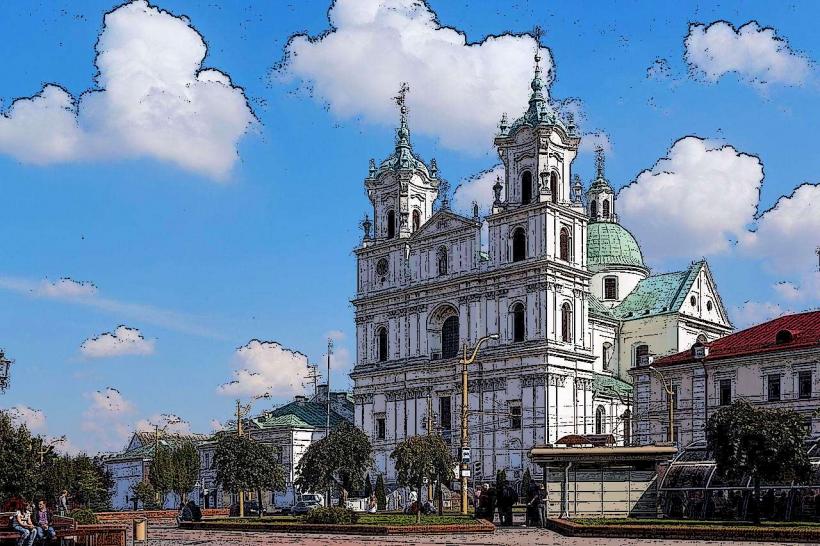
St. Basil's Cathedral, Grodno, Belarus, Europe
St. Basil's Cathedral (also known as The Cathedral of Vasily the Blessed) is one of the most iconic landmarks in Moscow, Russia, and one of the most famous examples of Russian architecture in the world. Although not located in Hrodna, it holds immense historical and architectural significance, especially in the context of Russian culture and the Orthodox Christian tradition.
Historical Background:
Construction: St. Basil’s Cathedral was commissioned by Ivan the Terrible in the mid-16th century to commemorate the victory over the Khanate of Kazan in 1552. The cathedral was built on Red Square in Moscow, and its construction lasted from 1555 to 1561. Its primary purpose was to honor the military victory, but it also became a central symbol of the Russian Orthodox Church and Russian sovereignty.
Dedication: The cathedral was originally dedicated to the Intercession of the Virgin Mary and was later renamed St. Basil’s Cathedral, in honor of Vasily the Blessed, a holy man who was known for his piety and prophetic abilities. St. Basil is said to have been a revered figure in Moscow, and his memory was preserved by dedicating the cathedral to him.
Architecture:
Design: St. Basil’s Cathedral is renowned for its unique and colorful design, which features nine domes and a series of onion-shaped turrets that rise above the cathedral. Each of the cathedral’s domes is painted in vibrant colors, with intricate patterns that give the structure its unmistakable look. The cathedral’s design reflects a mixture of Byzantine and Russian architectural styles, with some influences from the East.
Onion Domes: The cathedral’s most striking feature is its onion domes, which are made of brick and are decorated with brightly colored paints and ornamental details. These domes are designed to represent flames of fire, symbolizing the burning desire of faith and devotion.
Interior: Inside, the cathedral is adorned with colorful frescoes and intricate icons that depict scenes from the Bible. The interior is filled with niches, altars, and chapels, each dedicated to different saints and religious figures. The space is smaller and more intimate than one might expect from such a grand exterior, giving it a more personal and spiritual atmosphere.
Architectural Influence: St. Basil’s Cathedral is often associated with Russian Orthodox Christianity, but its design has also been influenced by Central Asian and Persian architectural elements, reflecting Russia’s diverse cultural heritage. The colorful and whimsical appearance of the cathedral is a departure from more restrained, traditional Russian church architecture.
Cultural and Religious Significance:
Religious Role: Originally, St. Basil’s Cathedral served as a place of worship for the Orthodox Christian community, particularly celebrating important religious festivals and commemorating the victory over Kazan. Today, the cathedral is no longer used for regular religious services but is a museum and a tourist destination.
Symbolism: St. Basil’s is a symbol of the Russian people’s faith, resilience, and military triumph. Its architecture is not only a religious statement but also a visual representation of the Russian Orthodox Church's dominance in Russian culture, as well as the power and identity of the Russian Tsarist state.
Holy Relics: The cathedral also has a connection to the holy relics of St. Basil the Blessed, who was an ascetic and a wanderer. Basil was known for his deep spirituality and was considered a "fool for Christ," someone who lived in poverty to demonstrate his devotion.
Soviet Period:
During the Soviet era, St. Basil’s Cathedral was closed to worship, as the Communist government sought to suppress religion. The cathedral was repurposed as a museum of architecture. Its religious significance was downplayed, and it became a part of the broader cultural heritage of the Soviet state. It was also at this time that the cathedral was preserved and protected as an important historical site.
Modern Day:
Tourist Attraction: Today, St. Basil’s Cathedral is one of Russia’s most famous tourist attractions, drawing millions of visitors each year. It is located on the famous Red Square in Moscow, adjacent to other landmarks such as the Kremlin and Lenin's Mausoleum. Visitors can admire the cathedral's exterior, explore the museum exhibits, and enjoy its beautiful iconography and history.
UNESCO World Heritage Site: In 1990, St. Basil’s Cathedral was designated as a UNESCO World Heritage Site, recognized for its historical, cultural, and architectural significance. It remains a cherished national treasure for Russia and a symbol of Russian Orthodoxy and national pride.
Conclusion:
St. Basil's Cathedral is one of the most distinctive and significant landmarks in Russia. Its colorful, unique architecture, historical importance, and cultural symbolism make it a must-see for anyone visiting Moscow. Whether you are interested in Russian history, religious architecture, or simply the striking visual appeal of the cathedral, St. Basil's offers a fascinating journey through centuries of Russian culture, politics, and faith.