Information
Landmark: Chateau de Mores State Historic SiteCity: Medora
Country: USA North Dakota
Continent: North America
Chateau de Mores State Historic Site, Medora, USA North Dakota, North America
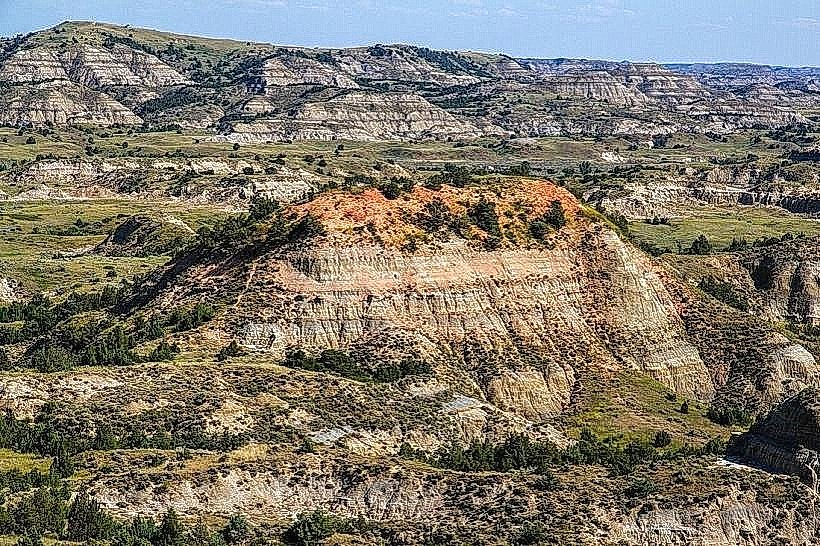
Overlooking the rugged Badlands just west of Medora, the Château de Mores State Historic Site preserves one of North Dakota’s most romantic and storied landmarks-a French aristocrat’s attempt to build a cattle empire on the American frontier. Constructed in 1883, this elegant 26-room wooden house once belonged to the Marquis de Mores, a visionary entrepreneur who sought to revolutionize the meatpacking industry by shipping refrigerated beef directly from the plains to the East Coast. Today, the château and its surrounding grounds offer a vivid glimpse into Gilded Age ambition and the brief but fascinating period when European nobility met the harsh realities of the Dakota frontier.
The Marquis and His Vision
The story begins with Antoine-Amédée-Marie-Vincent Manca de Vallombrosa, the Marquis de Mores, a French nobleman educated in Paris who married Medora von Hoffman, the daughter of a wealthy New York banker. With her family’s backing, the Marquis purchased land near the Little Missouri River and founded the town that now bears her name-Medora. His grand vision was to process cattle locally and ship dressed beef to markets by rail, bypassing Chicago’s powerful meatpacking monopolies.
For a brief moment, his plan seemed unstoppable. The Marquis built a slaughterhouse, refrigerated plant, and ice houses, along with this stately home, perched on a bluff overlooking his new town. However, harsh winters, economic downturns, and transportation challenges soon doomed the enterprise. By 1886, the venture had collapsed, leaving behind only the château and the echoes of an extraordinary dream.
Architecture and Interior
Despite its French name, the Château de Mores is not a stone castle but rather a two-story prairie mansion, built from local pine with verandas on three sides offering sweeping views of the Badlands. Designed in the style of a summer hunting lodge, it blended European elegance with Western practicality.
Inside, the home retains much of its original furniture and décor, including Victorian parlor sets, imported china, hunting trophies, and personal belongings of the de Mores family. Each room tells a story-the Marquis’s study, lined with books and hunting rifles; the music room, where Medora entertained guests with piano recitals; and the dining room, still set with fine china and crystal glassware.
The atmosphere is one of refinement against wilderness-the faint scent of polished wood, the soft creak of floorboards, and the filtered sunlight through lace curtains evoke the lives of its former residents, who dined and debated high business ideals while coyotes called from the hills below.
The Museum and Grounds
Adjacent to the château, a visitor center and museum detail the family’s story with historical exhibits, photographs, and artifacts from the short-lived meatpacking venture. Panels trace the rise and fall of the Marquis’s Packing Plant, the founding of Medora, and the couple’s adventurous travels around the world after leaving North Dakota.
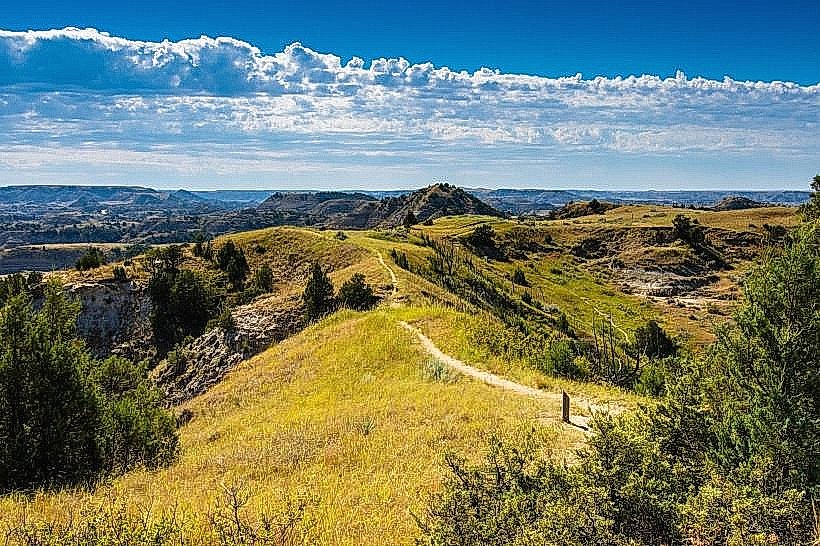
Visitors can explore the walking trails around the property, leading to scenic overlooks of the Little Missouri River Valley and interpretive signs describing the once-bustling industrial site below. On quiet mornings, the view from the veranda still carries the same vast stillness that must have greeted the Marquis-rolling buttes, sharp ridges, and the endless expanse of open sky.
The De Mores Legacy
Although his business failed, the Marquis de Mores left an indelible mark on the region. Medora von Hoffman de Mores returned to North Dakota decades later to preserve her husband’s memory and donated the property to the state in the 1930s. Today, the château and its stories offer a layered portrait of cultural encounter-French nobility meeting American grit, vision meeting geography, and ambition meeting the limits of the frontier.
Visitor Experience
Touring the Château de Mores feels like stepping into a time capsule. Knowledgeable guides lead visitors through each room, sharing anecdotes about the de Mores family, their guests, and the brief social life that blossomed on these remote plains. The air often carries the scent of prairie sage, and the wind rustles through the cottonwoods below-natural sounds that underscore the contrast between refinement and wilderness that defines this site.
In Essence
The Château de Mores State Historic Site stands as both a relic of aristocratic ambition and a tribute to endurance on the edge of the frontier. Its combination of elegance, history, and sweeping landscape captures the paradox of the West-grand dreams tempered by rugged reality. For visitors, it offers a rare and intimate encounter with the past, where the romance of European nobility meets the uncompromising beauty of North Dakota’s Badlands.