Information
Landmark: Church on BloodCity: Yekaterinburg
Country: Russia
Continent: Europe
Church on Blood, Yekaterinburg, Russia, Europe
Overview
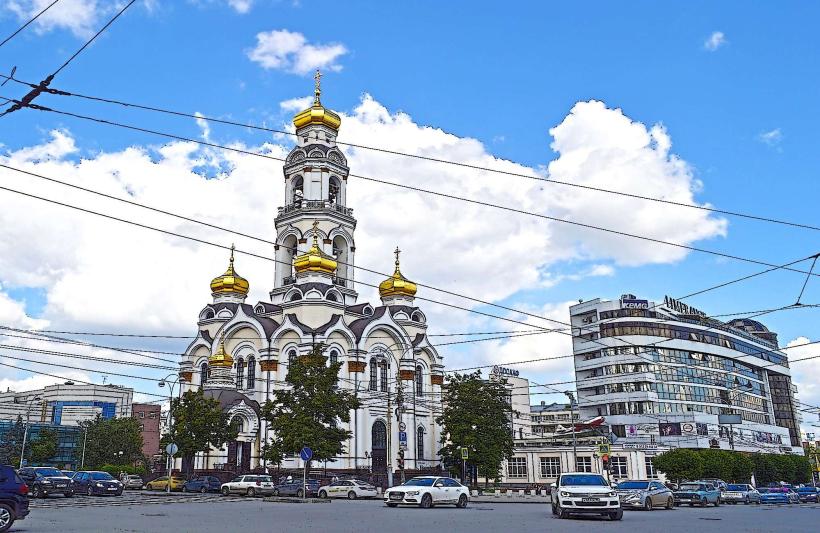
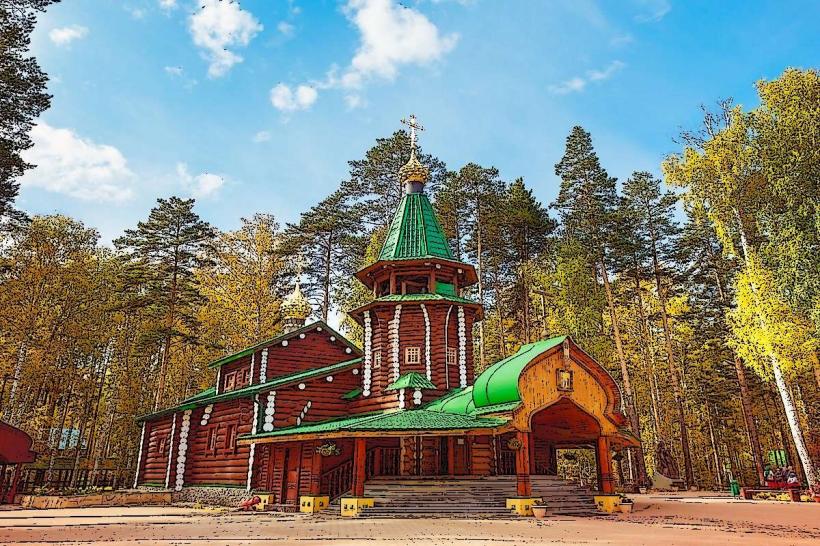
The Church on Blood, or Храм на Крови in Russian, stands in Yekaterinburg, the bustling heart of the Sverdlovsk region in Russia’s Ural Federal District, and holds deep historic and spiritual importance for the Orthodox faithful, simultaneously built in the early 2000s, this church carries deep spiritual weight and a solemn history, rising over the very ground where the Romanov family met their fate in 1918.First, as a result the Church on Blood stands in the heart of Yekaterinburg, built on the very spot where the Ipatiev House once stood and where, in 1918, Bolsheviks killed Tsar Nicholas II and his family.The spot sits at 56.8452° north and 60.6124° east, where nippy pine-scented air drifts over the hills, therefore architectural Style: The church follows the Russian Revival style, marked by classic Russian touches like vivid onion-shaped domes and richly detailed religious imagery.The design takes its cues from older Russian Orthodox churches, echoing their onion domes and arches, while placing special emphasis on honoring the Romanovs, then construction of the Church on Blood started in 2000, with stone and scaffolding rising through the chilly air, and finished in 2003.They built it to honor the Romanov family and to mark the destination where their lives ended in blood and silence, then number two stood out in bold, like a black ink mark on a fresh white page.Mind you, The church stands where the Ipatiev House once stood, the venue where, on a dim July night in 1918, Tsar Nicholas II, Tsarina Alexandra, and their five children were shot by the Bolsheviks.safeIn 2000, the Russian Orthodox Church declared Tsar Nicholas II and his family martyrs, honoring them as victims of political violence who met their deaths for their faith, shot in a dimly lit basement, in conjunction with the event firmly established the Church on Blood’s spiritual significance, making it a site where people remember the Romanovs and the sorrowful fate of Russia’s monarchy-like a silent witness beneath the frosty Ural sky, mildly You know, Number three sat in the corner, petite and sharp like a chalk mark on a blackboard, on top of that the Church on Blood rises high above the street, its grand silhouette crowned with gleaming onion domes-a signature of Russian Orthodox design.The church’s main dome gleams with gold, catching the light and making the whole building stand out, simultaneously the church’s facade glimmers with traditional Russian icons and vivid biblical scenes, each panel unfolding the story of martyrs slain within its walls.Golden crosses crown the domes, catching the light above the church’s multi-colored façade, a vivid display of its Orthodox roots and ties to Russia’s imperial past, therefore inside the church, visitors step into a world of rich iconography and sacred art-a golden halo here, a painted saint there-each piece woven into the heart of Orthodox worship.Honestly, Inside, you’ll find icons of saints, biblical characters, and moments from the Romanovs’ lives, some painted in rich gold and deep reds, subsequently the church also has a towering central iconostasis-a screen crowded with painted saints and gold trim-that stands between the altar and the rest of the sanctuary.You’ll often witness this in Orthodox churches, where it draws the eye and anchors the liturgy, equally important inside the church stands a memorial chapel for the Romanovs, where visitors pause to pay their respects and explore the family’s history, from faded portraits to quiet glass cases of relics.The chapel displays photographs and emblems of the Romanovs, alongside worn icons and softly lit prayers honoring their martyrdom, meanwhile inside the Church on Blood stands a tiny mausoleum, once holding the Romanovs’ remains before they were formally identified and laid to rest, slightly This is a quiet locale where people pause to reflect and remember, the air still as candlelight, in addition number four.Funny enough, The Church on Blood draws Orthodox Christians from near and far, especially those who venerate the Romanovs as martyrs, making it a deeply fundamental area of pilgrimage where candles flicker in the quiet air, furthermore people visit the church not just to pray, but to trace the history of the Russian monarchy and hear the somber tale of the Romanovs’ final night.Religious Services: As a living Russian Orthodox parish, the Church on Blood hosts regular liturgies and services, from solemn masses to candlelit feasts honoring the Romanovs, in turn the church marks the Romanov family’s execution anniversary with special events, and it comes alive again during Russian Orthodox holidays, candles flickering in the cool air.For Russia, the church stands as a vivid link to its imperial past, carrying the Romanovs’ legacy like an classical seal pressed into wax, subsequently it captures the tangled ties between Russia’s imperial past and its Soviet years, offering a venue where people can recall those eras and talk about them-sometimes over the smell of heritage books and polished wood.Five, on top of that the Church on Blood welcomes visitors daily, with its doors open every day of the week, from the quiet hush of morning to the soft glow of evening light.As it happens, The church often holds liturgies and prayer services, so check ahead for special schedules or restrictions-like a noon service that fills the air with the sound of bells-before you go, likewise entrance Fees: You can usually saunter into the Church on Blood for free, since it’s still an active region of worship, with candles flickering softly near the altar, moderately Still, you might pay a minute fee for certain extras, like a guided tour through the historic stone chapel, equally important visitors can join a guided tour of the church, where a guide shares vivid stories about its history, intricate architecture, and the role it played in the Romanovs’ final days.You can usually take these tours in Russian or English, sometimes hearing the guide’s voice echo off the stone walls, alternatively getting there’s simple-the Church on Blood sits in Yekaterinburg’s city center, just a quick hop by bus, tram, or taxi, or a short stroll past the bustling shops and cafés nearby.It sits just steps away from some of Yekaterinburg’s other historic landmarks, where ancient stone walls still catch the afternoon light, simultaneously languages: Most services are held in Russian, but the staff can usually switch to English to help international visitors-sometimes with a warm smile and a patient pause for the right word.If you’d like to learn more about the church’s history and meaning, English-speaking guides are on hand-ready to point out details like the worn carvings along the doorway, besides number six.Fun fact: The Church on Blood draws its design from 17th-century Russian Orthodox architecture, especially the colorful onion domes and intricate patterns of St, consequently basil’s Cathedral in Moscow.Building the church was a massive undertaking, paid for by donations from the Russian Orthodox community, Romanov supporters, and even the Russian state-coins and notes stacking high in the collection boxes, to boot romanov Memorialization: In Yekaterinburg, the church stands at the heart of honoring the Romanovs, its white walls catching the pale morning light.Besides the Church on Blood, the city is home to the Ganina Yama Monastery, a quiet memorial to the Romanovs set deep in the pine forest where their bodies were first laid to rest, after that the church has come to stand for more than the Romanovs’ tragic end; it also embodies reconciliation and healing in post-Soviet Russia, like a quiet candle flickering in the dusk.It’s a destination where history meets faith, and memories linger like the scent of vintage wood, likewise seven.Wrapping things up:
Author: Tourist Landmarks
Date: 2025-09-21