service

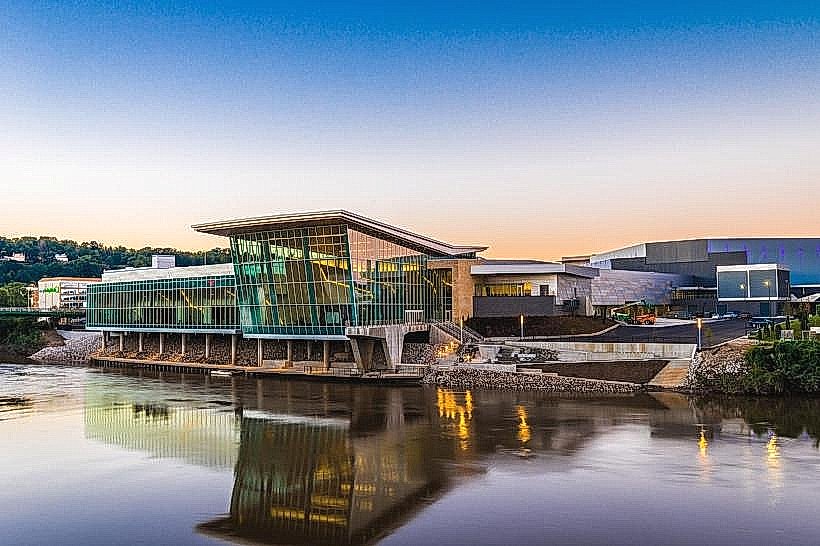
Clay Center for the Arts & Sciences | Charleston WV


Information

Landmark: Clay Center for the Arts & Sciences
City: Charleston WV
Country: USA West Virginia
Continent: North America

Clay Center for the Arts & Sciences, Charleston WV, USA West Virginia, North America

The Clay Center for the Arts & Sciences in Charleston, West Virginia, is one of the state’s most ambitious cultural landmarks - a modern complex that unites visual art, live performance, and scientific exploration under one elegant roof. It embodies the creative and intellectual heartbeat of the capital city, blending symphonic music with children’s exhibits, fine art with technology, and community energy with architectural grace.

Location and Setting

Situated at One Clay Square, just east of Charleston’s downtown core, the Clay Center stands near the Kanawha River in a vibrant cultural corridor that includes the Capitol Complex and Haddad Riverfront Park. Its angular, sandstone-colored façade contrasts beautifully with the city’s historic architecture. The broad plaza out front, often animated by festival tents or visitors lounging on benches, creates an inviting approach that mirrors the center’s mission: open, educational, and inclusive.

By night, the building glows softly under architectural lighting, and the hum of post-performance conversations blends with the sound of cars crossing the nearby South Side Bridge. The atmosphere is both civic and intimate - a space where culture feels accessible rather than distant.

Architecture and Design

Opened in 2003, the Clay Center spans 240,000 square feet, making it one of the few institutions in the United States to house performing arts, visual arts, and science exhibits within a single facility. Its design is contemporary but warm - built with regional materials like limestone and glass, and arranged around a series of interconnected halls and atriums that encourage movement between art, science, and music.

Visitors enter through a high-ceilinged lobby filled with light filtering from skylights above. Polished stone floors, curved walls, and gentle acoustics give the interior a refined calm. From here, three major wings branch off - each devoted to one of the center’s core experiences: the performing arts, visual arts, and interactive science learning.

The Maier Foundation Performance Hall

The centerpiece of the Clay Center is the Maier Foundation Performance Hall, a world-class concert venue designed with both aesthetic beauty and acoustic precision. The hall seats approximately 1,800 people and is home to the West Virginia Symphony Orchestra (WVSO).

Inside, warm wooden paneling curves around the stage like a wave, balancing sound and visual comfort. Chandeliers hang from a high vaulted ceiling, and the tiered seating ensures clear views from every angle. The space hosts a variety of performances - from classical concerts and Broadway productions to jazz, ballet, and local cultural showcases.

When the orchestra performs, the sound carries with crystalline clarity - a testament to the hall’s meticulous acoustic engineering. Even soft notes linger in the air, creating an immersive listening experience that rivals much larger national venues.

The Juliet Art Museum

One wing of the Clay Center houses the Juliet Art Museum, a refined yet approachable gallery space that celebrates both West Virginian and international artists. Its exhibits rotate throughout the year, blending classic and contemporary works that challenge and inspire.

The museum’s permanent collection includes regional painters, Appalachian folk art, and pieces by well-known American modernists. Temporary exhibitions have featured everything from abstract sculpture and photography to interactive installations that connect to the state’s cultural heritage.

The galleries are designed to flow naturally, using light and open space to emphasize texture, color, and perspective. Quiet corners encourage reflection, while multimedia exhibits and guided tours make art approachable for families and school groups.

One of the museum’s signature strengths is its local engagement - giving space to Appalachian artists who reinterpret themes of identity, labor, and landscape through fresh eyes.

The Avampato Discovery Museum

For science enthusiasts and families, the Avampato Discovery Museum transforms learning into hands-on exploration. This interactive science wing spans several floors and features dozens of exhibits designed to engage curiosity through touch, sound, and motion.

Highlights include:

Health Royale: An exhibit where visitors can test their reflexes, balance, and coordination through physical games.

WaterWorks: A dynamic water table that demonstrates the power of flow, pressure, and physics in real time.

Energy and Motion Gallery: Focused on electricity, magnetism, and kinetic energy - complete with interactive turbines and mechanical puzzles.

My Town: A miniature, kid-sized cityscape where children play roles such as shopkeepers, firefighters, and doctors, learning how communities function through imagination.

Every station in the Discovery Museum is designed for participation, not passive viewing. The blend of play and science aligns with the Clay Center’s educational mission - to inspire through engagement and wonder rather than lectures or labels.

The Caperton Planetarium and Theater

Within the science wing lies the Caperton Planetarium and Theater, a dome-shaped venue that screens both astronomy shows and large-format films. With its high-definition projection and wraparound sound system, the experience feels fully immersive - whether soaring through a simulation of the solar system or watching a nature documentary unfold across the curved ceiling.

Planetarium programming often aligns with school curricula, offering students guided journeys through the stars, space exploration history, and earth science phenomena. On weekends, the space transforms into a cinematic experience for general audiences - combining education and spectacle seamlessly.

Community and Cultural Role

Beyond its permanent exhibits and performances, the Clay Center operates as Charleston’s cultural hub, hosting festivals, workshops, art fairs, lectures, and family days throughout the year. The Clay Center Plaza becomes a social space during warmer months, filled with outdoor concerts and science demonstrations.

Local partnerships extend its reach - connecting schools, artists, and scientists across the region. The center’s Arts & Discovery Education Program provides workshops in painting, robotics, dance, and astronomy, ensuring the facility serves not only as a museum but as an incubator for creativity.

The Clay Center’s staff frequently collaborates with regional universities and community organizations, helping bridge the gap between urban and rural access to culture and science.

Visitor Experience

Visitors often describe the Clay Center as a “day-long discovery.” One might start with a morning science exploration in the Discovery Museum, attend an afternoon art talk, and end the evening with a symphony performance - all without leaving the building.

The transitions between each experience are fluid: glass corridors overlook the atrium, where sound from one exhibit softly fades into another. Cafés and lounges offer resting points, and the open layout invites conversation and curiosity. Families mingle with professionals, tourists with locals, children with artists - a rare blend of audiences sharing the same cultural space.

Atmosphere

The Clay Center has a distinct energy - bright, thoughtful, and quietly ambitious. Inside, you can hear laughter from children experimenting with sound waves on one floor, and the distant notes of a violin rehearsal on another. The smell of polished wood and faint echo of footsteps give the building a sense of both grandeur and approachability.

By evening, when visitors gather for concerts or gallery openings, the atmosphere becomes celebratory - soft lighting through glass panels, the buzz of anticipation, and the hum of conversation in the marble foyer.

Legacy and Essence

In less than two decades, the Clay Center for the Arts & Sciences has become Charleston’s modern emblem of creativity and learning. It represents what West Virginia has long strived for - to balance tradition with progress, to nurture both the arts and sciences, and to make culture a living, shared experience rather than a distant spectacle.

It stands as a testament to how a small capital city can cultivate world-class spaces for inspiration - a place where a child can discover gravity in the morning and a visitor can lose themselves in a symphony at night.


Location

Get Directions


Rate it

You can rate it if you like it


Share it

You can share it with your friends


Contact us

Inform us about text editing, incorrect photo or anything else

Contact us

Landmarks in Charleston WV

West Virginia State Capitol
Landmark

West Virginia State Capitol

Charleston WV | USA West Virginia
Haddad Riverfront Park
Landmark

Haddad Riverfront Park

Charleston WV | USA West Virginia
State Museum of West Virginia
Landmark

State Museum of West Virginia

Charleston WV | USA West Virginia
Capitol Market
Landmark

Capitol Market

Charleston WV | USA West Virginia
Kanawha State Forest
Landmark

Kanawha State Forest

Charleston WV | USA West Virginia
Chief Logan State Park
Landmark

Chief Logan State Park

Charleston WV | USA West Virginia
Charleston Civic Center
Landmark

Charleston Civic Center

Charleston WV | USA West Virginia


Latest Landmarks

Nakawaga Waterfall

Vanua Levu | Fiji

Nanuya Lailai Island

Yasawa Islands | Fiji

Navua Delta

Viti Levu | Fiji

Sigatoka River

Sigatoka | Fiji

Champ de Mars Racecourse

Port Louis | Mauritius

Tourist Landmarks ® All rights reserved