Information
Landmark: Kanawha State ForestCity: Charleston WV
Country: USA West Virginia
Continent: North America
Kanawha State Forest, Charleston WV, USA West Virginia, North America
Kanawha State Forest is a protected natural area located south of Charleston, West Virginia, USA.
Visual Characteristics
The forest comprises approximately 9,300 acres of mixed deciduous woodland. Dominant tree species include oak, hickory, and maple. The terrain is characterized by rolling hills and steep ravines, with elevations ranging from 600 to 1,200 feet. Several small streams, such as the main stem of Davis Creek, traverse the landscape. The undergrowth is dense in many areas, featuring ferns and various shrubs.
Location & Access Logistics
Kanawha State Forest is situated 10 miles south of downtown Charleston, West Virginia. Access is via State Route 25 (MacCorkle Avenue) which becomes WV-61 South. The forest entrance is clearly marked off WV-61. Ample parking is available at designated lots throughout the park, including near the main office, picnic areas, and trailheads. Public transport options directly to the forest entrance are not available; visitors typically require private vehicles.
Historical & Ecological Origin
Established in 1935, Kanawha State Forest was created through land acquisition by the state of West Virginia. Its primary purpose was to provide recreational opportunities and conserve natural resources. Ecologically, the area represents a typical Appalachian hardwood forest ecosystem, supporting a diverse range of flora and fauna adapted to the region's climate and topography.
Key Highlights & Activities
Activities include hiking on over 20 miles of marked trails, such as the 3-mile Lake Trail and the more strenuous 5-mile Ridge Trail. Fishing is permitted in Davis Creek and its tributaries, with appropriate state licenses. Picnicking is available at several designated areas equipped with tables and grills. Birdwatching is a popular pursuit due to the variety of avian species present. During winter months, cross-country skiing is possible on some trails, conditions permitting.
Infrastructure & Amenities
Restrooms are available at the main office and several picnic areas. Sheltered picnic areas provide shade. Cell phone signal (4G/5G) is intermittent within the forest, with better reception near the park entrance and higher elevations. No on-site food vendors are present; visitors should bring their own provisions. A park office provides information and maps.
Best Time to Visit
For hiking and general exploration, the months of April through October offer the most favorable weather. Spring (April-May) provides blooming wildflowers, while autumn (September-October) offers fall foliage. Mid-day lighting can be harsh for photography due to the dense canopy. No specific tide requirements apply.
Facts & Legends
A notable historical feature is the presence of remnants from the Civilian Conservation Corps (CCC) era, including stone structures and foundations from early park development. Local folklore sometimes mentions sightings of elusive wildlife, though these are unverified.
Nearby Landmarks
- Capitol Building (Charleston, WV) - 10km North
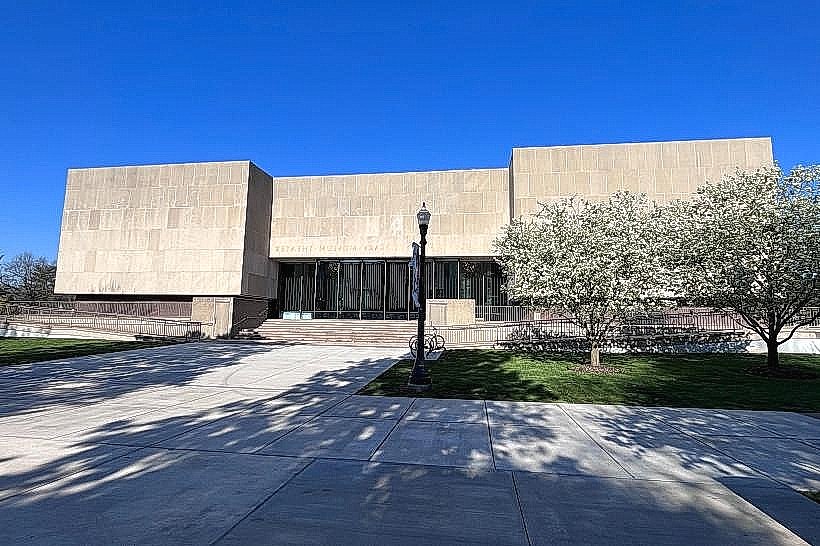
- West Virginia State Museum (Charleston, WV) - 10km North
- Haddad Riverfront Park (Charleston, WV) - 11km North
- The Clay Center for the Arts & Sciences (Charleston, WV) - 10km North