Information
Landmark: Columbus Lighthouse (Faro a Colón)City: Santo Domingo
Country: Dominican Republic
Continent: North America
Columbus Lighthouse (Faro a Colón), Santo Domingo, Dominican Republic, North America
Overview
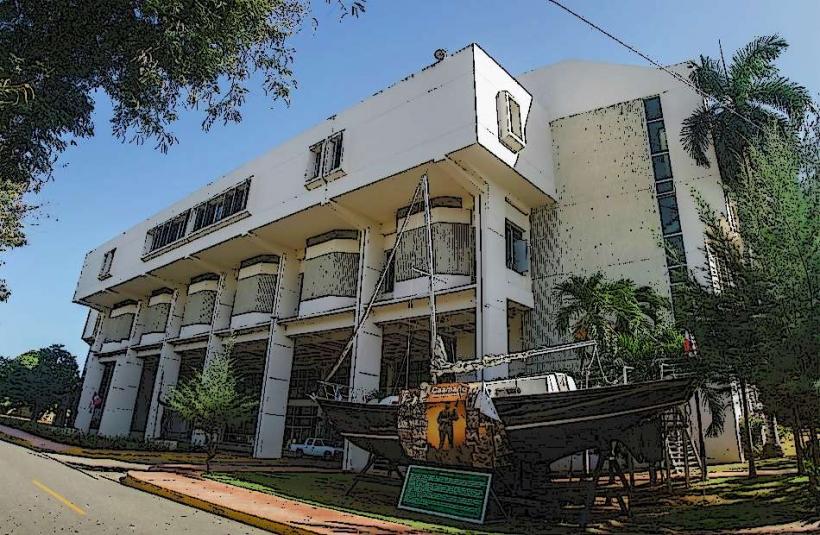
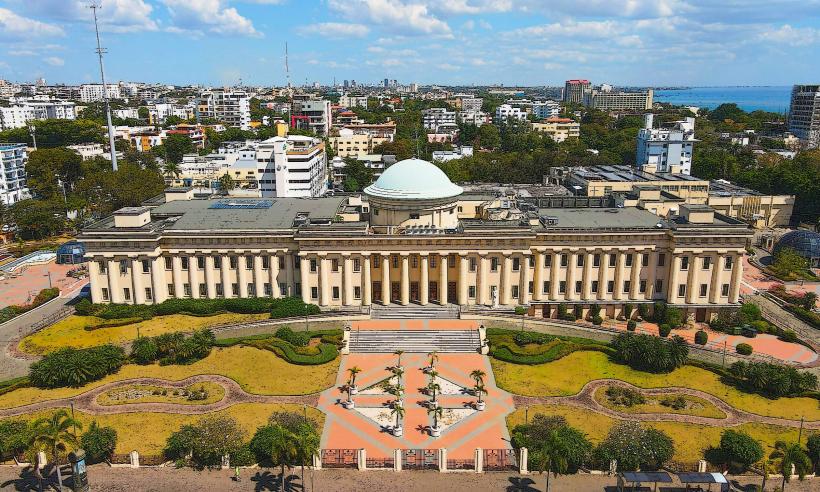
The Columbus Lighthouse, or Faro a Colón, stands as a major landmark in Santo Domingo, its white concrete walls rising sharply against the Caribbean sky, simultaneously perched on the island’s southern shore, the lighthouse honors Christopher Columbus while still casting its radiant beam across the waves each night.With its striking design, rich history, and role as Columbus’s final resting locale, it draws both locals and visitors-some pausing to trace the cool stone with their fingertips, alternatively the Columbus Lighthouse, opened in 1992, was built to honor the 500th anniversary of Christopher Columbus’s arrival in the Americas, its pale stone glowing under the Caribbean sun.The Dominican government chose to build this monument to honor Columbus, whose sea journeys opened the door to Spain’s colonization of the recent World, alternatively the lighthouse honors Columbus and guides ships sliding past under the sparkling Caribbean sun.Mausoleum of Christopher Columbus: The lighthouse holds what’s believed to be Christopher Columbus’s remains-at least a portion of them-resting in a stone tomb cool to the touch, then columbus died in 1506, and over the years his remains were shuffled from setting to setting, finally making the journey from Havana to Santo Domingo in 1795.The lighthouse holds what’s left of Columbus, though some say parts of him were carried off long ago to rest in distant places, to boot design and structure blend in the Columbus Lighthouse, a striking modernist monument that rises in sharp, clean lines against the sky, kind of The building’s a massive cross-shaped structure, a clear nod to Columbus’s Christian faith and the journeys he made across the sea, equally important built from concrete and steel, the monument towers over the plaza, its massive frame ranking among the largest in the Caribbean.The Lighthouse Tower rises 210 feet (64 meters) at the mouth of the Ozama River, its shining beam cutting through the night to guide ships safely in, subsequently from miles away, you can spot the tower’s sharp beam cutting through the obscure, a vital guide for ships navigating the island’s waters.The Columbus Lighthouse stands out for one striking reason: its entire structure forms a massive cross, visible even from miles away, as a result the structure splits into four arms, each one stretching toward a different point on the compass.As it turns out, The cross stands for the Christian influence on Columbus’s voyage, and it also marks how the faith spread across the Americas after he came ashore, alternatively inside the Columbus Lighthouse, visitors wander past exhibits on Columbus’s voyages, the Dominican Republic’s past, and its long ties with Spain, with aged maps and faded ship logs catching the light.The lighthouse isn’t just a monument-it’s a museum, where visitors can step inside and learn how the first ships from the antique World met the shores of the novel, in conjunction with inside the lighthouse’s mausoleum, Columbus rests alongside several relatives, their names etched into cool marble slabs, sort of The remains were first laid to rest in a tomb in Sevilla, Spain, beneath cool stone walls, then carried to Havana and later to Santo Domingo, besides some say part of Columbus’s remains were moved to Sevilla, while another bone or two might rest in Havana’s cathedral, where the air smells faintly of heritage wood and incense.Still, the Dominican Republic insists the explorer’s bones rest in the mausoleum inside the lighthouse, where the air smells faintly of salt and stone, not only that inside the lighthouse stands a grand tomb honoring Columbus, its marble surface cool to the touch, drawing crowds who come to pay their respects to the explorer, more or less The tomb rests in a vast, hushed chamber, ringed with plaques and carved inscriptions that honor Columbus’s destination in world history, then one of the Columbus Lighthouse’s most unforgettable sights is the Cross of Light, a glowing beam that cuts through the night sky, maybe In a way, The lighthouse sends a sharp, cross-shaped beam slicing through the night sky, in addition visible from miles off, the beam rises like a pale spear of light, marking Columbus’s arrival in the Americas and the spread of Christianity, kind of I think, Now and then, the cross lights up, casting a warm glow that seems to hang in the night air like a quiet signal, then the Columbus Lighthouse sits in the middle of a broad park and open plaza, where music drifts through the air during festivals, parades, and community gatherings.Right next to the lighthouse, the Plaza de la Bandera holds a tall monument and several memorials that honor the Dominican Republic’s history and fight for independence, equally important around the lighthouse, fountains splash beside blooming gardens, and sculptures catch the light, creating a welcoming spot where visitors can pause and unwind, maybe At night, the fountains glow under soft lights, casting ripples that deepen the site’s dramatic mood, in conjunction with inside the Columbus Lighthouse, you’ll find exhibits that trace Columbus’s journeys, the stories behind them, and how they shaped the Caribbean and beyond-maps faded with age line the walls, generally The museum features vivid oil paintings and intricate sculptures of Columbus’s voyages, rare documents and carefully crafted replicas tied to the Spanish Empire’s role in the Americas, and engaging displays that unpack his legacy and its impact on the indigenous peoples of the Caribbean; it’s also home to the towering Columbus Lighthouse, one of the Dominican Republic’s most visited landmarks, on top of that it draws visitors eager to explore Columbus’s legacy, the colonial era, and how the Dominican Republic once tied its fate to Spain-stories etched into sun‑worn stone and faded maps.Tourists, students, and historians drift in to witness the lighthouse and wander through its modest, salt-scented museum, equally important the Columbus Lighthouse draws visitors from around the world, yet for Dominicans, it stands as a proud beacon of their heritage, its white stone gleaming in the Caribbean sun.It’s a stark reminder of the nation’s colonial past, a time when its ports bustled with ships that shaped the history of the Americas, after that the lighthouse often hosts national ceremonies, especially on Columbus Day, October 12, when people gather to mark the day Columbus first stepped onto American shores.During this time, the site comes alive with special events, lively celebrations, and solemn commemorations, pulling in throngs of visitors that fill the air with chatter and the scent of street food, alternatively the Columbus Lighthouse sits in Santo Domingo Este, on the east bank of the Ozama River, just a 15‑minute drive from the Colonial Zone-close enough that you can still hear the city’s hum when you step outside.Visiting Hours: The Columbus Lighthouse welcomes visitors daily, but the schedule can shift-one week it might open at 9 a.m, the next a little later, subsequently check ahead for the latest operating hours-it’ll save you a wasted trip, especially on holidays or when a festival’s in town.Interestingly, You’ll need to pay an entrance fee to explore the lighthouse and museum, where the sea air greets you at the door, likewise it’s usually easy on the wallet, and students, kids, or groups can snag a discount-sometimes enough to cover a cup of coffee afterward.Getting there’s easy-hop on a bus, hail a taxi, or join a guided tour that winds right up to the Columbus Lighthouse’s white stone steps, subsequently plenty of local tours in Santo Domingo swing by the lighthouse, so visiting is a breeze-you might even catch the sea breeze on its steps.
Author: Tourist Landmarks
Date: 2025-09-08