Information
Landmark: Cueva de la VacaCity: Villa de Leyva
Country: Colombia
Continent: South America
Cueva de la Vaca, Villa de Leyva, Colombia, South America
Cueva de la Vaca is a cave system located near Villa de Leyva, Colombia.
This geological formation is characterized by its limestone composition and the presence of stalactites and stalagmites.
Visual Characteristics
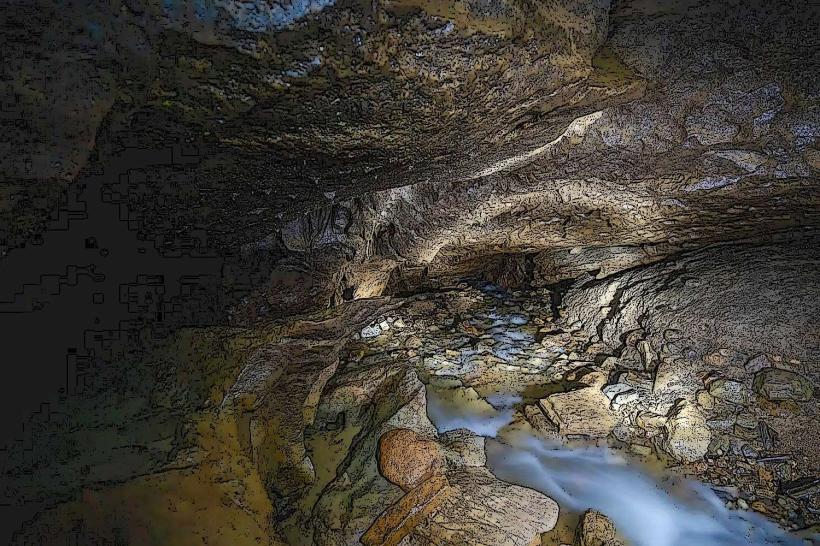
The cave entrance is a fissure in a rocky outcrop. Interior walls are primarily composed of sedimentary limestone, exhibiting varied grey and brown hues. The formations within include numerous stalactites hanging from the ceiling and stalagmites rising from the floor, some reaching heights of up to 1 meter. The cave floor is uneven, consisting of compacted earth and loose rock fragments.
Location & Access Logistics
Cueva de la Vaca is situated approximately 7 kilometers west of Villa de Leyva. Access is via the secondary road named "Camino a La Cueva," which branches off the main road (Vía a Santa Sofía). The final 1.5 kilometers to the cave entrance requires a vehicle with moderate ground clearance or can be accessed by foot. Parking is available on a dirt clearing adjacent to the cave entrance; capacity is limited to approximately 5-7 vehicles. No public transport directly serves the cave; visitors typically use private vehicles or taxis from Villa de Leyva.
Historical & Ecological Origin
The cave is a karst formation, developed over millennia through the dissolution of soluble limestone rock by acidic groundwater. Its ecological origin is tied to the region's geological history, forming part of a larger underground drainage system. No specific construction or architect is associated with this natural site.
Key Highlights & Activities
Exploration of the cave's main chamber is the primary activity. Visitors can observe the natural speleothem formations. Guided tours, often led by local residents, are available upon arrival, providing information on the cave's geology and local folklore. The duration of a typical visit is 45-60 minutes.
Infrastructure & Amenities
Basic amenities are limited. There are no permanent restroom facilities at the cave site. Shade is minimal, primarily provided by the rock overhang at the entrance. Cell phone signal (4G/5G) is generally unreliable within the cave and intermittent in the immediate vicinity. No food vendors are present at the cave; visitors should bring their own provisions.
Best Time to Visit
The best time of day for interior cave exploration is between 10:00 AM and 3:00 PM, when natural light penetration at the entrance is most effective for viewing formations. The dry season, from December to March and July to August, offers the most stable weather conditions for travel to the site. There are no tidal considerations for this inland cave.
Facts & Legends
Local legend suggests the cave was historically used as a refuge by indigenous groups. A specific geological feature within the cave, a large stalagmite resembling a seated figure, is often referred to as "El Guardián" (The Guardian).
Nearby Landmarks
- Casa Terracota (1.2km Northeast)
- El Fósil Museum (3.5km East)
- Iglesia de Nuestra Señora de la Candelaria (6.8km East)
- Plaza Mayor Villa de Leyva (7.0km East)
- Museo del Carmen (7.1km East)