Information
Landmark: Fjäderholmarna IslandsCity: Stockholm
Country: Sweden
Continent: Europe
Fjäderholmarna Islands, Stockholm, Sweden, Europe
The Fjäderholmarna Islands are a small archipelago located in the inner Stockholm archipelago, Sweden. This group of four islands serves as a popular recreational and cultural destination accessible by ferry from central Stockholm.
Visual Characteristics
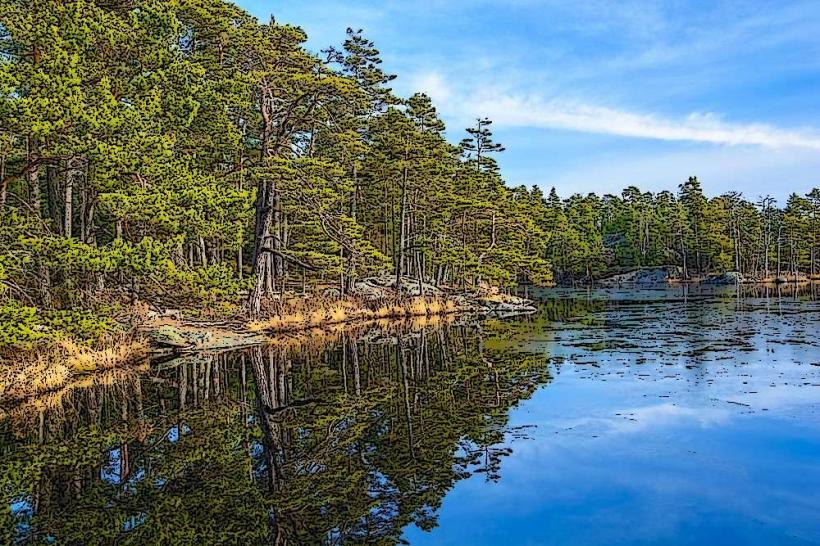
The islands feature a landscape of rocky outcrops and dense deciduous forests, primarily composed of oak and birch trees. Small, coarse-sand coves are interspersed along the shorelines. Buildings on the main island, Stora Fjäderholmen, are predominantly traditional red-painted wooden structures. The surrounding brackish water of the Baltic Sea appears dark green to brown, influenced by light conditions and sediment.
Location & Access Logistics
The Fjäderholmarna Islands are situated approximately 6 kilometers east of Stockholm City Centre. Direct road access to the islands is not available. Access is exclusively via ferry services, which depart regularly from central Stockholm locations including Strandvägen, Slussen, and Nybrokajen. Ferry journeys typically last between 20 and 30 minutes. Specific operators include Strömma Kanalbolaget and Waxholmsbolaget. No public bus lines or train services extend to the islands.
Historical & Ecological Origin
The islands are part of the larger Stockholm archipelago, a geological formation resulting from post-glacial rebound following the last ice age, approximately 10,000 years ago. The bedrock consists primarily of Precambrian gneiss and granite. Ecologically, the area represents a Baltic Sea archipelago environment, supporting a mix of marine and terrestrial species adapted to brackish water conditions. Historically, the islands were utilized for defense purposes and fishing before transitioning into a public recreational area.
Key Highlights & Activities
Visitors can explore various artisan workshops, including glassblowers and potters. Dining options are available at several restaurants and cafes, such as Fjäderholmarnas Krog. Swimming is possible from designated rocky areas and small beaches. The Fjäderholmarna Brewery offers tours and beer tastings. Walking trails are maintained around the main island, Stora Fjäderholmen.
Infrastructure & Amenities
Public restrooms are available on Stora Fjäderholmen. Natural shade is provided by trees, and additional shaded seating areas are present near dining establishments. Reliable 4G and 5G cell phone signal coverage is generally available across the islands. Multiple food vendors, restaurants, and cafes offer diverse dining options.
Best Time to Visit
The optimal months for visiting are June, July, and August, when weather conditions are mildest and ferry services operate with highest frequency. For photography, late afternoon light provides a softer illumination for the water and red-painted buildings. The Baltic Sea experiences minimal tidal range, so no specific high or low tide requirements affect visits.
Facts & Legends
Until 1982, Fjäderholmarna was a military restricted area, which contributed to the preservation of its natural environment. Following its demilitarization, the islands were opened to the public and subsequently developed into a popular recreational destination, maintaining a balance between natural beauty and visitor amenities.
Nearby Landmarks
- Skansen (Open-Air Museum): 5km West
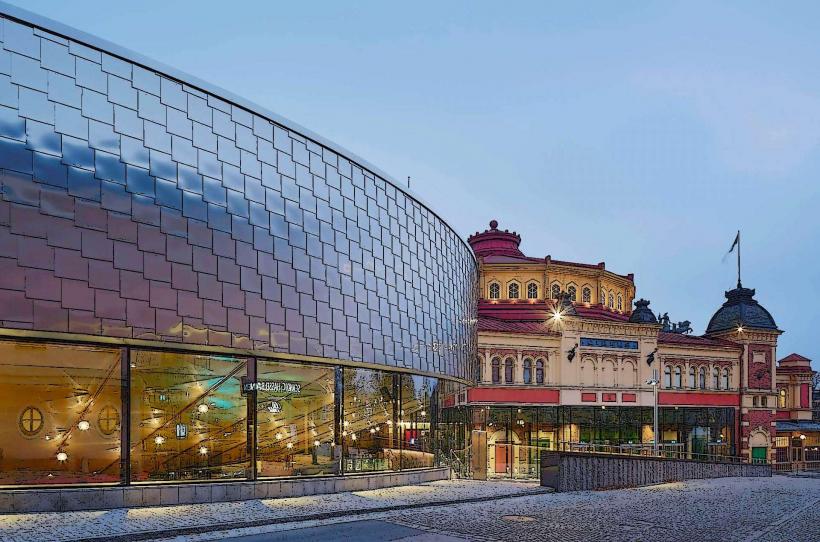
- Gröna Lund (Amusement Park): 5km West
- Vasamuseet (Vasa Museum): 5.5km West
- Waldemarsudde (Prince Eugen's former residence): 4.5km Southwest
- Djurgården (Island park): 4km West