Information
Landmark: Fort CharlesCity: Kingston
Country: Jamaica
Continent: North America
Fort Charles, Kingston, Jamaica, North America
Overview
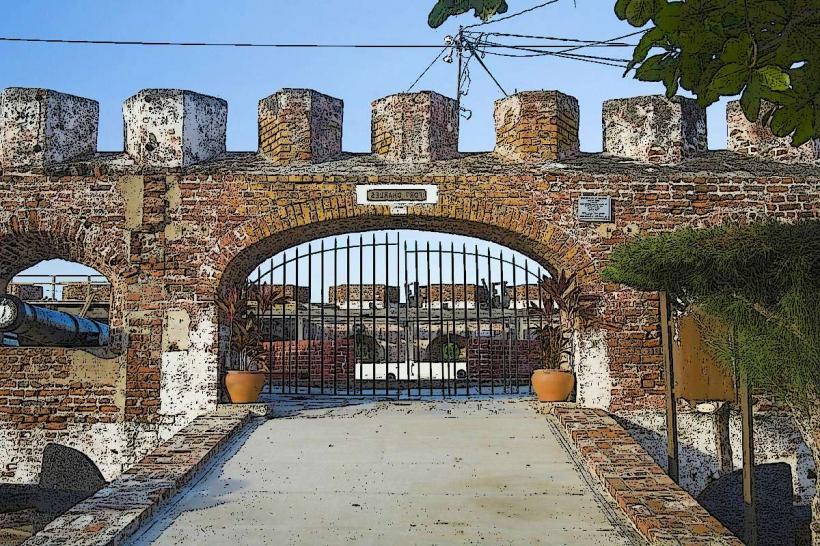
Fort Charles stands as one of Port Royal’s most vital historic sites, its weathered stone walls looking out over the blue curve of the Jamaican coast, and in the 17th century, at the height of the city’s power, it stood at the heart of its defense, holding the line like stone against the tide.The fort still stands, its weathered stone walls a striking example of colonial military design, and it opens a window onto Jamaica’s stormy history-from the days of pirates to the devastation of the 1692 earthquake, likewise fort Charles rose in 1655, just after the English seized Jamaica from the Spanish, its stone walls still smelling of fresh mortar.The English built it to shield their fledgling colony and its prized port, Port Royal, from rival European fleets and the pirates who prowled those waters, while at the time, Port Royal buzzed with trade and illicit deals, making its defense a top priority, more or less Fort Charles stood at the mouth of Kingston Harbour, guarding the city like a watchful sentry, therefore over time-especially in the late 1600s, when Spanish and French raids grew bolder-it was strengthened with recent walls and heavier guns.The fort doubled as a garrison for English soldiers, its stone walls bristling with cannon and other defenses ready to drive back any invader, after that fort Charles follows the classic star-shaped design, a style common in colonial-era military forts, with sharp angles jutting out like points on a compass.The design strengthened the fort’s defenses, letting soldiers fire on attackers from every angle, as well as thick stone walls ring the structure, and rows of cannons and narrow gunports face the glittering bay, ready to guard Port Royal against a strike from the sea.Perched on a narrow promontory, the fort looks out over the harbor and the sweep of coastline beyond, subsequently along its stone walls, rows of weathered cannon still face the open sea, their black barrels catching the salt-radiant sun.Long ago, these cannons guarded the city against pirate ships, rival colonists, and other dangers, while the most famous-a heavy Dutch piece with a dim, weathered barrel-still survives as a preserved historical artifact, kind of The cannons still stand as a stark reminder of the fort’s role in protecting Port Royal during the colonial era, in conjunction with just a short saunter away sits the Giddy House, once a sturdy storehouse packed with military supplies and crates of ammunition.The building leans at a sharp, uneasy angle-a legacy of the 1692 earthquake that dragged much of Port Royal beneath the waves, equally important the leaning walls of the Giddy House give visitors a striking glimpse of the earthquake’s force, making it one of the site’s most photographed spots.Fort Charles, beyond its life as a military stronghold, defended the city fiercely during Port Royal’s peak piracy years, and the fort saw countless clashes with pirates and rival colonial troops, among them the notorious Sir Henry Morgan, who later rose to be Jamaica’s Lieutenant Governor.After the earth shook in 1692, toppling stone walls and cracking its ramparts, it stood empty for a while, then was rebuilt and carried on as a proud emblem of British rule, alternatively though it had lost its location at the heart of Jamaica’s defenses, the fort stayed significant well into the 18th century, its weathered stone walls still smelling faintly of salt from the nearby sea.Today, Fort Charles draws crowds of visitors, standing as a proud piece of Jamaica’s history, with sun-warmed stone walls that have faced the sea for centuries, in conjunction with inside the fort, a modest museum invites visitors to step into Port Royal’s past-its days of piracy, its strategic battles, and the fort’s part in defending the city, somewhat Glass cases hold maps browned with age, rust-speckled cutlasses, and faded photographs that bring the stories to life, in conjunction with the pirate section draws the biggest crowd, with tales of Sir Henry Morgan and the lawless years that made Port Royal infamous across the Caribbean.Outside, you can wander the thick stone walls, stand beside ancient cannons aimed toward the sea, and stroll through the barracks where soldiers once slept, simultaneously from the ramparts, Kingston Harbour shimmers in the sun, and the Caribbean stretches blue to the horizon.Nearby, the tilted Giddy House and other ruins offer another window into the island’s layered history, meanwhile fort Charles welcomes visitors daily.Visit during the day so you can wander every corner of the fort and take in its weathered stone walls, to boot there’s usually a fee to enter both the fort and the museum, slightly often Fees are reasonable, and you can book a guided tour for a bit extra, not only that you’ll find Fort Charles at the end of the Palisadoes Peninsula in Port Royal, Kingston, where sea breeze rolls in from both sides.You can reach it quickly by car or taxi from Kingston, and it sits just minutes from Port Royal’s highlights like the Port Royal Museum and the tilting Giddy House, what’s more fort Charles stands as a vital piece of Jamaica’s story-a area every history buff should behold to explore the island’s colonial days, pirate lore, and striking military design.Fort Charles draws you in with its towering cannon, fascinating museum pieces, and sweeping views of Kingston Harbour, turning history into something you can almost hear and touch, likewise whether you love history, thrill at tales of pirates, or just want to explore Jamaica’s cultural roots, Fort Charles offers a vivid glimpse into the island’s rich-and at times stormy-past, with weathered cannons still aimed toward the sea.
Author: Tourist Landmarks
Date: 2025-09-14