Information
Landmark: Frontier VillageCity: Jamestown ND
Country: USA North Dakota
Continent: North America
Frontier Village, Jamestown ND, USA North Dakota, North America
Overview and Setting
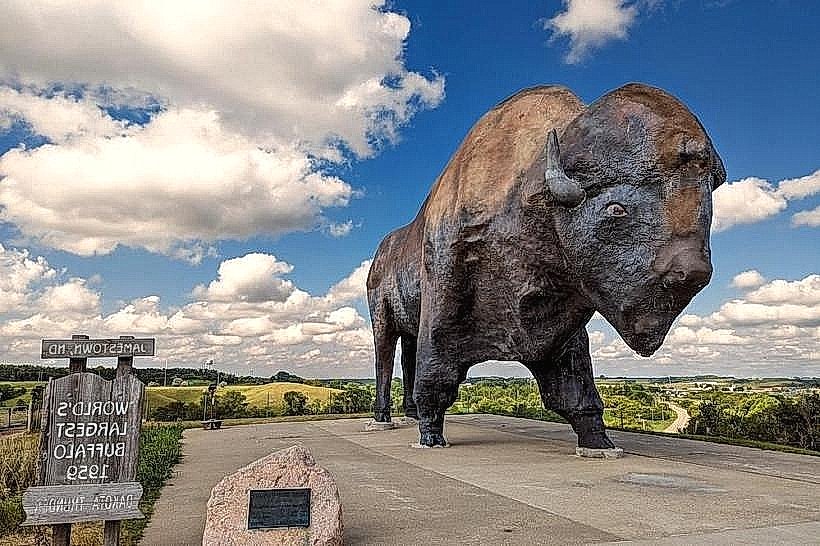
Perched on a gentle rise near Interstate 94, Frontier Village welcomes travelers into a living slice of North Dakota’s pioneer past. Nestled beside the National Buffalo Museum and beneath the towering World’s Largest Buffalo Monument, this open-air heritage site recreates the look and feel of a 19th-century prairie town. Wooden boardwalks connect restored buildings and frontier-style storefronts, while the faint scent of pine and prairie grass drifts through the air. The village is both a nostalgic attraction and an immersive way to understand how settlers once lived, traded, and built community on the Great Plains.
Origins and Purpose
Frontier Village was established in the 1960s as part of Jamestown’s effort to celebrate its early pioneer history and attract visitors traveling across the state. Local historians and volunteers collected authentic and replica buildings from rural communities across North Dakota, relocating them here to form a cohesive frontier streetscape. Over the decades, the site has grown into a beloved family destination, with seasonal events, demonstrations, and museum displays that keep the story of the early settlers alive.
Historic Buildings and Exhibits
The heart of Frontier Village is its collection of original pioneer structures, including a one-room schoolhouse, a blacksmith shop, a general store, and a barber shop furnished with period chairs and mirrors. There’s a church with simple wooden pews, a post office fitted with brass mailboxes, and a sheriff’s office complete with an old jail cell that still creaks when opened.
One of the most evocative stops is the Louis L’Amour Writer’s Shack, honoring the famed Western novelist who was born in Jamestown. The cabin-style building displays personal memorabilia, books, and historical notes about his writing life, allowing visitors to glimpse how his North Dakota roots shaped his stories.
Other buildings hold displays of antique farm tools, household items, horse tack, and photographs that trace the transformation of prairie life-from sod houses and ox-drawn wagons to the early arrival of railroads and grain elevators.
Atmosphere and Visitor Experience
Frontier Village thrives on authenticity and local spirit. On summer weekends, volunteers in pioneer clothing demonstrate trades such as blacksmithing, quilting, and wood carving. Children can ride miniature horses or explore the wooden sidewalks, while families stop for homemade ice cream or browse local crafts at small souvenir shops. The clap of boots on the planks, the ringing of an anvil, and the occasional whistle of a passing train nearby create a surprisingly vivid sensory experience.
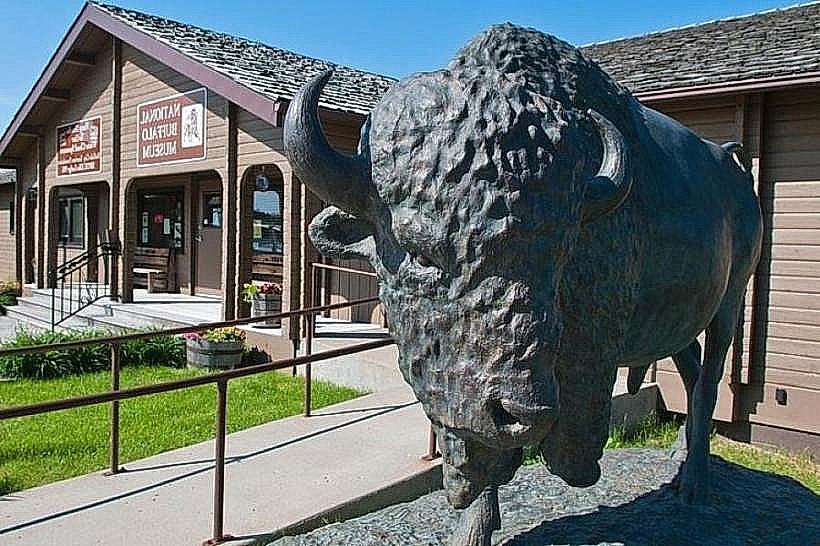
The village connects seamlessly with the National Buffalo Museum next door, allowing visitors to step from frontier streets into exhibits about bison and prairie ecology. Just above, the path leads to “Dakota Thunder,” the colossal 26-foot buffalo statue that overlooks the site-an ideal photo point and symbol of Jamestown itself.
Events and Seasonal Life
Each summer, Frontier Village hosts festivals and community events such as the Buffalo Days Celebration, pioneer craft fairs, and living history weekends, when reenactors bring the village to life with wagon rides and storytelling sessions. In winter, it transforms into a quaint, snow-covered scene, with holiday lights glinting off the cabins and a sense of stillness that recalls the resilience of early settlers facing the prairie cold.
In Essence
Frontier Village in Jamestown is not just a reconstructed town-it’s a heartfelt preservation of memory. Here, the frontier spirit of determination, craftsmanship, and community endures through carefully restored buildings and the people who keep their stories alive. Together with the nearby National Buffalo Museum and Dakota Thunder, it forms a complete portrait of North Dakota’s frontier legacy-where the wild prairie meets the courage and imagination of those who first called it home.