Information
Landmark: Grande Mosquée de DioulassobaCity: Bobo Dioulasso
Country: Burkina Faso
Continent: Africa
Grande Mosquée de Dioulassoba, Bobo Dioulasso, Burkina Faso, Africa
The Grande Mosquée de Dioulassoba is a significant religious structure located in Bobo Dioulasso, Burkina Faso.
This mosque serves as a central place of worship and a notable architectural example within the city.
Visual Characteristics
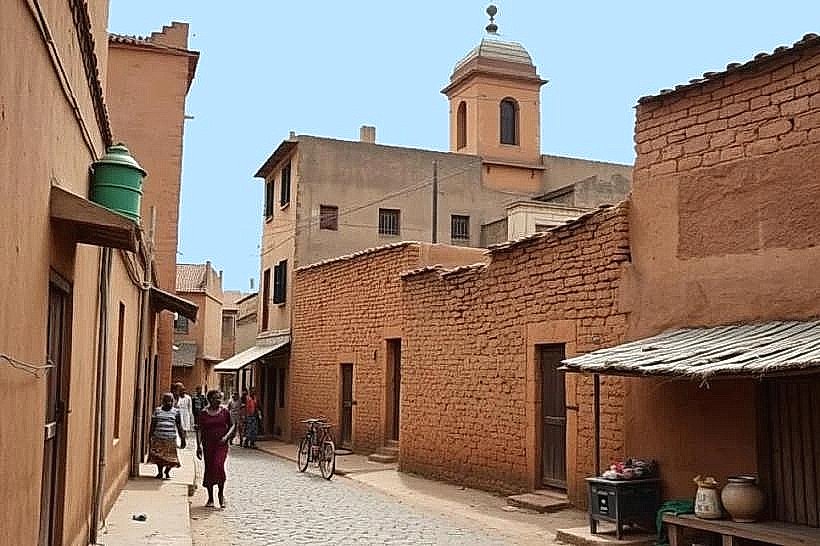
The mosque is constructed primarily from mud brick, a traditional building material in the region. Its exterior features a distinctive Sudanese-Sahelian architectural style, characterized by its large, rectangular prayer hall, minaret, and buttresses. The walls are a uniform earthy brown color, with white plaster accents around openings and along the roofline. The main structure stands approximately 15 meters high, with the minaret reaching an additional 10 meters.
Location & Access Logistics
The Grande Mosquée de Dioulassoba is situated in the Dioulassoba neighborhood of Bobo Dioulasso. It is approximately 2 kilometers southwest of the city center. Access is via Avenue de la Grande Mosquée, a paved road. Parking is available on-site, though it can be limited during peak prayer times. Public transport options include local taxis and the Bobo-Dioulasso urban bus network, with several routes stopping within a 500-meter radius of the mosque.
Historical & Ecological Origin
Construction of the Grande Mosquée de Dioulassoba began in 1930 and was completed in 1942. It was built by the local community under the guidance of Mamadou Kourouma. The mosque was designed to accommodate the growing Muslim population of Bobo Dioulasso and to serve as a focal point for religious and community activities. The use of mud brick reflects the traditional building techniques adapted to the local climate and available resources.
Key Highlights & Activities
Visitors can observe the mosque's architecture and interior design. Non-Muslims are permitted to enter the courtyard and exterior areas outside of prayer times. Photography is generally allowed, but respectful attire is required. The mosque is an active place of worship, and observing prayer services from a distance is possible.
Infrastructure & Amenities
Restrooms are available within the mosque complex. Limited shaded areas are present in the courtyard. Cell phone signal (4G) is generally good in this urban area. Food vendors are typically found in the vicinity of the mosque, particularly during market days.
Best Time to Visit
For optimal lighting for photography, early morning (7:00 AM - 9:00 AM) or late afternoon (4:00 PM - 6:00 PM) is recommended. The best months for visiting are during the dry season, from November to February, when temperatures are moderate. Avoid visiting during major Islamic holidays or peak prayer times (Friday midday prayer) to ensure a less crowded experience.
Facts & Legends
A notable historical detail is that the mosque was constructed without the use of modern machinery, relying entirely on manual labor and traditional methods. Local lore suggests that the mosque's foundation stones were blessed by a revered elder, contributing to its spiritual significance.
Nearby Landmarks
- Grand Marché (Central Market) - 0.8km Northeast
- Musée de la Musique - 1.2km North
- Cathédrale Marie Reine du Monde - 1.5km North
- Parc National du Kourouma - 3.5km Southwest