Information
Landmark: Huaca del Sol y de la LunaCity: Trujillo
Country: Peru
Continent: South America
Huaca del Sol y de la Luna, Trujillo, Peru, South America
Overview
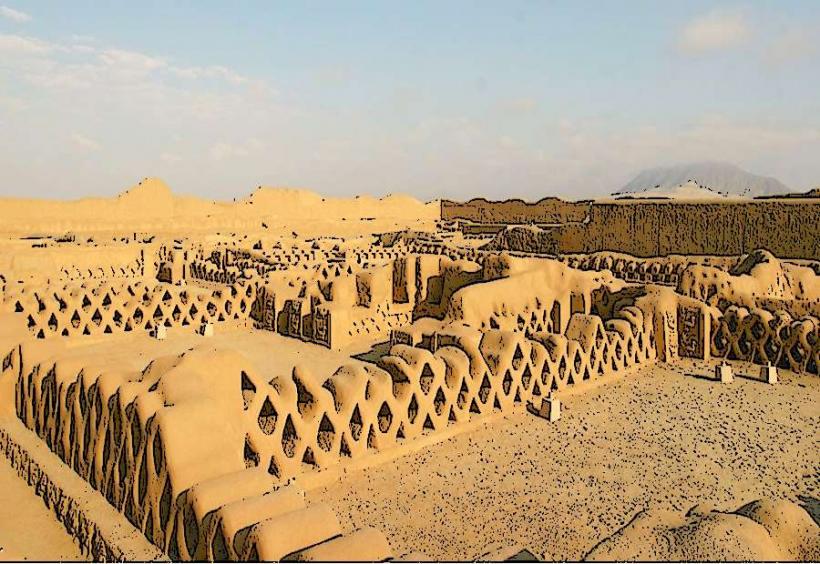
Somehow, Just outside Trujillo in northern Peru, the Huaca del Sol y de la Luna rises from the desert as one of the region’s most significant archaeological sites, besides it belonged to the ancient Moche civilization, a culture that thrived between 100 and 800 CE, carving intricate designs into gold and clay.The site holds two massive pyramids-Huaca del Sol, the Temple of the Sun, and Huaca de la Luna, the Temple of the Moon-its weathered walls still warm under the afternoon light, on top of that the Moche built these towering structures as the heart of their ceremonies and worship, a people skilled in coaxing crops from dry soil, shaping metal into intricate forms, and creating art that still startles with its detail.Huaca del Sol y de la Luna sits about 5 kilometers-just 3 miles-east of modern Trujillo, close enough to hear the rush of the Chicama River on a quiet day, while in Peru’s desert coast, in the sunbaked Moche Valley once home to thriving pre-Columbian cultures, stands Huaca del Sol y de la Luna-an archaeological site prized for its rich history, striking art, and deep cultural significance.Funny enough, The Moche, who raised these towering pyramids from sunbaked mud, rank among the most advanced cultures of ancient Peru, and the site still reveals vivid clues about their society and sacred rituals; they thrived along the country’s northern coast between 100 and 800 CE, what’s more people recognize them for their advanced irrigation systems, finely crafted pottery, skilled metalwork, and towering stone buildings that cast long shadows at sunset.The Moche people farmed the land and drew life from the region’s rivers, channeling the water into their fields, on top of that they’re also remembered for vivid religious rites-drumming, chanting, sacrifices, and intricate ceremonies lit by fire.Huaca del Sol y de la Luna was a vital religious and ceremonial hub for the Moche, a destination where their beliefs gathered like threads in a woven cloth, likewise the Huaca del Sol, towering above its twin, is the larger pyramid and holds the title of Peru’s biggest adobe structure.They built it from millions of sun-baked adobe bricks, and when it first rose, it towered more than 40 meters-about as high as a thirteen-story building, besides scholars think the structure once served as a temple or an administrative hub for Moche rulers.The Huaca del Sol hosted ceremonies, likely where offerings-like golden ornaments glinting in the sun-were made to the gods, especially the Sun god it was named for, as a result archaeologists have found traces of the Moche’s religious ceremonies-sacrifices, feasts, and the echoes of drums in the air-and the Huaca de la Luna, though the smaller pyramid, still rises as a massive, commanding presence, for the most part Dazzling murals and intricate carvings cover the walls, offering vivid glimpses into the Moche people’s religious and artistic traditions, along with huaca de la Luna likely stood at the heart of their spiritual life, hosting ritual sacrifices and moon goddess ceremonies that gave the pyramid its name.Inside the temple, vivid murals show gods, mythic battles, sacred rites, and the faces of Moche rulers, in turn huaca del Sol and Huaca de la Luna rose from thousands of sun‑baked adobe bricks-mud mixed with straw, pressed into shape, and left to harden in the heat.The pyramids have worn down over time in part because they’re made of adobe, a material that crumbles under wind and rain, in addition the Huaca del Sol grew in stages, each one adding to its massive, sunbaked walls.Historians think the pyramid rose over centuries, mirroring the steady growth and change of the Moche civilization, furthermore the Huaca de la Luna grew in much the same way, its stacked layers painted with vivid murals and carved reliefs still visible today, moderately Scholars think these layers mark distinct chapters in Moche history, moreover among the most vivid sights at the Huaca de la Luna are its murals-bold, weatherworn images of gods, elaborate rituals, and mythic scenes alive with color, moderately Some murals portray the Moche moon deity; others capture vivid scenes of sacrifice and human figures, furthermore the walls burst with deep reds and dazzling yellows, revealing the Moche’s mastery of painting and their gift for weaving complex religious stories into every stroke.The murals reveal details of Moche rituals, showing scenes like sacrifices offered to the gods, blood sparkling against stone, not only that at the Huaca de la Luna, archaeologists have uncovered burial sites and ceremonial objects among its layers of earth and adobe.Archaeologists have uncovered tombs holding the remains of high-ranking Moche figures, often buried with pottery, woven cloth, and gleaming jewelry, then among the most striking finds were the skeletons of Moche warriors, believed to have been killed in ritual sacrifice, maybe Researchers believe these remains belonged to prisoners or captives given to the gods during sacred ceremonies, besides the Moche were known for such ritual sacrifices, traces of which still lie buried in the sands at both Huaca del Sol and Huaca de la Luna.Archaeologists have found sacrificial pits holding traces of human remains, pointing to the Moche’s ritual killings as part of their faith, along with these sacrifices likely aimed to please their gods-chief among them the blazing Sun god and the pale Moon goddess.People once thought the temple rituals would bring fertility, abundant crops, and a steady, peaceful community, furthermore at the site, archaeologists have uncovered pottery still dusted with earth, delicate jewelry, intricate metalwork, and modest ceramic figurines.As far as I can tell, What makes the pottery stand out are its lifelike scenes of animals, gods, and moments from everyday life-like a farmer bent over in the fields, at the same time today, many of these artifacts rest in the Museo de Arqueología de la Universidad Nacional de Trujillo, their colors faded but still vivid under the glass, along with others in nearby museums, sort of The fall of the Moche civilization-and the abandonment of Huaca del Sol y de la Luna-remains a mystery scholars continue to debate, after that shifts in the land, changes in the climate, and waves of social unrest may have driven the decline; by the time the Inca pushed into the region in the 15th century, the Moche were already gone.The Incas eventually seized the Moche lands, and the site’s importance faded, subsequently today, visitors to Huaca del Sol y de la Luna can amble past sun-warmed adobe walls and discover vivid murals that reveal the Moche’s religious, artistic, and architectural mastery, mildly A petite local team runs the site, answering emails and keeping the lights on late into the night.
Author: Tourist Landmarks
Date: 2025-09-13