Information
Landmark: Húsavík Viking VillageCity: Husavik
Country: Iceland
Continent: Europe
Húsavík Viking Village, Husavik, Iceland, Europe
The Húsavík Viking Village is a historical reconstruction site located on the eastern outskirts of Husavik, Iceland, designed to depict a 9th-century Norse settlement.
It serves as an educational and immersive experience into the daily life and architecture of the Viking Age.
Visual Characteristics
The village comprises several structures constructed primarily from timber, turf, and stone, reflecting traditional Norse building techniques. Key buildings include a large longhouse, a smaller chieftain's house, a forge, and a turf church. Roofs are typically covered with thick layers of turf, blending the structures into the surrounding landscape. The wood elements are unpainted, exhibiting natural weathered browns and grays. The overall aesthetic is rustic and functional, with minimal ornamentation.
Location & Access Logistics
The Húsavík Viking Village is situated approximately 3 kilometers east of Husavik town center, accessible via Road 85. From the town, follow signs for Road 85 East. A dedicated gravel parking area is available directly adjacent to the village entrance. Public transport options are limited; local taxi services from Husavik are available, but there are no direct bus lines serving the site. Walking from the town center takes approximately 30-40 minutes along the main road.
Historical & Ecological Origin
The Húsavík Viking Village is a modern reconstruction, not an archaeological site. It was originally constructed in 1999 for the Icelandic film "The Raven Flies" (Hrafninn flýgur), directed by Hrafn Gunnlaugsson. Its primary purpose was as a film set, meticulously designed to replicate the architectural styles and living conditions of early Norse settlers in Iceland. Following its use in the film, it was repurposed as a tourist attraction and educational facility.
Key Highlights & Activities
Visitors can explore the various reconstructed buildings, including the longhouse, forge, and turf church, to observe period-accurate interiors and tools. Demonstrations of traditional Viking crafts, such as blacksmithing or weaving, are occasionally conducted by staff. Photo opportunities are available throughout the village. Guided tours provide context on Viking history and daily life.
Infrastructure & Amenities
Basic restroom facilities are available on-site. Limited natural shade is provided by the turf roofs and surrounding vegetation. Cell phone signal (4G/5G) is generally reliable throughout the area. A small gift shop offering Viking-themed merchandise is present. Food vendors are not consistently available directly within the village, but Husavik town center offers various dining options.
Best Time to Visit
The best time to visit is during the summer months, from June to August, when weather conditions are mildest and daylight hours are extensive. For photography, early morning or late afternoon light provides softer illumination, enhancing the textures of the turf and wood structures. The village is typically open during daylight hours, with specific operating times varying by season; checking current hours is advisable.
Facts & Legends
The village was initially built as a temporary film set, designed to be dismantled after production. However, its authenticity and appeal led to its preservation and development as a permanent attraction. A local anecdote suggests that some of the construction techniques used were rediscovered by studying ancient sagas and archaeological findings, ensuring a high degree of historical accuracy in the replica.
Nearby Landmarks
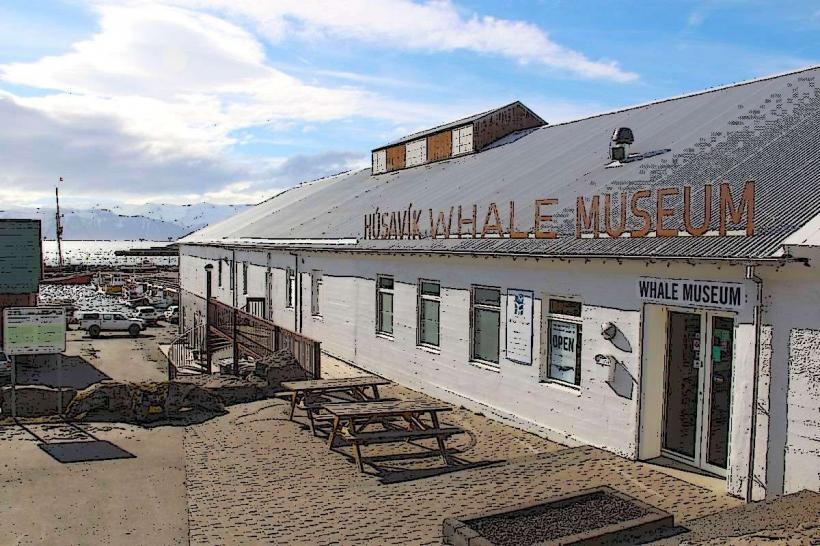
- Húsavík Whale Museum: 2.5km West
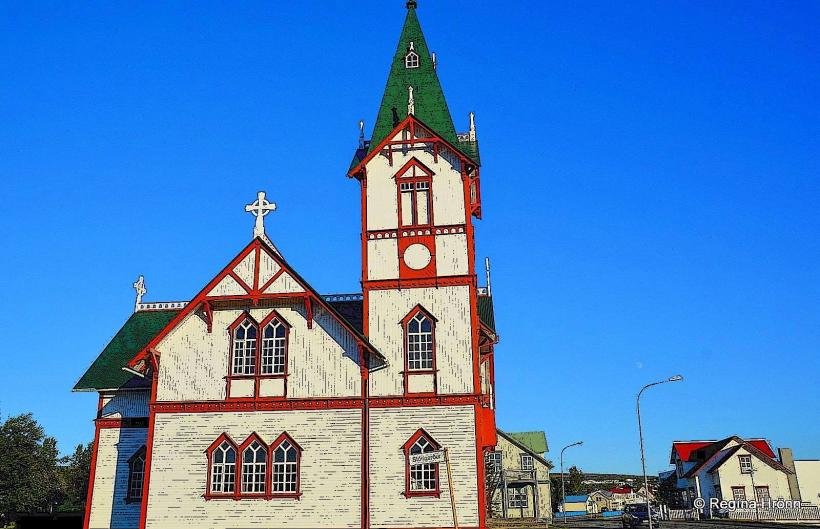
- Húsavíkurkirkja (Husavik Church): 2.8km West
- Exploration Museum: 2.7km West
- Geosea Geothermal Sea Baths: 4.0km North-West