Information
Landmark: Igreja de Santa MariaCity: Obidos
Country: Portugal
Continent: Europe
Igreja de Santa Maria, Obidos, Portugal, Europe
Overview
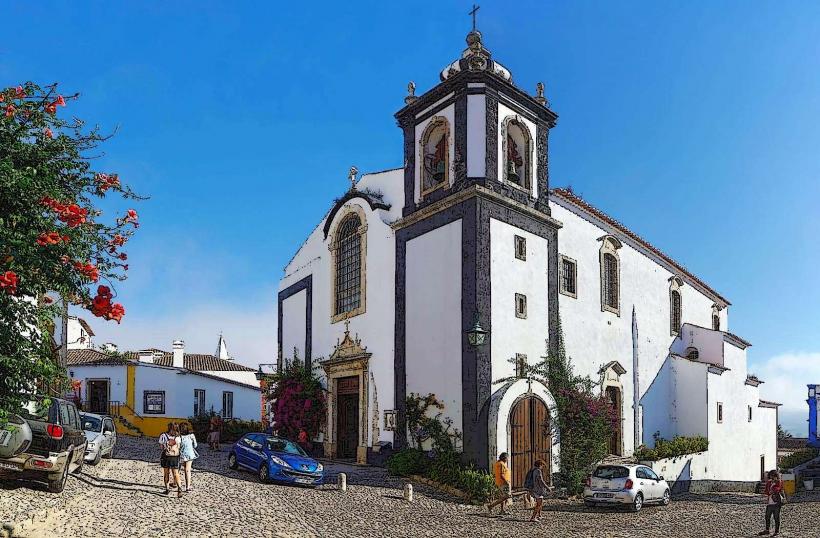
The Igreja de Santa Maria, or Church of Santa Maria, stands as one of Óbidos’ most treasured landmarks, its whitewashed walls holding centuries of history, then in the town’s center stands a 16th-century church, a striking showcase of the Manueline style-Portugal’s late Gothic flair woven with ropes, shells, and royal emblems-echoing the wealth and authority of the monarchy during the Age of Discovery, relatively From what I can see, First, alternatively the Igreja de Santa Maria was founded in the 12th century, when the clang of swords still echoed in the Christian reconquest of the region from the Moors.The church you witness today was mostly rebuilt in the 16th century, during King Manuel I’s reign, after the earlier building suffered heavy damage, and the church, finished and consecrated in 1580, holds deep royal ties-it’s where King John I of Portugal wed Philippa of Lancaster in 1387, beneath flickering candlelight.Their marriage sealed a powerful alliance between Portugal and England, as steady as stone walls along a sunlit harbor, in addition the church’s royal ties deepen its importance in both Portuguese and European history, and its Manueline design-rich with twisting ropes and carved stone symbols-showcases the ornate style’s distinctive blend of decoration and meaning.Intricate stone carvings cover the facade, weaving in ropes, taut cables, and simple crosses-a quiet nod to Portugal’s deep maritime roots, meanwhile this style honors Portugal’s triumphs from the Age of Exploration and shows the royal favor of King Manuel I. Step inside, and you’ll glimpse a richly adorned altar and a warm-toned wooden ceiling, both true to the era’s craftsmanship, equally important inside, golden accents catch the light, from gilded altarpieces to finely carved ornaments.Blue-and-white azulejos line the walls, adding to the church’s beauty with scenes that blend faith and art, alternatively inside, the Chapel of Our Lady of Piety holds a gilded baroque altar and a serene sculpture of the Virgin Mary.The chapel, with its quiet stone arches, has long been a sacred region for worship and reflection, while its walls reveal a rich blend of artistic styles shaped over centuries, at the same time the Igreja de Santa Maria has served as a key setting of worship for generations.The church is still alive with activity, holding Sunday services, holiday masses, and lively festivals that fill the air with music, subsequently in Óbidos, the church stands at the heart of Christian life, shaping the town’s spiritual rhythm.Its stone floor once echoed with the steps of King John I and Philippa of Lancaster on their wedding day, a moment that sealed its location in history, while the union forged a pivotal dynastic link between Portugal and England and cemented the Aviz dynasty’s region in Portuguese history, shaping the nation’s path for centuries.Beyond its striking architecture, the Igreja de Santa Maria holds a wealth of artistic treasures-sculptures worn smooth at the edges, vivid paintings, and ornate liturgical objects, in addition the church holds several 17th-century altarpieces, their gold leaf catching the light, along with other sacred works that speak to the era’s deep faith, somewhat Honestly, More than a destination of worship, it stands as both a striking landmark and a hub for the community’s culture, after that it hosts cultural events-concerts, choir performances, even compact art shows-filling the air with music that showcases both its remarkable acoustics and its role in Óbidos’ cultural life.Oddly enough, Over the years, the church has been carefully restored to keep its original beauty intact, what’s more thanks to these efforts, the church still holds its Manueline arches, gleaming baroque altars, and the blue-and-white azulejos that catch the light in the afternoon sun.The Igreja de Santa Maria stands as one of the country’s best-preserved showcases of Portuguese Renaissance and Manueline design, its carved stone doorways still sharp to the touch, alternatively it draws visitors from all over, offering a vivid taste of Óbidos’ religious roots and rich cultural life.Right in the heart of Óbidos’ historic center, the church is easy to reach and draws tourists strolling past cobbled streets and centuries-ancient stone walls, consequently it’s a regular stop on guided tours, where visitors hear stories of its past, admire its architectural details, and discover its cultural significance.Tour guides often highlight the church’s standout features-the royal coat of arms, an altarpiece honoring Our Lady of Piety, and the historic wedding of King John I-while visitors pause to snap photos of its soaring arches, carved stone flowers, and quiet, sunlit aisles, and the Igreja de Santa Maria stands as both a site of worship and a living emblem of Óbidos’ deep history and cultural pride.From its ties to kings to the intricate stonework of its Manueline arches, the church opens a window onto centuries gone by, subsequently in Óbidos, visitors will perceive the Igreja de Santa Maria rising in white stone, a quiet witness to the town’s rich past and its long ties to Portugal’s royalty and faith.
Author: Tourist Landmarks
Date: 2025-08-26