Information
Landmark: Jajce Old TownCity: Jajce
Country: Bosnia and Herzegovina
Continent: Europe
Jajce Old Town, Jajce, Bosnia and Herzegovina, Europe
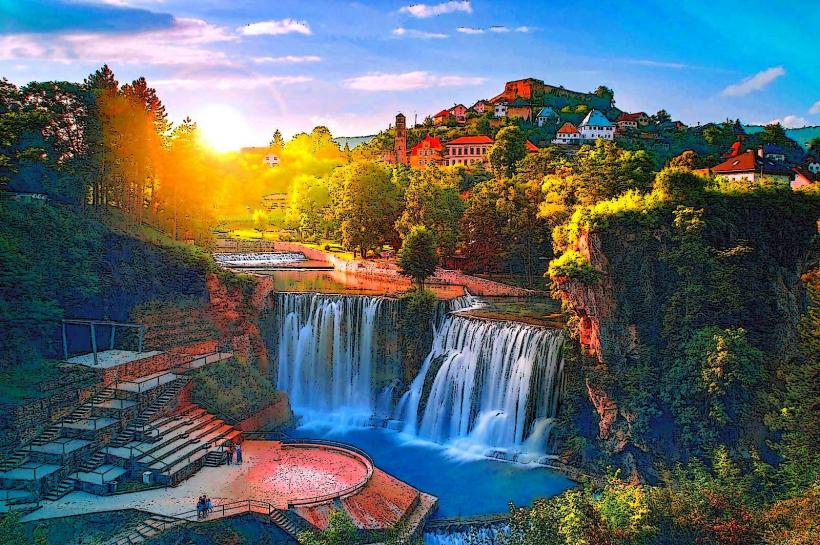
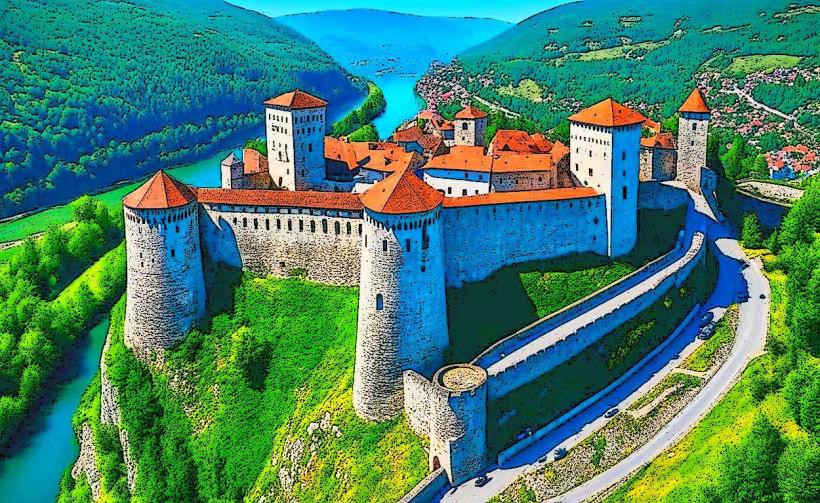
The Old Town of Jajce is a fortified urban complex located on a limestone hill in the center of Bosnia and Herzegovina. It is situated at the meeting point of the Pliva and Vrbas rivers, forming the historic core of the modern city.
Visual Characteristics
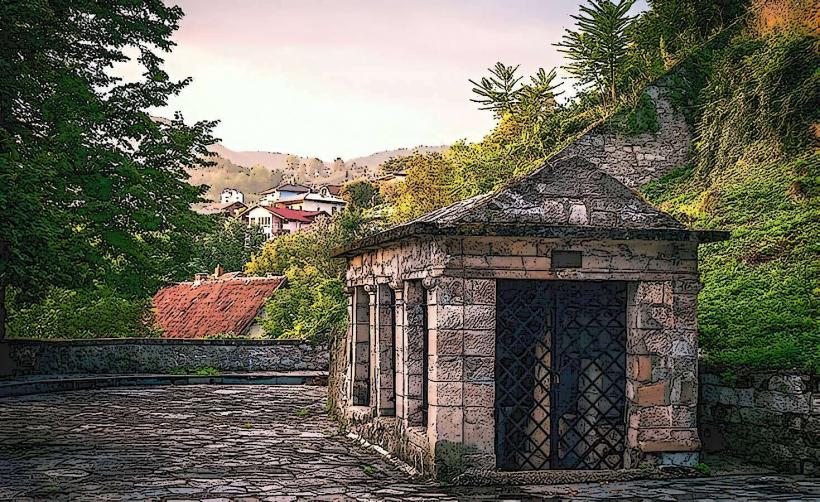
The area is characterized by steep, narrow cobblestone streets and traditional Bosnian residential architecture featuring white-washed walls and dark timber frames. The district is enclosed by a 1,300-meter-long stone defensive wall, with the terrain rising sharply toward a central citadel. Buildings are primarily constructed from local limestone and tufa, with many roofs featuring traditional wooden shingles or red clay tiles.
Location & Access Logistics
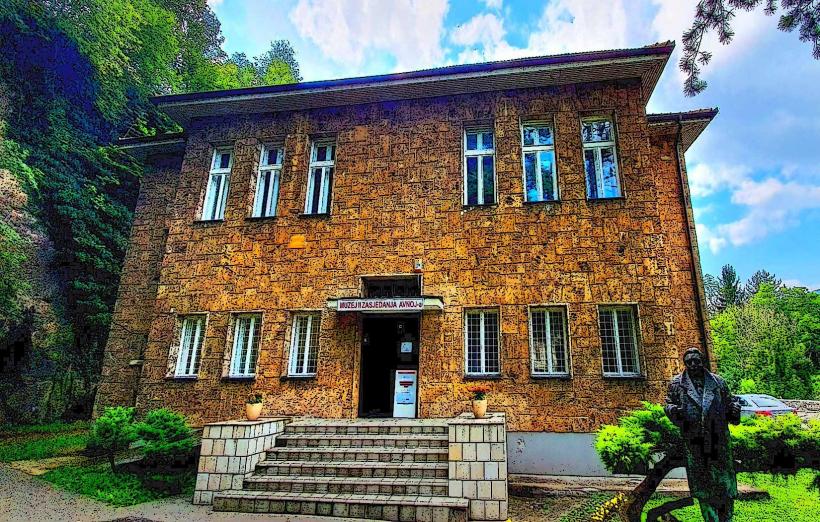
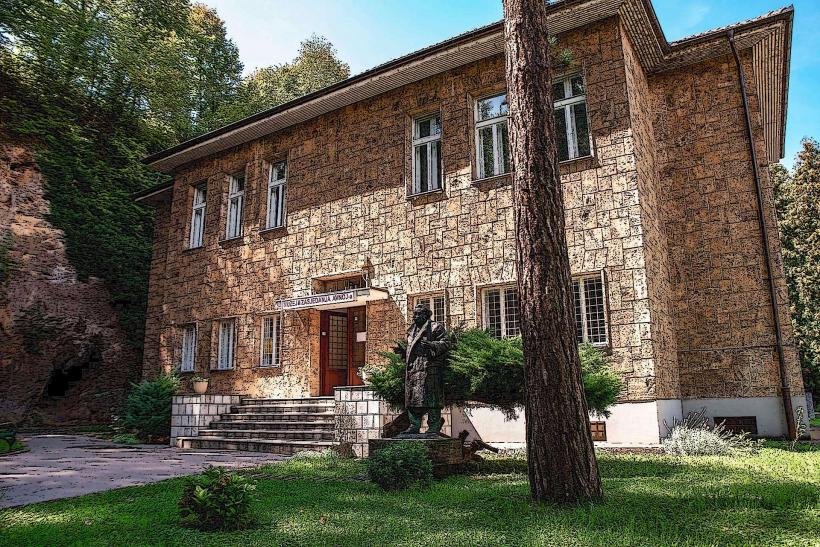
The Old Town is accessed via two main medieval gates: the Travnik Gate to the east and the Banja Luka Gate to the west. It is located 160 kilometers northwest of Sarajevo and 70 kilometers south of Banja Luka. The central bus station is situated at the base of the hill, approximately 400 meters from the historic entrance. Parking is restricted within the interior streets; visitors must use the public lots located near the Pliva Waterfall or the AVNOJ Museum.
Historical & Ecological Origin
Established in the 14th century by Duke Hrvoje Vukčić Hrvatinić, the Old Town served as the final capital of the independent Bosnian Kingdom. It was the site of the 1461 coronation of Stephen Tomašević, the last Bosnian king. The site is built upon a natural karst plateau, with the underlying tufa rock providing a stable but porous foundation that has influenced the city's unique water drainage system.
Key Highlights & Activities
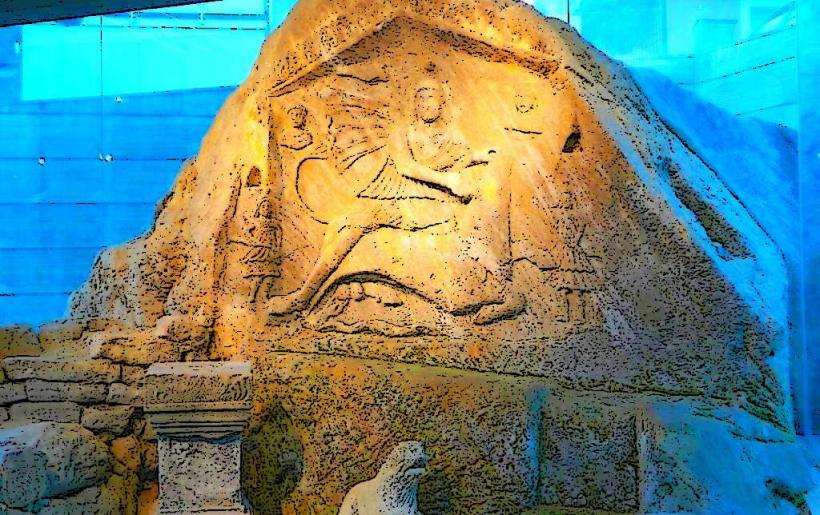
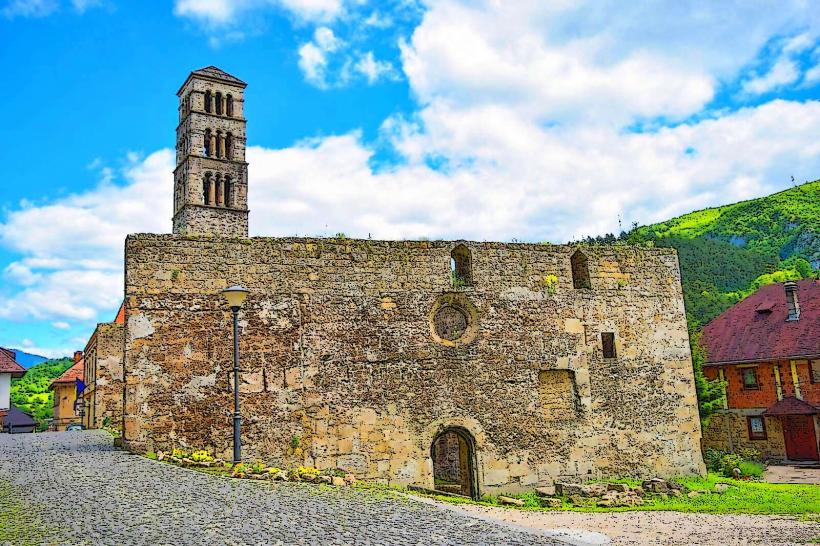
Walking tours of the ramparts offer views of the surrounding canyons and river confluence. Major sites within the perimeter include the Catacombs, St. Luke’s Bell Tower, and the Bear Tower. Visitors can observe the transition between medieval European and Ottoman architectural styles throughout the residential quarters.
Infrastructure & Amenities
The district contains a concentrated selection of cafes, traditional restaurants, and small souvenir shops. Public restrooms are available at the entrance near the Catacombs and at the AVNOJ Museum at the base of the hill. 4G and 5G cellular signals are consistent throughout the town. Most historic sites within the Old Town require separate entry fees, typically payable in Bosnian Mark (BAM) or via card at main kiosks.
Best Time to Visit
May through September offers the most favorable weather for navigating the steep, slippery cobblestones. For photography, the late afternoon provides light that emphasizes the texture of the stone walls and the depth of the Vrbas canyon. Morning visits are recommended to avoid the peak heat and the high volume of tour groups arriving mid-day.
Facts & Legends
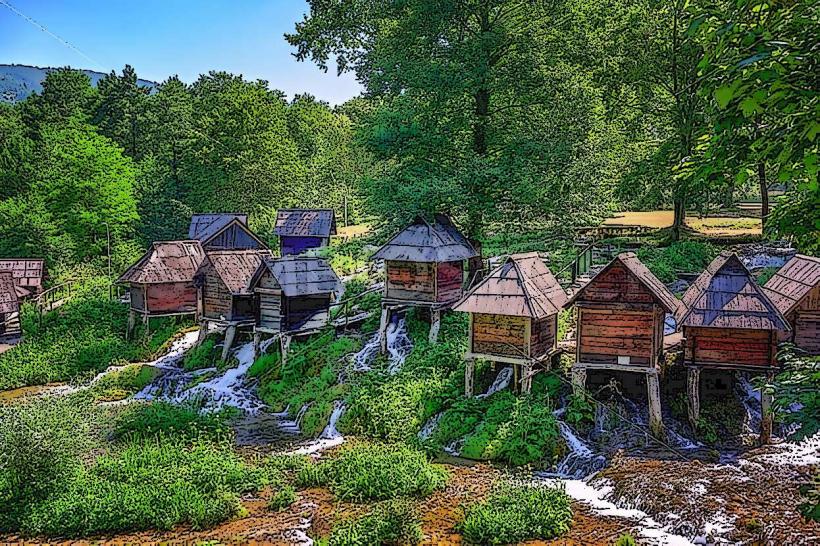
The Old Town is unique for having been a "Royal City" where the crown of the Bosnian Kingdom was kept until the Ottoman conquest in 1527. A local historical oddity is the persistence of "water rights" documentation for the small mills and house foundations, some of which date back over four centuries without interruption in ownership records.
Nearby Landmarks
Jajce Fortress (0.1km North)
Catacombs of Jajce (0.2km Northwest)
St. Luke’s Bell Tower (0.1km East)
Jajce Waterfall (0.3km South)
AVNOJ Museum (0.4km South)