Information
Landmark: Kadriorg PalaceCity: Tallinn
Country: Estonia
Continent: Europe
Kadriorg Palace, Tallinn, Estonia, Europe
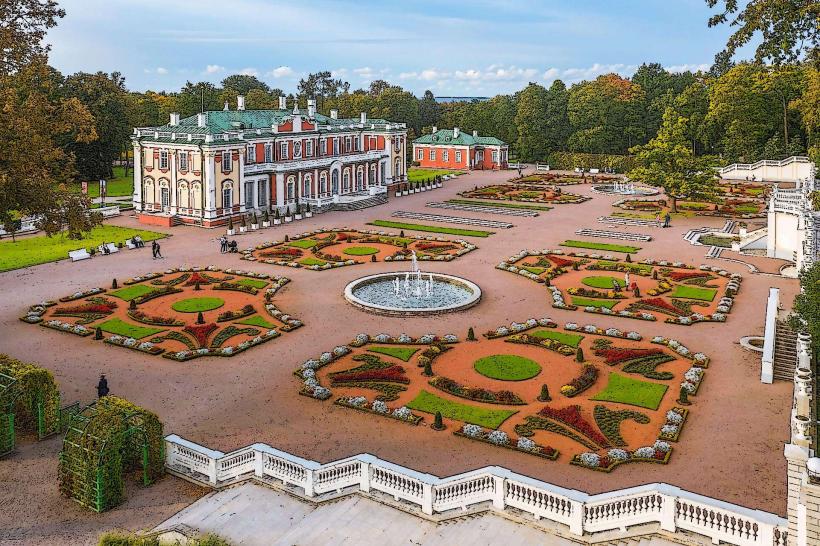
Kadriorg Palace is an 18th-century Baroque palace located within Kadriorg Park in Tallinn, Estonia, primarily functioning as a branch of the Art Museum of Estonia, housing its foreign art collection.
Visual Characteristics
The palace features a three-story central block flanked by two wings, constructed from stone and stucco. Its exterior is characterized by a pink facade with white architectural details, including cornices, pilasters, and window frames. The architectural style is Northern Baroque. The palace is fronted by a formal French garden with geometric parterres, fountains, and sculpted hedges.
Location & Access Logistics
Kadriorg Palace is situated approximately 2.5 kilometers east of Tallinn's Old Town. Access is primarily via public transport or walking. Tram lines 1 (Kopli-Kadriorg) and 3 (Tondi-Kadriorg) provide direct service to the Kadriorg stop, which is a short walk from the palace entrance. Several bus lines, including 5, 6, 7, 8, 34A, 38, and 60, also serve stops near Kadriorg Park. Limited paid parking is available on streets surrounding Kadriorg Park, such as Mäekalda and Weizenbergi streets.
Historical & Ecological Origin
Construction of Kadriorg Palace commenced in 1718 under the order of Peter the Great of Russia. The initial design was conceived by Nicodemus Tessin the Younger, with the main architectural work executed by Gaetano Chiaveri. Its original purpose was to serve as a summer residence for the imperial family, specifically for Catherine I, Peter the Great's wife, after whom the palace and park are named (Kadriorg translates to "Catherine's Valley").
Key Highlights & Activities
Visitors can explore the Kadriorg Art Museum, which displays European and Russian art from the 16th to 20th centuries. The palace's grand hall and state rooms are accessible. The surrounding Kadriorg Park offers extensive walking paths, including the formal gardens, the Swan Pond, and the Japanese Garden. The adjacent Presidential Palace, the official residence of the President of Estonia, can be viewed from the park.
Infrastructure & Amenities
Restrooms are available within the Kadriorg Art Museum and at various points throughout Kadriorg Park. The park provides ample shade from mature trees, and the palace interior offers shelter. Cell phone signal (4G/5G) is generally strong throughout the area. Several cafes and restaurants are located within Kadriorg Park and its immediate vicinity, offering food and beverage options.
Best Time to Visit
The best time to visit Kadriorg Palace for photography is during the morning or late afternoon hours when the light is softer, particularly for capturing the palace facade and formal gardens. The months of May through September offer the mildest weather conditions for exploring the park. The formal gardens are most visually appealing when in full bloom, typically from late spring to early autumn.
Facts & Legends
The palace's name, Kadriorg, is derived from the Estonian translation of "Catherine's Valley," honoring Catherine I, wife of Peter the Great. A short distance from the palace, within the park, stands Peter the Great's House Museum, a modest cottage that served as his residence during the palace's construction. This provides a stark contrast to the grandeur of the palace itself.
Nearby Landmarks
- Presidential Palace: 0.1km West
- Peter the Great's House Museum: 0.3km North-East
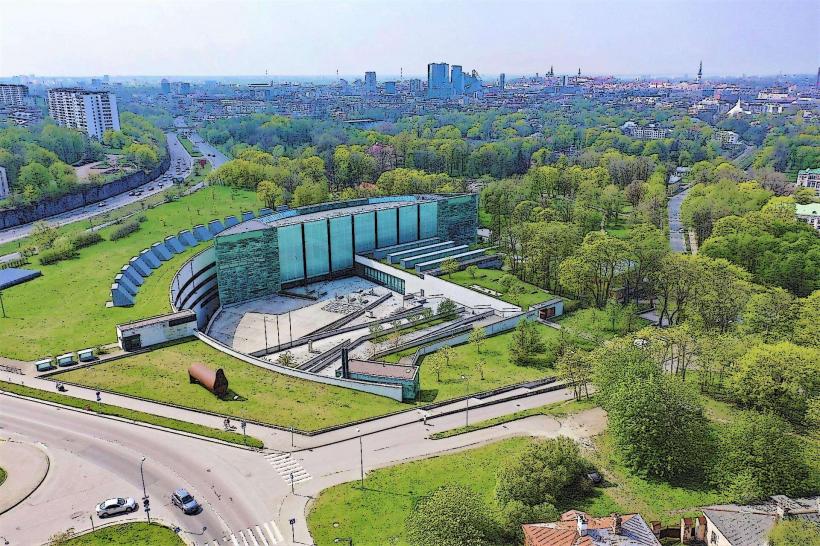
- Kumu Art Museum: 0.5km East
- Russalka Memorial: 1km North
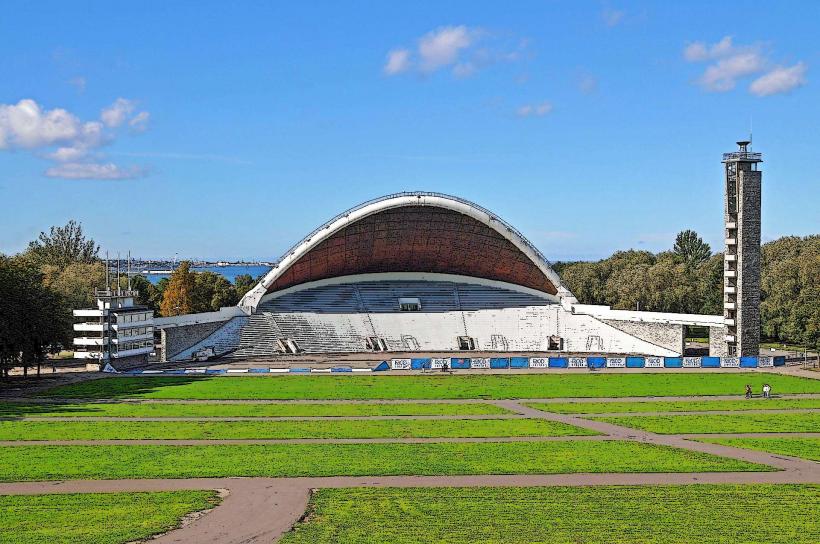
- Tallinn Song Festival Grounds: 2km East