Information
Landmark: Kingdom of Bamum Palace (Foumban Royal Palace)City: Bafoussam
Country: Cameroon
Continent: Africa
Kingdom of Bamum Palace (Foumban Royal Palace), Bafoussam, Cameroon, Africa
Setting and First Impressions
The Kingdom of Bamum Palace dominates the center of Foumban, rising above the town with a commanding presence that immediately signals royal authority. Set against the gentle hills of western Cameroon, the palace grounds feel expansive and ceremonial. The approach passes through open courtyards and formal gateways, where the atmosphere shifts from everyday street life to one shaped by tradition, symbolism, and history.
Historical Significance
The palace is the seat of the Sultan of Bamum and the heart of the Bamum Kingdom, one of Cameroon’s most influential historical states. Its legacy is closely tied to Sultan Ibrahim Njoya, a visionary ruler of the late nineteenth and early twentieth centuries who developed the Bamum script, promoted education, and reformed administration. The palace stands as a living reminder of Bamum political power, intellectual achievement, and cultural resilience.
Architecture and Layout
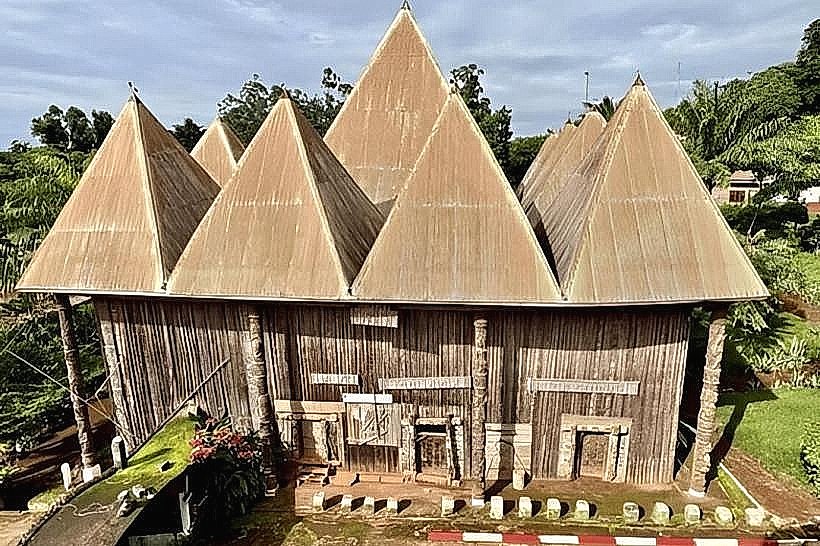
The palace is notable for its distinctive blend of traditional Bamum design and later architectural influences. Broad walls, symmetrical forms, and decorative motifs reflect royal symbolism and hierarchy. Courtyards organize movement through the complex, separating public ceremonial spaces from private royal areas. Carved doors, relief patterns, and symbolic shapes communicate authority, lineage, and spiritual meaning embedded in Bamum culture.
Interior Spaces and Artifacts
Within the palace and its associated museum spaces, visitors encounter royal regalia, thrones, masks, musical instruments, weapons, and historical documents. Many objects relate directly to Sultan Ibrahim Njoya’s reign, including items connected to governance, warfare, and cultural innovation. The arrangement emphasizes function and meaning rather than display alone, allowing the palace to serve as both royal residence and historical archive.
Cultural Life and Ceremonies
The palace remains an active center of tradition. Royal ceremonies, festivals, and court gatherings continue to take place, reinforcing the Sultan’s role in contemporary Bamum society. Drumming, dance, and formal processions animate the space during major events, transforming the palace from a quiet architectural landmark into a living stage of cultural expression.
Visitor Experience
Visiting the Kingdom of Bamum Palace offers an immersive encounter with living history. Moving through courtyards and exhibition rooms, visitors gain insight into Bamum governance, art, and worldview. The presence of guides and custodians adds depth through oral history and explanation, connecting objects and spaces to stories passed down through generations.
Closing Impression
The Kingdom of Bamum Palace is more than a historical site; it is the enduring heart of Bamum identity. Its power lies in continuity-tradition actively practiced, history actively remembered, and authority rooted in culture. For visitors, it offers a profound understanding of one of Cameroon’s most sophisticated and influential traditional kingdoms.