Information
Landmark: Kosljun MonasteryCity: Krk
Country: Croatia
Continent: Europe
Kosljun Monastery, Krk, Croatia, Europe
The Franciscan Monastery of the Annunciation is situated on the islet of Košljun, a 6.5-hectare forest reserve in the center of Punat Bay (Puntarska Draga) on Krk Island. It is a significant center for Glagolitic literacy and Franciscan spirituality.
Visual Characteristics
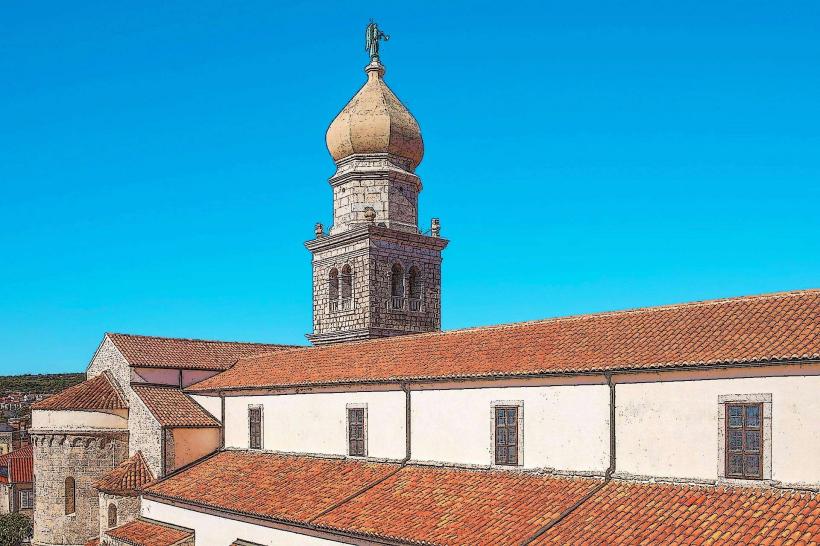
The monastery complex is characterized by a mix of Gothic and Renaissance architecture, set within a dense holm oak (Quercus ilex) forest. The central feature is the Church of the Annunciation with its simple facade and stone bell tower. The interior is noted for its high-quality woodwork and the monumental "Last Judgment" painting (1653) by Francesco Ughetto, which spans the entire wall above the choir.
Location & Access Logistics
Access is exclusively by sea.
Departure Point: Taxi boats depart regularly from the waterfront in Punat (approx. 800m away).
Transit Time: The boat ride takes 5–10 minutes.
Cost: Expect a fee for the return boat trip (approx. €9) plus a separate entrance fee to the monastery and museums (approx. €6).
Schedule: Generally open 09:30–17:00 (Monday–Saturday) and 10:30–12:30 (Sundays). Winter hours are typically reduced.
Historical & Ecological Origin
The islet was inhabited in Roman times (known as Cassonia or Castellum). A Benedictine abbey existed here from the 9th to the 15th century. In 1447, the Frankopan dukes (specifically Ivan VII) facilitated the arrival of the Franciscans, who expanded the existing Romanesque structures. The island is a protected forest reserve, home to over 400–500 plant and mushroom species, making it a "micro-botanical" garden.
Key Highlights & Activities
Four Specialized Museums: 1. Archaeological: Featuring Roman artifacts and early Christian stone monuments.
2. Ethnographic: Displaying traditional Krk costumes, tools, and nautical models.
3. Natural History: Housing a collection of rare plants, minerals, and animal specimens.
4. Sacral Art: Containing valuable 16th-century wooden crucifixes and polyptychs.
The Library: Contains over 30,000 volumes, including rare Glagolitic manuscripts and one of only three remaining copies of Ptolemy’s 16th-century atlas.
Walking Path: A perimeter trail (approx. 1km) leads past several small votive chapels (St. Francis, St. Bernardine, and the Holy Cross).
Infrastructure & Amenities
Facilities: A small souvenir shop sells monastery-made products (olive oil, herbal liqueurs). Public restrooms are available.
Restrictions: There are no restaurants or cafes on the islet to maintain its tranquil atmosphere. Modest dress is required for church entry.
Cell Signal: Stable 4G/5G on the islet due to proximity to Punat.
Best Time to Visit
The islet is an ideal retreat from the summer crowds of the main island. Morning visits are recommended to allow for 1.5–2 hours of exploration before the midday heat. The atrium often hosts classical and sacred music concerts during the Krk Summer Festival (July–August).
Facts & Legends
According to local legend, the islet was formed after a conflict between two brothers over fertile land; the sea flooded the fields of the greedy brother, leaving only the small hill (Košljun) belonging to the virtuous brother above water. It is also the burial site of Katarina Frankopan, whose 1529 tombstone remains in the church.
Nearby Landmarks
Punat Waterfront – 0.8km East (via boat)
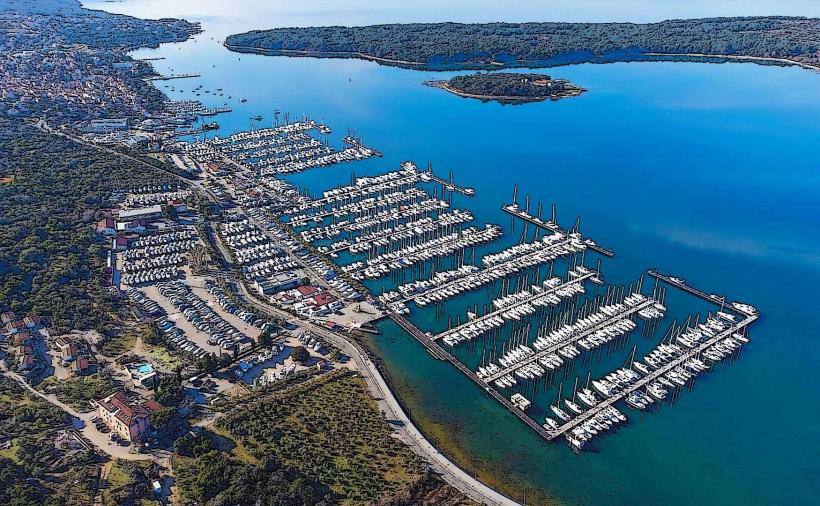
Marina Punat – 1.5km North
Church of St. Donatus – 2.0km North
Krk Town – 8.0km Northwest