Information
Landmark: Kozjak LakeCity: Plitvice Lakes
Country: Croatia
Continent: Europe
Kozjak Lake, Plitvice Lakes, Croatia, Europe
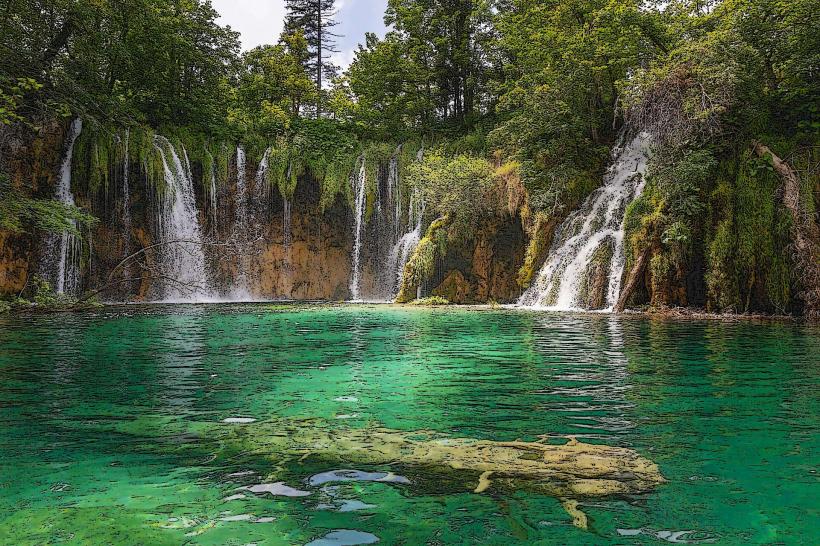
Kozjak Lake is the largest and deepest lake within Plitvice Lakes National Park. It serves as the transitional boundary between the Upper Lakes (Gornja jezera) and the Lower Lakes (Donja jezera).
Visual Characteristics
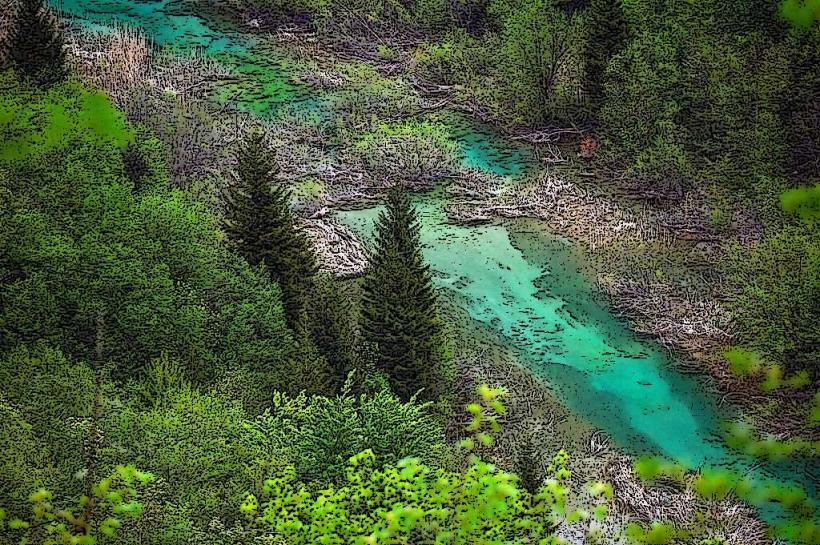
Kozjak spans approximately 81.5 hectares with a maximum depth of 47 meters. The water is characterized by a deep turquoise color, which shifts to emerald depending on light and sediment concentration. The shoreline is densely forested with beech and fir trees. A notable feature is Štefanija’s Islet, a small oval island composed of Triassic dolomite situated in the northern half of the lake.
Location & Access Logistics
The lake is centrally located and serves as the primary transit hub for the park.
Access: Accessible via Entrance 2 (South Entrance) or by walking down from Entrance 1.
Electric Boat (P1-P2-P3): The park operates an electric boat service across the lake.
P1 to P2: A short 5-minute shuttle connecting the two shores of the Upper Lakes.
P2 to P3: A 20-minute crossing from the Upper Lakes to the Lower Lakes terminal.
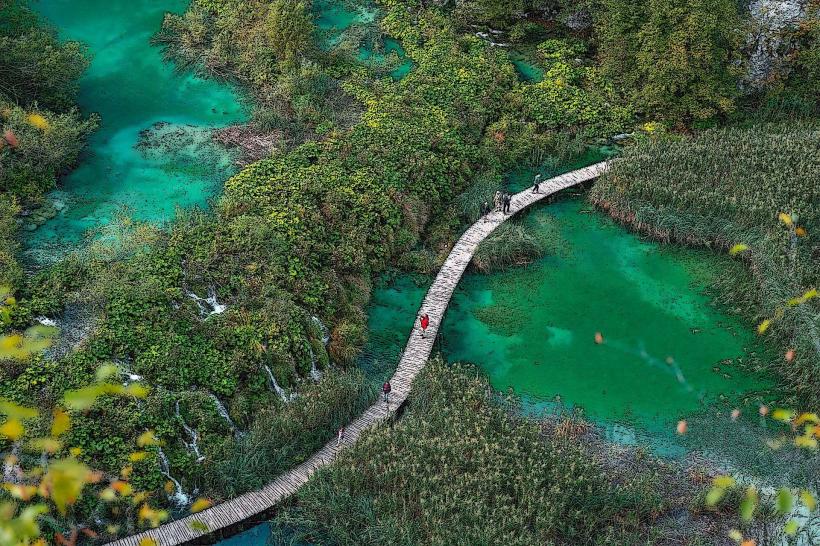
Walking: A perimeter trail (Program K) follows the eastern and western shores, though the boat is the standard transit for Programs B, C, and H.
Historical & Ecological Origin
Kozjak was originally two separate lakes divided by a 40-meter-high travertine barrier. Approximately 400 years ago, the downstream barrier grew faster than the upstream one, causing the water level to rise until the two lakes merged. Today, the original barrier remains submerged 4 meters below the surface. Geologically, the lake sits on a bed of impermeable dolomite, which prevents water from draining into the karst underground.
Key Highlights & Activities
Boat Crossing: The primary way to experience the scale of the lake. The boats are silent and environmentally neutral.
Štefanija’s Islet: Visible during the boat ride; named after Queen Stephanie of Belgium, who visited the park in 1888.
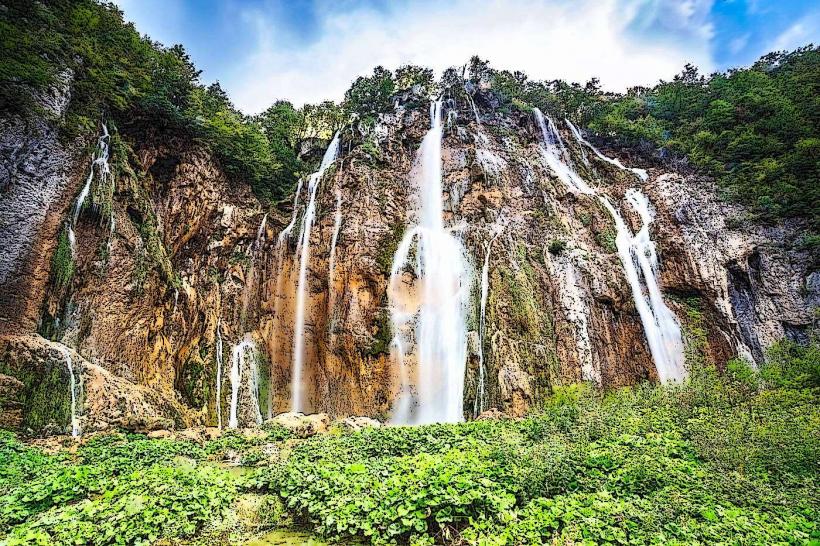
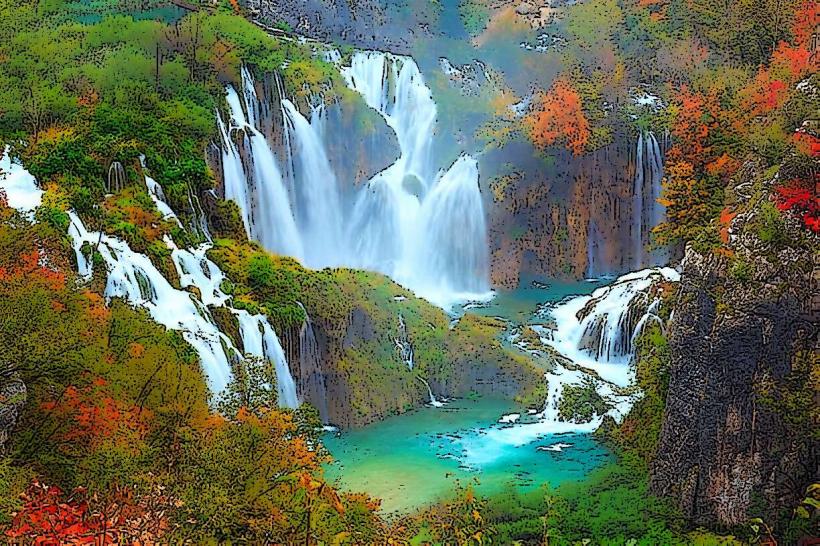
Burget Waterfalls: A series of low travertine cascades located at the southern end where water enters from Gradinsko Lake.
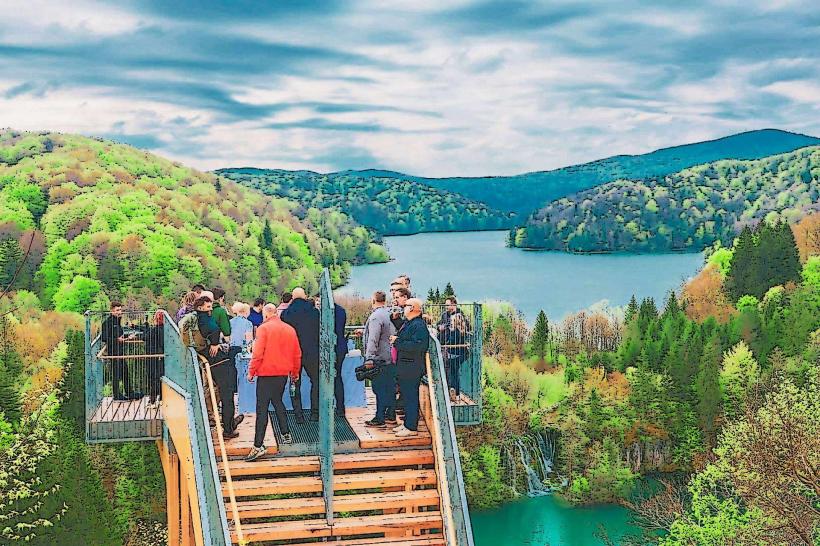
Photography: The P3 dock area provides a panoramic view of the lake's widest point.
Infrastructure & Amenities
The P3 (Lower Lakes) station is the most developed resting area in the park:
Food: Large bistro/buffet area with outdoor seating.
Facilities: Public restrooms and trash disposal.
Connectivity: 5G/4G signals are stable across the lake surface and at all terminals.
Best Time to Visit
The boat lines are most congested between 11:00 and 15:00. To avoid wait times of 30+ minutes, aim to cross before 10:00. In winter, the boat service may be suspended if the lake freezes, though this is increasingly rare.
Facts & Legends
The name "Kozjak" is derived from the Croatian word koza (goat). According to local legend, 30 goats once attempted to cross the frozen lake in winter to escape wolves, but the ice broke, and they drowned. A more scientific fact: because of the submerged barrier, Kozjak is effectively a "living" laboratory for studying how tufa growth can drastically alter landscape hydrology.
Nearby Landmarks
Gradinsko Lake – 0.1km South (Upper Lakes)
Milanovac Lake – 0.1km North (Lower Lakes)
P3 Rest Area – Northern tip of the lake
Entrance 2 – 0.8km East
Veliki Prštavac Waterfall – 0.5km South