Information
Landmark: Kresna GorgeCity: Blagoevgrad
Country: Bulgaria
Continent: Europe
Kresna Gorge, Blagoevgrad, Bulgaria, Europe
Kresna Gorge is a steep, 18-kilometer-long canyon carved by the Struma River between the Pirin and Maleshevo mountains. It is located approximately 20 kilometers south of Blagoevgrad and serves as a critical transport corridor and biological crossroads.
Visual Characteristics
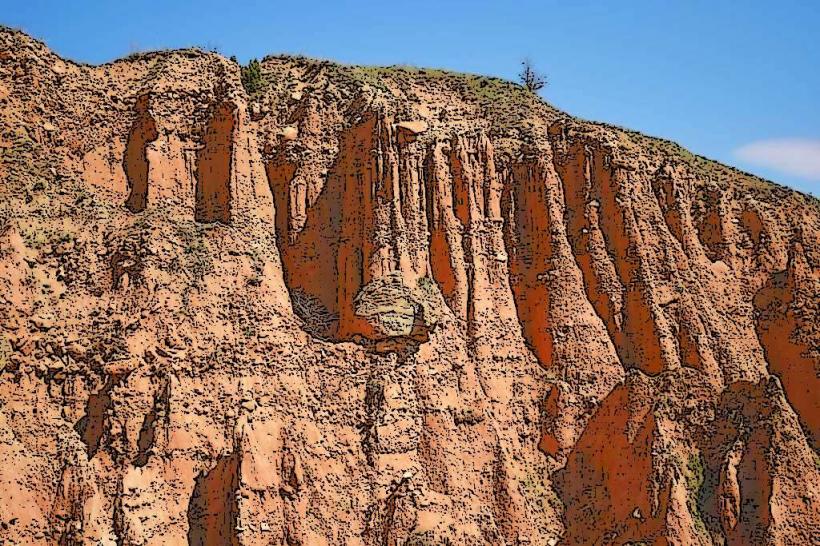
The gorge is defined by vertical granite cliffs, jagged rock formations, and the turquoise-green waters of the Struma River. The vegetation transitions from Mediterranean shrubs at the southern end to continental forests in the north. The landscape is dominated by the narrow, winding E79 international road and the parallel railway line, both squeezed between the river and the mountain walls.
Location & Access Logistics
The gorge begins south of the village of Simitli and ends near the town of Kresna. It is the primary route for vehicle traffic between Sofia and the Greek border (Kulata-Promachonas). Access is via the E79 road; however, driving requires high concentration due to narrow lanes, frequent tunnels, and high traffic density. There are several paved pull-off areas and parking lots near rafting centers and roadside restaurants.
Historical & Ecological Origin
Formed over millions of years by the erosion of the Struma River, the gorge is a unique transitional climatic zone. It acts as a corridor for Mediterranean flora and fauna moving north. It is a protected site under the Natura 2000 network due to its high concentration of rare reptile species, bats, and predatory birds. Historically, it has been a strategic bottleneck for military movements since antiquity.
Key Highlights & Activities
Whitewater Rafting and Kayaking: The gorge is the premier destination for rafting in Bulgaria, with multiple centers offering guided trips through Class II-IV rapids, primarily during the spring high-water season (April–June).
Rock Climbing: Several established climbing routes exist on the granite faces.
Hiking: The "Tisata" Reserve offers trails through forests of evergreen Mediterranean juniper.
Birdwatching: The cliffs are home to rare species like the Short-toed Snake Eagle and the Egyptian Vulture.
Infrastructure & Amenities
Several dedicated rafting camps provide equipment rental, changing rooms, and basic catering. Roadside infrastructure includes gas stations and traditional taverns (mehanas) at the northern and southern entrances. 4G and 5G cellular coverage is generally available but can be intermittent in deep sections of the canyon or inside tunnels.
Best Time to Visit
For adventure sports, late spring (May) provides the highest water levels. For nature observation and hiking, early autumn (September–October) offers milder temperatures and vibrant foliage. Avoid the gorge during peak summer weekend afternoons (Friday and Sunday) due to extreme traffic congestion.
Facts & Legends
The gorge is home to 31 species of bats and 12 species of snakes, making it one of the most biodiverse areas in Europe for its size. A verified logistical fact is that it remains one of the most dangerous road sections in Bulgaria due to the combination of high speed and narrow geometry, leading to ongoing debates about the construction of the Struma Motorway tunnel or bypass.
Nearby Landmarks
Tisata Reserve - 0.5km from Kresna (South end)
Sheitandere (Devil’s River) - Accessible from the central gorge area
Town of Kresna - 1.0km South
Simitli - 2.0km North
Pirin National Park - 10.0km East