Information
Landmark: La Laguna de OlomegaCity: Chalatenango
Country: El Salvador
Continent: North America
La Laguna de Olomega, Chalatenango, El Salvador, North America
La Laguna de Olomega is a volcanic crater lake situated in the department of Chalatenango, El Salvador.
This body of water is a significant natural resource within its regional context.
Visual Characteristics
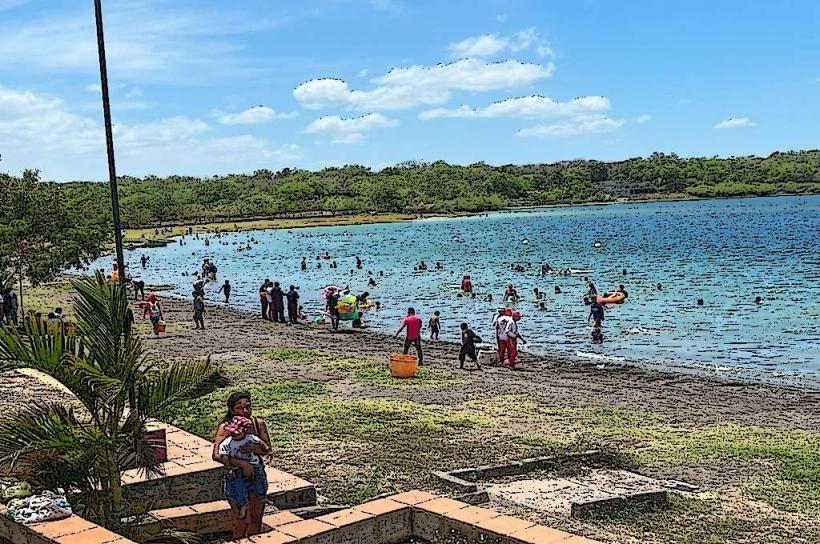
The lake's surface is typically calm, reflecting the surrounding vegetation and sky. The water color varies from deep blue to greenish hues depending on depth and light conditions. The shoreline is characterized by a mix of dense tropical foliage and exposed earth, with some areas featuring volcanic rock formations. The elevation of the lake contributes to a cooler microclimate compared to surrounding lowlands.
Location & Access Logistics
La Laguna de Olomega is located approximately 15 kilometers southwest of the city of Chalatenango. Access is primarily via Carretera CA-4, turning onto local roads marked for the lake. The final approach involves unpaved but generally passable tracks. Parking is available in informal lots near the lake's edge, managed by local residents. Public transport options are limited; local buses run from Chalatenango to nearby villages, requiring a subsequent taxi or motorcycle ride to reach the lake itself.
Historical & Ecological Origin
The lake is a phreatomagmatic crater lake, formed by the interaction of magma and groundwater, resulting in an explosive eruption. Its geological origin dates back to a volcanic event thousands of years ago. Ecologically, it is a freshwater lake supporting a diverse range of aquatic and terrestrial flora and fauna adapted to its specific environment.
Key Highlights & Activities
Fishing is a primary activity for local communities and visitors. Boat rentals, typically small wooden canoes, are available for exploring the lake. Birdwatching is possible, with various species observed around the shoreline and in the adjacent vegetation. Hiking trails around the lake perimeter offer views of the water and surrounding landscape.
Infrastructure & Amenities
Basic amenities are present. Small, informal food stalls operated by locals offer regional dishes. Restrooms are rudimentary and may not be consistently available. Shade is provided by natural tree cover along the shore. Cell phone signal (2G/3G) is generally weak to intermittent.
Best Time to Visit
The best time of day for photography is early morning or late afternoon when the light is softer and the water surface is less disturbed. The dry season, from November to April, offers more stable weather conditions. The lake's water level is relatively consistent year-round, so tide considerations are not applicable.
Facts & Legends
Local folklore suggests the lake is inhabited by water spirits that protect its ecosystem. A verified historical detail is that the lake's water was historically used for irrigation in surrounding agricultural areas, though its primary function is now ecological and recreational.
Nearby Landmarks
- Laguna Verde (3.2km Northeast)
- Parque Nacional El Boquerón (4.5km Southwest)
- Catedral de Chalatenango (14.8km Northeast)
- Ruinas de Cihuatán (18.1km West)