Information
Landmark: La Laguna de XiloáCity: Chalatenango
Country: El Salvador
Continent: North America
La Laguna de Xiloá, Chalatenango, El Salvador, North America
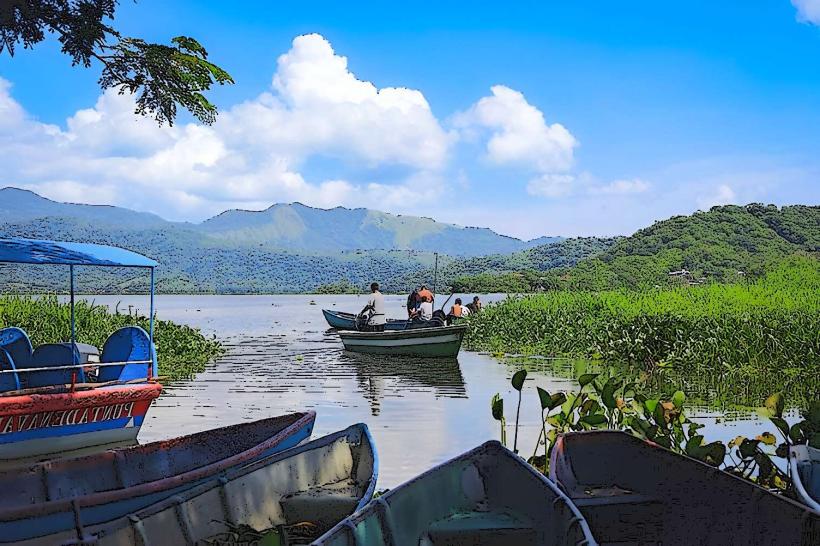
La Laguna de Xiloá is a volcanic crater lake situated in the municipality of El Carmen, within the department of Chalatenango, El Salvador.
Visual Characteristics
The lake is characterized by its deep blue water, a result of its depth and mineral content. The surrounding terrain consists of steep, vegetated slopes, primarily covered with tropical dry forest species. The lake's surface area is approximately 1.5 square kilometers.
Location & Access Logistics
La Laguna de Xiloá is located approximately 45 kilometers north of San Salvador. Access is via the CA-4 highway, turning off onto the local road leading to El Carmen. From the town center of El Carmen, it is an additional 3 kilometers to the lake. Parking is available at designated areas near the lake's edge. Public transport options include local buses (Rutas 119 and 129) that travel between San Salvador and El Carmen; from El Carmen, a taxi or mototaxi is required for the final stretch.
Historical & Ecological Origin
The lake is a phreatomagmatic crater lake, formed by the interaction of magma and groundwater, resulting in an explosive eruption that created the caldera. The last known eruption of the Xiloá volcano occurred approximately 10,000 years ago. The surrounding ecosystem is classified as tropical dry forest.
Key Highlights & Activities
Swimming is permitted in designated areas. Boat rentals are available for exploring the lake. Fishing is a common activity for local residents. Hiking trails are present along the crater rim, offering elevated views of the lake.
Infrastructure & Amenities
Restrooms are available at the main access points. Shade is provided by natural vegetation. Cell phone signal (4G) is generally available. Small food vendors operate near the parking areas, offering local snacks and beverages.
Best Time to Visit
The best time of day for photography is in the late morning, between 10:00 AM and 12:00 PM, when sunlight directly illuminates the water. The dry season, from November to April, offers the most favorable weather conditions with minimal rainfall. There are no specific tide requirements as it is a freshwater lake.
Facts & Legends
Local folklore suggests that the lake is inhabited by a water spirit that protects its depths. A verified historical detail is that the lake's water level has remained remarkably consistent over decades, despite seasonal rainfall variations.
Nearby Landmarks
- Laguna de Apastepeque (15km Southeast)
- Parque Nacional Montecristo (30km Northwest)
- Ruinas de Cihuatán (25km Southwest)
- Volcán de San Salvador (40km South)