Information
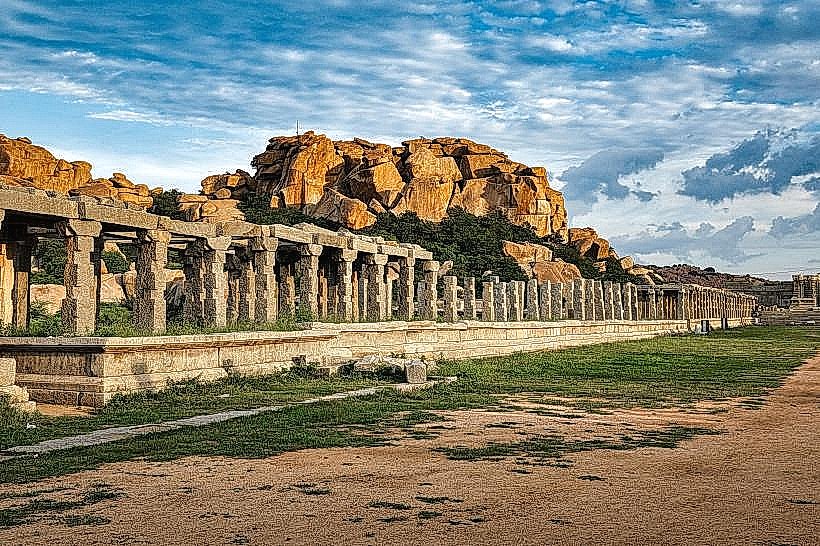
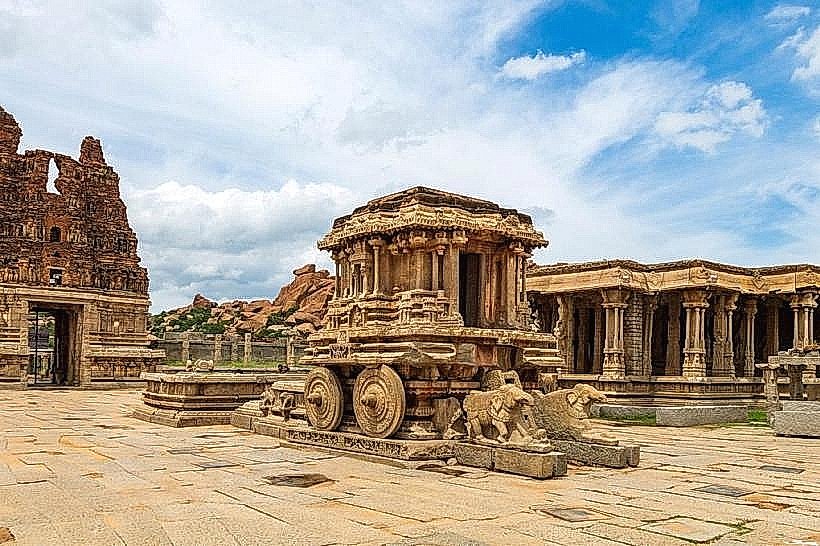
Landmark: Lotus MahalCity: Hampi
Country: India
Continent: Asia
Lotus Mahal, Hampi, India, Asia
The Jagdish Temple is a large Hindu temple located in the heart of Udaipur, Rajasthan, India. It is dedicated to Lord Vishnu.
Visual Characteristics
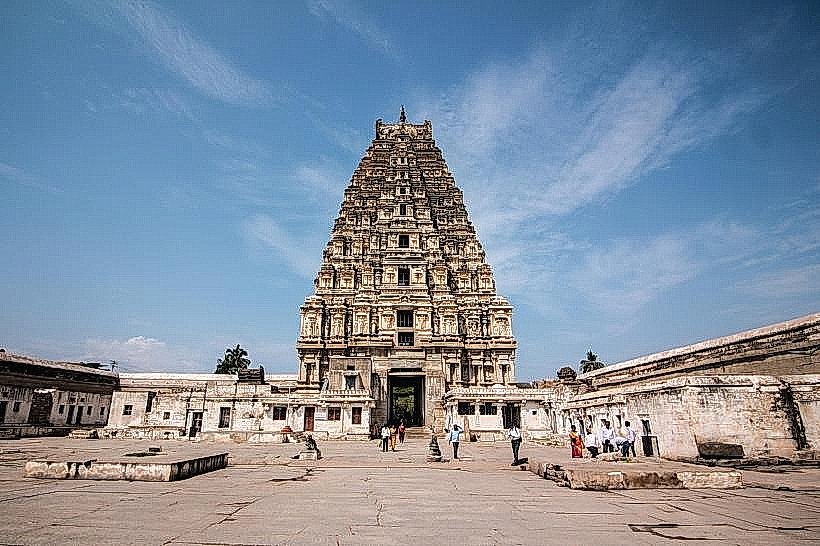
Constructed primarily from sandstone, the temple features a multi-tiered shikhara (spire) adorned with intricate carvings. The exterior walls are covered with detailed sculptures depicting deities, celestial dancers, and mythological scenes. The main shrine houses a black stone idol of Lord Vishnu. The temple complex includes several smaller shrines and courtyards.
Location & Access Logistics
The Jagdish Temple is situated approximately 1 kilometer north of the City Palace complex in Udaipur. Access is via the main city roads, with the closest major intersection being near the Gangaur Ghat. Limited street parking is available in the vicinity, and visitors are advised to utilize parking facilities near the City Palace or Lake Pichola. Auto-rickshaws and taxis are readily available to reach the temple. No direct public bus routes stop directly at the temple entrance.
Historical & Ecological Origin
Construction of the Jagdish Temple began in 1651 AD and was completed in 1651 AD under the patronage of Maharajah Jagat Singh I. It was built to serve as the principal temple for the city of Udaipur and to house the idol of Lord Vishnu. The architectural style is Indo-Aryan, with influences from Rajput and Mughal designs.
Key Highlights & Activities
Visitors can observe the detailed stone carvings on the temple exterior and interior. The main sanctum contains the idol of Lord Vishnu. Photography is permitted in most areas, though specific restrictions may apply within the inner sanctum. Devotional activities and aarti (religious rituals) are performed daily.
Infrastructure & Amenities
Restrooms are available within the temple complex. Shaded areas are provided in the courtyards. Cell phone signal (4G/5G) is generally good within the temple premises. Food vendors and small shops are located on the streets immediately surrounding the temple.
Best Time to Visit
The best time of day for photography is early morning or late afternoon when the sunlight creates distinct shadows on the carvings. The most favorable months for visiting Udaipur, and thus the temple, are from October to March, when the weather is cooler and drier. There are no tide-related considerations for visiting this temple.
Facts & Legends
A notable feature is the brass image of Garuda, Lord Vishnu's mount, positioned directly opposite the main shrine. Legend states that the temple was built in an attempt to appease Lord Vishnu after a series of natural disasters befell the region.
Nearby Landmarks
- City Palace (0.5km South)
- Lake Pichola (0.7km Southwest)
- Bagore Ki Haveli (0.6km South)
- Gangaur Ghat (0.4km South)