Information
Landmark: Martinsburg Train StationCity: Martinsburg
Country: USA West Virginia
Continent: North America
Martinsburg Train Station, Martinsburg, USA West Virginia, North America
Martinsburg Train Station is a historic railway structure located in Martinsburg, West Virginia, USA.
This station served as a significant operational hub for the Baltimore and Ohio Railroad.
Visual Characteristics
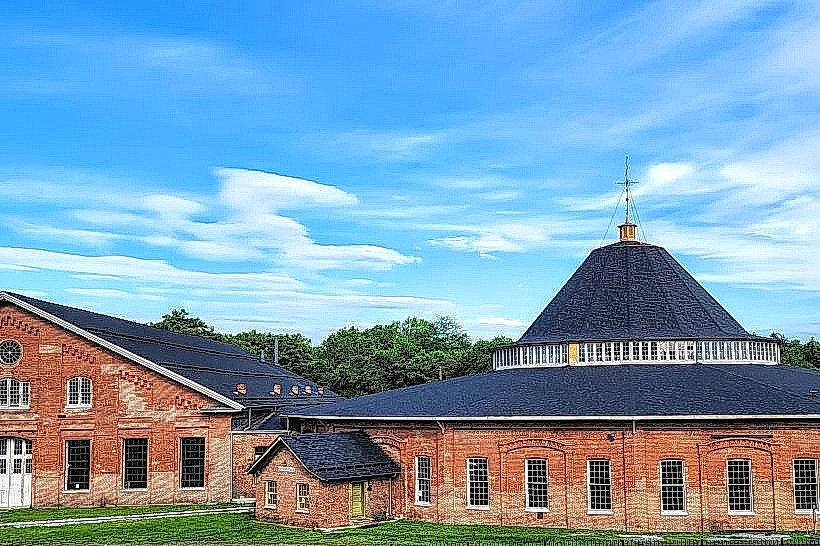
The station is constructed primarily of red brick with sandstone accents. It features a prominent clock tower and a hipped roof. The main building is two stories high, with a single-story baggage room attached. Architectural style is predominantly Richardsonian Romanesque.
Location & Access Logistics
The station is situated at 221 West Martin Street, Martinsburg, WV. It is approximately 0.5km west of the city center. On-site parking is available for visitors. The station is served by Amtrak's Capitol Limited route, with daily departures.
Historical & Ecological Origin
Construction of the Martinsburg Train Station was completed in 1889. It was designed by architect E. Francis Baldwin for the Baltimore and Ohio Railroad. Its original purpose was to facilitate passenger and freight transport, and serve as a division headquarters.
Key Highlights & Activities
Visitors can observe the station's architecture. Amtrak train arrivals and departures can be viewed. The station building itself is not open for tours, but the exterior is accessible.
Infrastructure & Amenities
Restrooms are available within the active Amtrak waiting area. Limited shade is provided by the building's overhang. Cell phone signal (4G/5G) is generally reliable. No food vendors are located directly at the station; options are available in the nearby downtown area.
Best Time to Visit
For photography of the exterior, morning light provides illumination on the eastern facade. Any time of day is suitable for observing train activity, though midday offers the most consistent service.
Facts & Legends
During the Great Railroad Strike of 1877, Martinsburg was a focal point of the labor unrest, with significant events occurring at this very location.
Nearby Landmarks
- 0.3km East: The Martinsburg Downtown Historic District
- 0.8km Northeast: Berkeley County Historical Society Museum
- 1.5km South: War Memorial Park
- 3.2km West: Belle Boyd House