Information
Landmark: Millesgården MuseumCity: Stockholm
Country: Sweden
Continent: Europe
Millesgården Museum, Stockholm, Sweden, Europe
Visual Characteristics
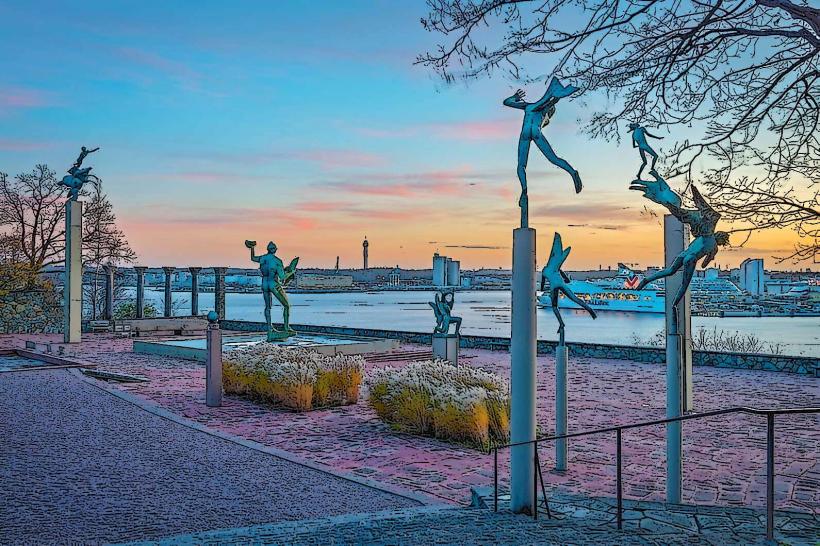
The site comprises multiple terraces built into a cliffside, featuring a collection of sculptures, fountains, and columns. Buildings are constructed primarily from stone and stucco, often in light, neutral tones. The architectural style blends classical influences with early 20th-century design, integrating with the natural landscape. Sculptures are predominantly bronze, but also include marble and other materials, often presented on tall pedestals to be viewed against the sky and the adjacent Värtan bay.
Location & Access Logistics
Millesgården is situated at Herserudsvägen 32, 181 50 Lidingö. It is approximately 8 kilometers northeast of Stockholm's city center. Access is primarily via public transport or private vehicle. From T-Centralen, take the Metro (Tunnelbana) Red Line 13 to Ropsten. From Ropsten, transfer to the Lidingöbanan (tram) line 21 towards Gåshaga brygga, disembarking at Torsvik or Baggeby, followed by a short walk. Alternatively, several bus lines, such as 201, 204, 205, 206, 211, 212, and 221, connect from Ropsten to stops near Millesgården. Limited on-site parking is available, with additional street parking in the vicinity.
Historical & Ecological Origin
Construction of Millesgården began in 1908. It was designed by Carl Milles himself, with architectural contributions from his brother Evert Milles and Karl M. Bengtson. The original purpose was to serve as Carl Milles's private residence, studio, and a display space for his extensive sculpture collection. In 1936, Carl and Olga Milles donated the property to the Swedish people, establishing it as a foundation and public museum.
Key Highlights & Activities
Visitors can observe Carl Milles's monumental sculptures, including "The Hand of God" and "Man and Pegasus," positioned across various terraces. Exploration of the sculpture park's tiered gardens and fountains is possible. The art gallery hosts temporary exhibitions. The former residence and studio of Carl and Olga Milles are open for viewing. An on-site café and shop are available.
Infrastructure & Amenities
Restroom facilities are available on the premises. Shade is provided by mature trees within the sculpture park and by indoor museum spaces. Cell phone signal (4G/5G) is generally strong throughout the area. An on-site café, Millesgården Lanthandel & Café, offers food and beverages.
Best Time to Visit
The months of May through September offer the most favorable weather conditions for outdoor exploration of the sculpture park. For photography, early morning or late afternoon light provides optimal illumination for the sculptures and views over the water. Weekday mornings typically experience fewer visitors, allowing for a more contemplative experience.
Facts & Legends
Carl Milles deliberately positioned many of his sculptures on high pedestals, a technique he called "sculpture in the air," to allow them to be seen against the sky and to create a sense of lightness despite their monumental scale. A specific tip for visitors is to explore the lower, less frequented terraces, which offer unique perspectives of the sculptures and quieter contemplation areas.
Nearby Landmarks
- Ropsten Metro Station: 1.5km West
- Lidingöbron (Old Lidingö Bridge): 1km West
- Lidingö Centrum: 2km East
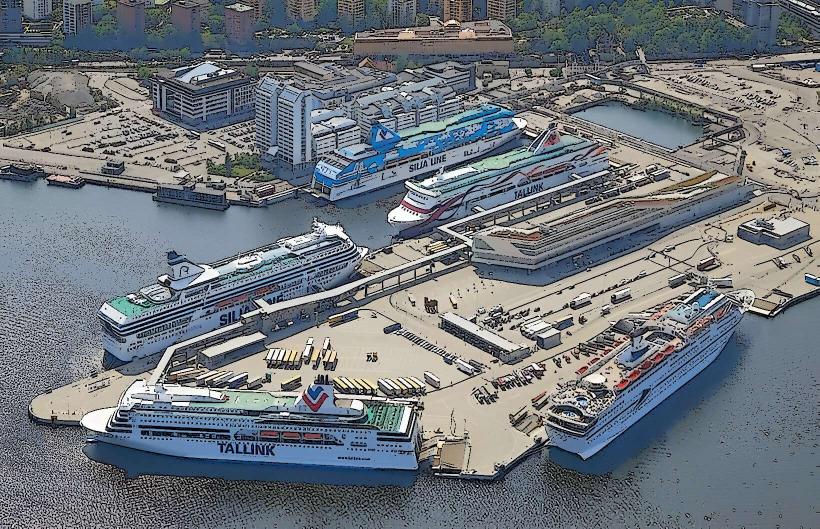
- Frihamnen (Port of Stockholm): 3km West
- Gärdet (Park area): 4km West-Southwest