Information
Landmark: Mohammed V SquareCity: Casablanca
Country: Morocco
Continent: Africa
Mohammed V Square, Casablanca, Morocco, Africa
Mohammed V Square (Place Mohammed V) is the central administrative and civic plaza of Casablanca, Morocco. It serves as a symbolic and functional heart of the modern city, representing both its colonial history and its national identity. The square is surrounded by important government buildings, cultural institutions, and examples of early 20th-century architecture that reflect the French colonial influence blended with Moroccan motifs.
Historical Background
The square was designed during the French protectorate, under the direction of General Hubert Lyautey, the first Resident-General of Morocco. It was part of a broader plan to modernize Casablanca and establish it as the economic and administrative capital of the country. The area was laid out in the 1910s and 1920s, and it became the focal point for the new French-built city.
Originally known as Place de France, it was later renamed in honor of King Mohammed V, the late monarch who played a key role in Morocco’s independence movement and is revered for his leadership and opposition to colonial rule.
Urban and Architectural Features
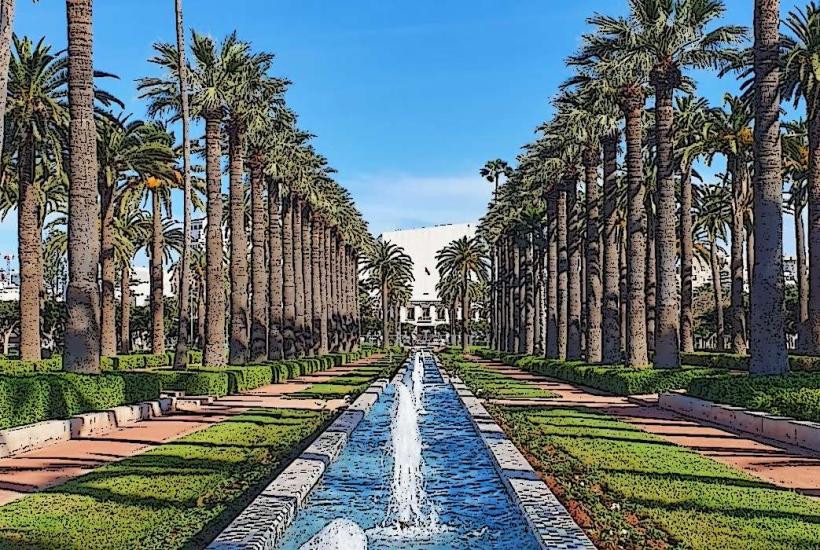
Mohammed V Square is notable for its symmetrical layout, European-style landscaping, and the blend of Moorish Revival and Art Deco architecture seen in the surrounding buildings. The layout and buildings reflect the influence of French architect Henri Prost, who was responsible for many aspects of urban planning in Morocco during the protectorate era.
Key Architectural Elements and Buildings Surrounding the Square:
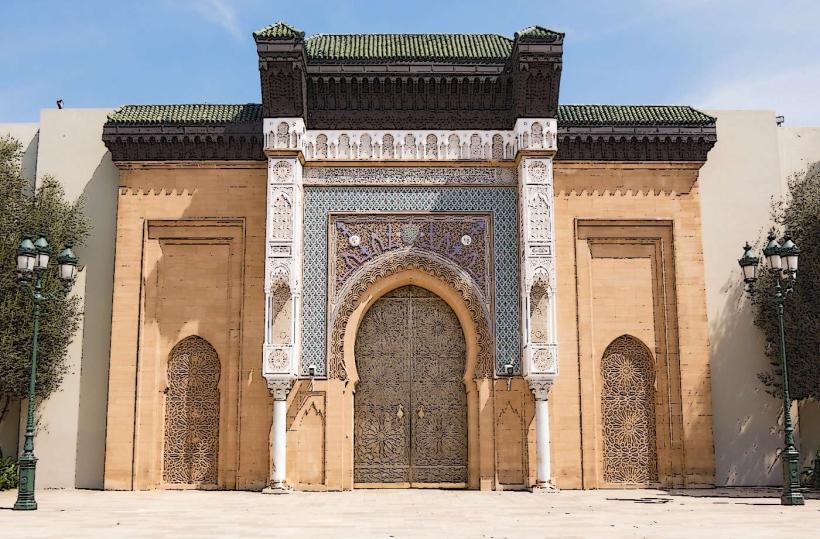
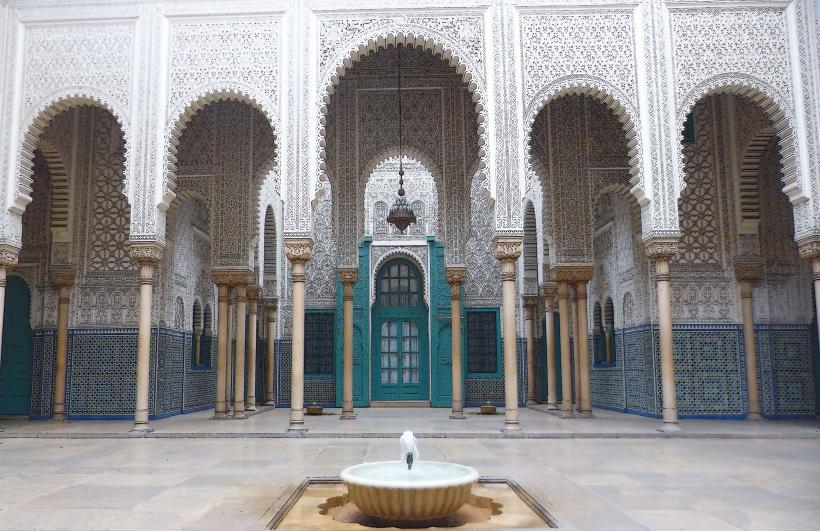
Palais de Justice (Court of Justice): An imposing building with traditional Moroccan design features like horseshoe arches, zellige tilework, and a green-tiled roof. It stands as a symbol of the judicial power of the state.
Wilaya (Prefecture of Casablanca-Settat): One of the most distinctive buildings around the square. It features a tall clock tower and combines traditional Moroccan details with European rationalist design.
Bank Al-Maghrib: Morocco's central bank has a branch on the square, housed in a structure that embodies classical and Moroccan elements.
French Consulate: Also located near the square, representing the continued French presence and diplomatic ties.
Main Post Office: An excellent example of early 20th-century design, combining French and Moroccan styles. Its interior, which includes art deco elements and mosaics, is a reminder of the colonial architectural legacy.
Central Fountain and Public Space
At the heart of the square is a large circular fountain, which becomes illuminated at night and often draws visitors and locals alike. The plaza around the fountain is paved and open, frequently used for public gatherings, casual strolls, and civic celebrations. It acts as a social hub for the city, a place where people come together, relax, and observe the urban rhythm.
The square also features:
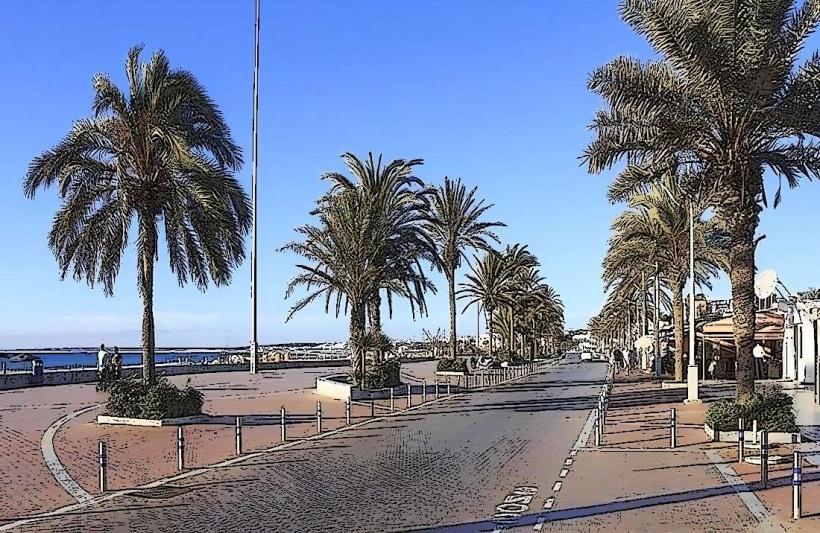
Green spaces and palm trees lining the area
Benches for resting
Occasional public art installations or performances
Pigeons, often flocking around the open area, adding to the square's lively atmosphere
Symbolic and Cultural Significance
Political Symbol: As the site of key government institutions, the square symbolizes state authority, colonial history, and Morocco's journey to sovereignty.
Cultural Heartbeat: It functions as a meeting place for locals, tourists, students, and city dwellers, representing Casablanca’s public life and civic spirit.
Architectural Legacy: It stands as a visible reminder of Casablanca's role as a modern city shaped by both Moroccan traditions and European colonialism. The blending of Andalusian-Moorish and Art Deco styles is particularly prominent here.
Recent Renovations and Developments
In recent years, the city has undertaken restoration and urban improvement projects around Mohammed V Square to preserve its heritage while enhancing its functionality. This has included:
Restoration of facades of historic buildings
Landscaping enhancements
Traffic reorganization to make the area more pedestrian-friendly
Modern lighting and urban furniture to improve the square’s nighttime ambiance
Additionally, a nearby tramway line runs through the area, making the square more accessible and connecting it efficiently with other parts of Casablanca.
Conclusion
Mohammed V Square is more than just an architectural landmark-it is a living space where Casablanca’s past and present intersect. Surrounded by administrative buildings and rich in historical layers, it embodies the evolution of the city from a colonial outpost to a dynamic modern metropolis. Whether for its aesthetic charm, its symbolic significance, or its role in everyday urban life, the square remains one of Casablanca’s most important public spaces.