Information
Landmark: Mon Repos PalaceCity: Corfu
Country: Greece
Continent: Europe
Mon Repos Palace, Corfu, Greece, Europe
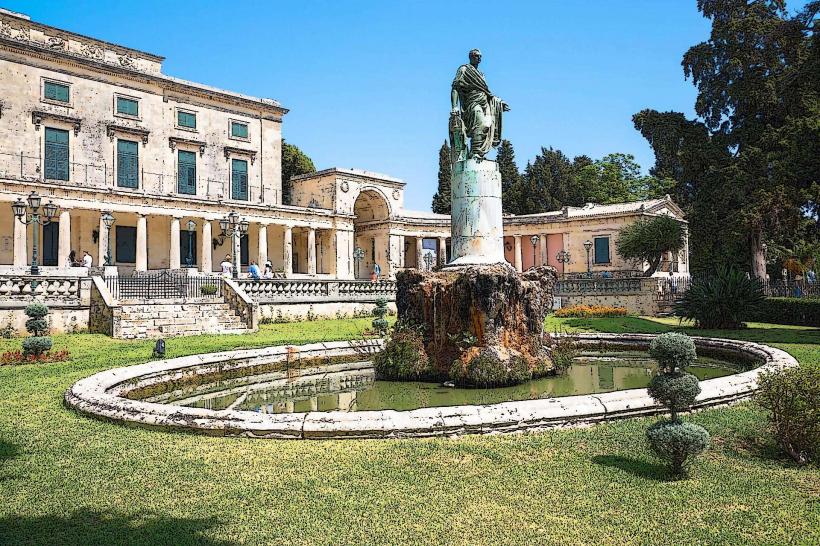
Mon Repos is a neoclassical estate and park located on the Analipsis Hill in the Kanoni area of Corfu. It serves as both a historic monument and the site of the Palace Museum of Paleopolis.
Visual Characteristics
The palace is a colonial-style villa characterized by strict symmetry, Doric porticos, and large green shutters. It is surrounded by 258 acres of dense forest and gardens containing rare botanical species. The interior maintains a 19th-century atmosphere with high ceilings and views directed toward the Ionian Sea.
Location & Access Logistics
Position: 3 km south of Corfu Town.
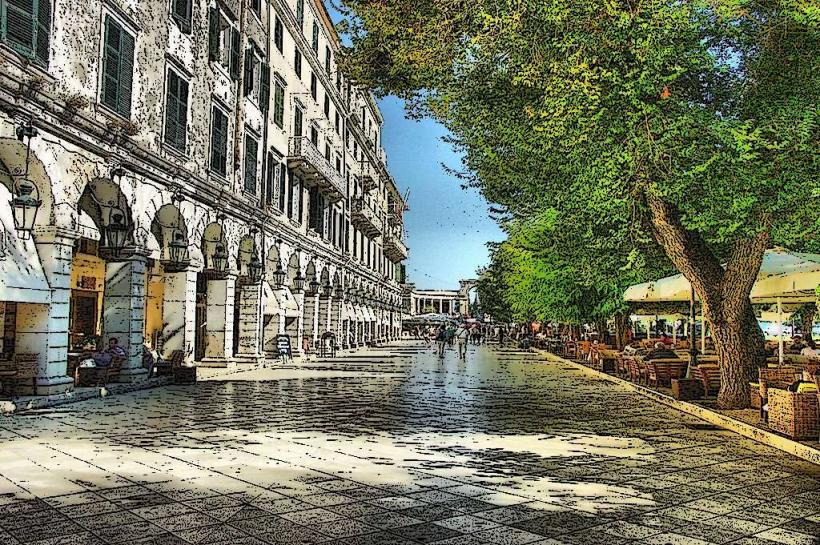
Transit: Accessible via City Bus Line 2 (Kanoni line) from the Liston or Spianada.
Access: The palace is reached via a 500-meter walk from the main gate through the forested park.
Hours: Park: 08:00–20:00. Museum: 08:30–15:30 (typically closed on Tuesdays).
Entry: The park is generally free; the Palace Museum requires a paid ticket.
Historical & Ecological Origin
Built in 1828–1831 by British High Commissioner Sir Frederick Adam as a summer residence, the palace was later gifted to the Greek Royal Family. It is notably the birthplace of Prince Philip, Duke of Edinburgh, in 1921. The estate sits directly atop the site of Paleopolis, the ancient city of Corfu (7th century BC). Following a legal dispute in the 1990s, the estate was transferred from the former Royal Family to the Greek state.
Key Highlights & Activities
Archaeological Site: The park contains the remains of the Temple of Hera and the 5th-century BC Temple of Kardaki.
Palace Museum: Displays archaeological finds from the surrounding excavations and 19th-century furniture.
Kardaki Beach: A small, secluded rocky beach at the edge of the estate, accessible via the forest paths.
Botanical Interest: The forest includes centuries-old trees and plants introduced during the British and Royal periods.
Infrastructure & Amenities
Facilities: Basic restrooms are available in the museum building.
Terrain: The park paths are gravel and dirt with moderate inclines.
Connectivity: 5G signal is stable in the park but can fluctuate near the ancient ruins.
Climate: The dense canopy provides significant shade, making it cooler than Corfu Town.
Best Time to Visit
Morning: For exploring the archaeological ruins before the museum closes.
Mid-day: The shade of the park provides a thermal refuge during peak summer heat.
Facts & Legends
A verified historical fact is that the Temple of Kardaki was discovered by accident in 1822 when British soldiers were trying to find the source of a natural spring. Local lore suggests the spring water of Kardaki has the power to make visitors forget their homeland and stay in Corfu forever.
Nearby Landmarks
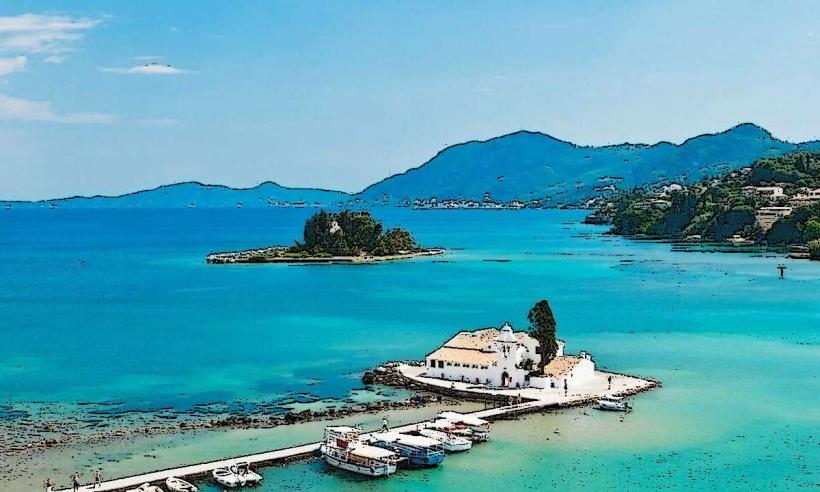
Kanoni & Mouse Island: 1.5 km South.
Paleopolis Basilica: Adjacent to the estate entrance.
Spianada Square: 3 km North.