Information
Landmark: Old Fortress of CorfuCity: Corfu
Country: Greece
Continent: Europe
Old Fortress of Corfu, Corfu, Greece, Europe
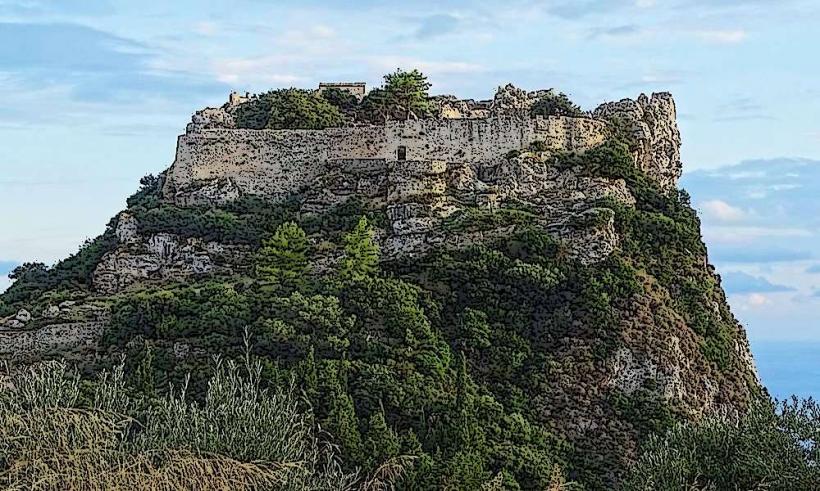
The Old Fortress of Corfu (Palaio Frourio) is a Venetian-built fortification situated on a rocky peninsula between the Gulf of Kerkyra and Garitsa Bay. It is separated from the city by the Contrafossa, a seawater moat.
Visual Characteristics
The fortress is defined by two distinctive peaks (Coryphae), which gave the island its name (Corfu). Its architecture is predominantly Venetian, featuring massive bastions, thick stone ramparts, and subterranean tunnels. Later British interventions added neoclassical elements, most notably the Church of Saint George, which resembles a Doric temple.
Location & Access Logistics
Position: Eastern edge of Corfu Town, adjacent to Spianada Square.
Access: Entrance is via a permanent bridge over the Contrafossa.
Transit: Centrally located; walkable from all points in the Old Town and the main bus terminal.
Hours: Typically 08:00–20:00 (Summer); 08:30–15:30 (Winter).
Entry: Paid admission.
Historical & Ecological Origin
The site was originally a Byzantine castle, but the current fortifications were largely engineered by the Venetians in the 15th and 16th centuries to protect the city from Ottoman expansion. The defensive design was so effective that the fortress was never captured by the Turks. During the British Protectorate (1814–1864), the site was further reinforced and repurposed with military barracks and hospitals.
Key Highlights & Activities
The Lighthouse: Located on the highest peak, offering a 360-degree view of the Ionian Sea and the Albanian coast.
Church of Saint George: Built by the British in 1840, this is one of the few Orthodox churches built in the style of an ancient Greek temple.
Contrafossa: The man-made moat where local fishing boats are now moored.
Public Archives and Library: Housed in the British barracks, containing significant historical documents of the Ionian Islands.
The Clock Tower: A prominent landmark visible from the Spianada.
Infrastructure & Amenities
Catering: A cafe and restaurant operate within the fortress walls with views of the bay.
Facilities: Includes a small gift shop and restrooms.
Terrain: Steep, stone-paved paths leading to the peaks. High-traction footwear is required for the climb to the lighthouse.
Connectivity: 5G signal is stable throughout the lower levels and peaks.
Best Time to Visit
Late Afternoon: To avoid the heat of the ascent and to view the sunset over the Old Town.
Concert Season: During summer, the fortress hosts open-air concerts and cultural events in the central courtyard.
Facts & Legends
A verified historical fact is that the Venetians cleared the area in front of the fortress to create the Spianada, ensuring a clear line of fire against attackers; this space later became the largest square in Greece. Local lore suggests that the tunnels beneath the fortress connect to the New Fortress on the other side of the city, though many of these passages remain sealed or flooded.
Nearby Landmarks
Spianada Square: Directly adjacent to the entrance.
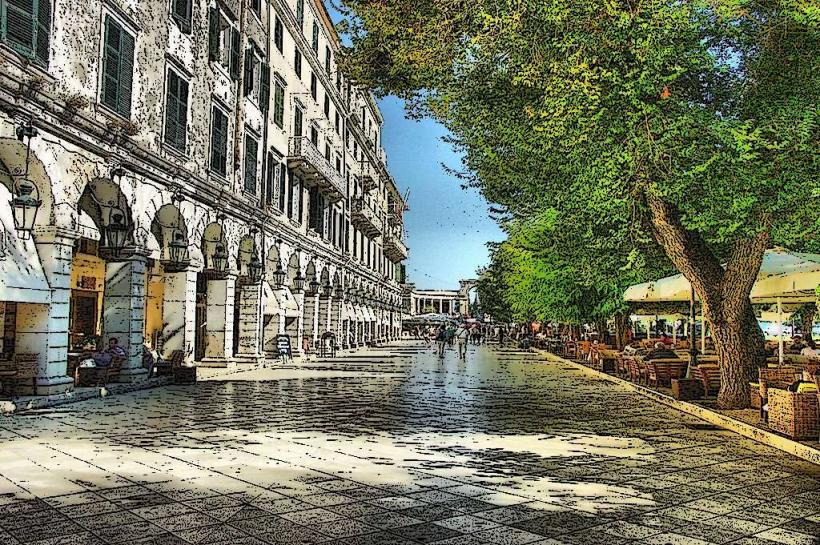
Liston Promenade: 0.2 km West.
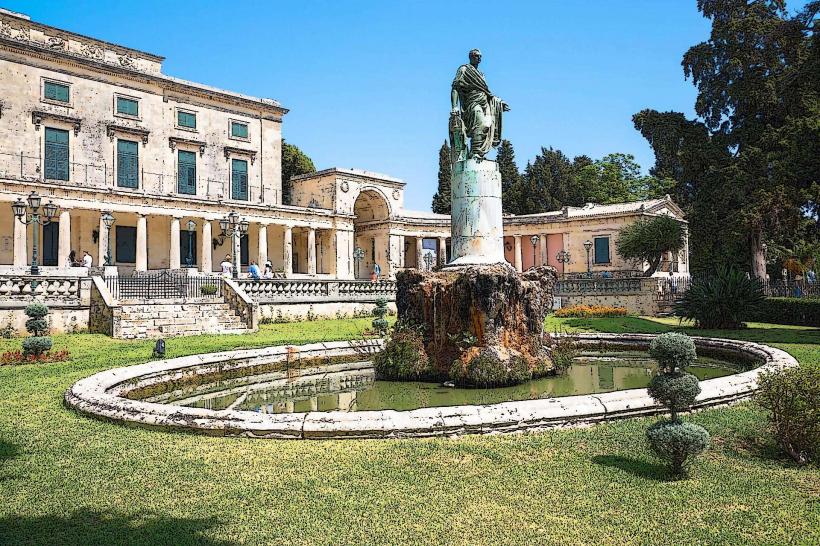
Palace of St. Michael and St. George: 0.3 km Northwest.
New Fortress: 1.2 km West.