Information
Landmark: Monastery of VlatadonCity: Chalkidiki
Country: Greece
Continent: Europe
Monastery of Vlatadon, Chalkidiki, Greece, Europe
Overview
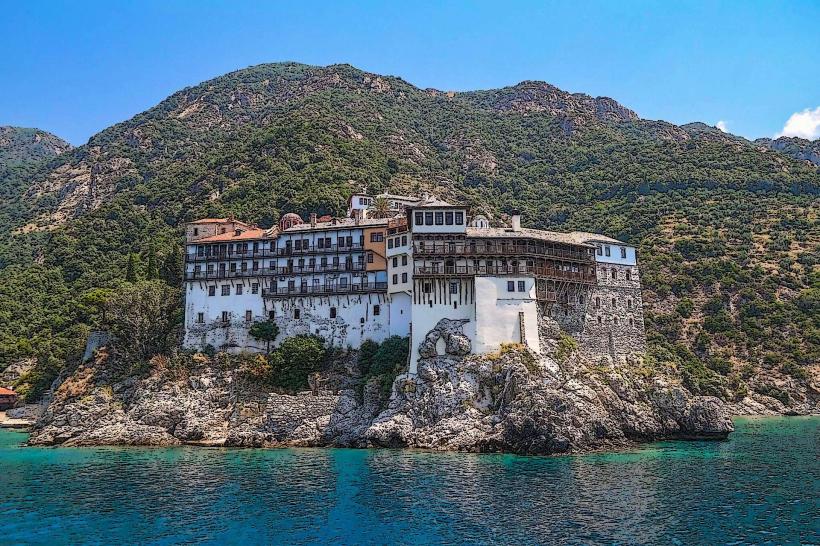
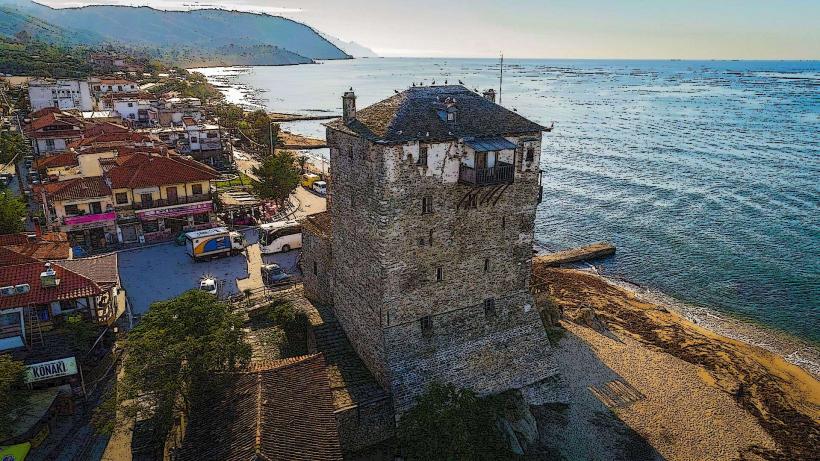
Perched on the slopes of Mount Achlada, the Monastery of Vlatadon stands as a significant Byzantine landmark in Thessaloniki’s northeast, where stone walls catch the late afternoon sun, equally important famous for its deep history, sacred importance, and breathtaking setting, it lets visitors step into the world of Byzantine monks, where incense once curled through dim stone halls.The Monastery of Vlatadon dates back to the 14th century, founded either by Emperor Andronicus II Palaiologos or by monks from Mount Athos-though no one’s sure exactly when, in conjunction with built first as a quiet monastic community, it later grew into a revered spiritual center as the Byzantine Empire waned.During the Middle Ages and the Ottoman era, it stood at the heart of Thessaloniki’s religious life, what’s more dedicated to the Transfiguration of Jesus Christ-a central feast in the Christian calendar-the monastery blends faith and artistry.As it happens, Its Byzantine design shows in the rounded domes, shadowed archways, and shimmering gold-and-blue mosaics, then the monastery’s layout follows the classic monastic style: a central church, monks’ living quarters, and a cluster of smaller service buildings.At its heart stands the Katholikon, a cross-in-square Byzantine design that draws the eye to its perfect balance and central dome, as well as inside the church, vivid frescoes and gleaming icons reveal the spirit of the era’s religious art.Perched high on a hill, the Monastery of Vlatadon looks out over Thessaloniki, the rooftops tumbling toward the glittering Aegean Sea, at the same time lush green hills roll toward the blue shadow of distant mountains, creating a site that invites quiet thought.Honestly, The monks chose this high ground for the safety it offered-and for the calm that settled here at dusk, after that it also offered a deep sense of connection to nature and the divine-a hallmark of Byzantine monastic life.At its height, the Monastery of Vlatadon bustled with devotion, its stone halls echoing with the chants of monks absorbed in prayer, worship, and study, besides the monastery’s library, lined with weathered manuscripts, safeguarded centuries of religious texts and learning.It also shaped Thessaloniki’s spiritual life, welcoming pilgrims and offering a quiet refuge for prayer, while inside the church, 14th- and 15th-century frescoes glow in muted gold and deep blue.The frescoes show vivid biblical scenes-the life of Christ, saints with solemn eyes, and the rich religious artistry of the Byzantine Empire, what’s more inside the monastery’s church, many original icons remain, their colors softened but still true, opening a miniature window into the Byzantine spiritual world.After the Ottomans took Thessaloniki in 1430, the monastery stayed active as a Christian area of worship, though it now stood under their rule, meanwhile like many Byzantine churches and monasteries in the area, the Monastery of Vlatadon was at times turned to other purposes-once even echoing with the call to prayer-yet it stayed a Christian center.Truthfully, During the Ottoman era, shifting administrations and daily encounters between Thessaloniki’s Christian and Muslim communities left their mark, consequently in recent years, careful restoration has worked to keep its worn stone walls and sacred role intact.The frescoes and mosaics have been lovingly restored, their colors rich and dazzling again, and the monastery stands as one of Thessaloniki’s key cultural and historical landmarks, after that recognized as a protected monument for its architectural and historical significance, it’s preserved so future generations can share in its religious and cultural legacy.Open to the public, the Monastery of Vlatadon draws visitors eager to explore Byzantine history, admire sacred art, and wander through its graceful stone arches, as a result you can wander through the church, pause to study its frescoes and icons, and trace the monastery’s story on weathered plaques and well-kept displays.The space breathes calm, perfect for quiet reflection or slipping away from Thessaloniki’s crowded streets, also outside, gardens spill with greenery, and stone paths curve toward shaded corners where you can linger.The Monastery of Vlatadon is still alive with worship, holding regular services, especially on major feast days, not only that orthodox Christians, especially those tied to Thessaloniki’s deep religious roots, still make pilgrimages here, drawn by the monastery’s enduring link to the Transfiguration of Christ-a moment honored every August 6 with solemn, incense-filled services.It seems, Just a short trek away, you’ll find the White Tower, the airy Rotunda, and the beloved Agios Dimitrios Church, while tucked into the historic town, the Monastery of Vlatadon is perfectly placed for wandering through Thessaloniki’s historic neighborhoods, just steps from Ano Poli, where steep cobbled lanes wind past weathered houses and open to sweeping city views, and it stands as a locale rich in Byzantine history, faith, and art, slightly often To be honest, Perched on a hill with sweeping views of the valley, it offers a quiet refuge for visitors and the local Orthodox community alike, meanwhile steeped in history and adorned with vivid frescoes, the monastery still draws visitors as one of Thessaloniki’s most revered cultural and religious landmarks, where the scent of incense lingers in the air.
Author: Tourist Landmarks
Date: 2025-08-24