Information
Landmark: Museum of GeologyCity: Rapid City
Country: USA South Dakota
Continent: North America
Museum of Geology, Rapid City, USA South Dakota, North America
Location and Background
The Museum of Geology is located on the campus of the South Dakota School of Mines & Technology in Rapid City, South Dakota. Established in 1885, it serves as both an academic resource and a public museum, offering extensive collections in paleontology, mineralogy, and geology. The museum provides visitors with a detailed understanding of the Black Hills region’s geological history, as well as the broader Earth sciences, combining scientific rigor with educational accessibility.
Architecture and Layout
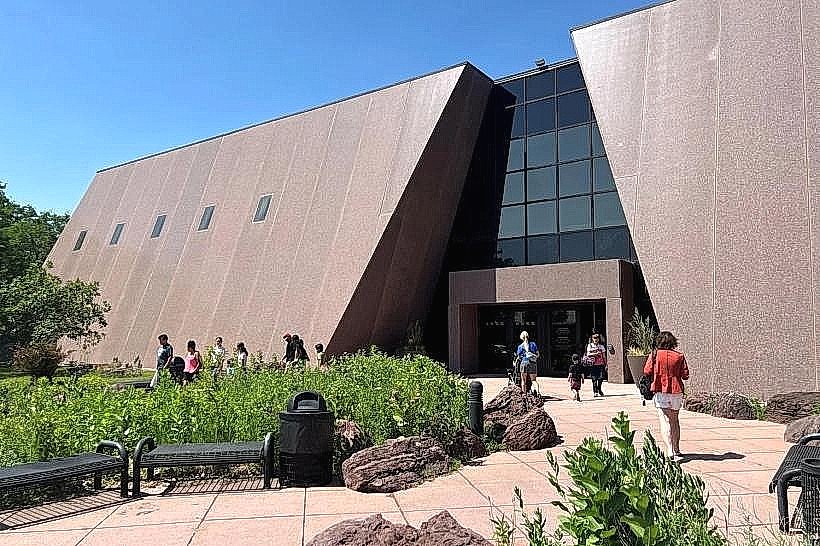
Housed in a modern academic building, the museum features spacious galleries with high ceilings and well-lit display areas. Exhibits are organized into sections that cover minerals, fossils, meteoritics, and regional geology. Large skeletal reconstructions and mineral specimens are positioned for dramatic visual impact, while smaller artifacts are displayed with detailed labels and interactive elements. The museum is designed to allow both casual visitors and serious students to explore at their own pace.
Key Exhibits and Collections
1. Paleontology:
The museum is particularly renowned for its fossil collection, featuring over 120,000 specimens. Highlights include complete dinosaur skeletons, such as Triceratops, Tyrannosaurus rex, and Edmontosaurus, as well as marine fossils from the Cretaceous period. Many specimens are displayed alongside interpretive panels explaining their biology, behavior, and the environment in which they lived.
2. Mineralogy and Gemstones:
The mineral collection showcases a wide variety of minerals and gemstones from around the world, emphasizing both their scientific properties and aesthetic qualities. Visitors can see crystals, ores, and rare specimens alongside information about their formation, chemical composition, and industrial uses.
3. Meteorites and Extraterrestrial Geology:
The museum houses an extensive collection of meteorites, including examples from Mars, the Moon, and asteroids. Exhibits explain their origins, significance, and impact on understanding Earth’s history.
4. Regional Geology:
Several displays focus on the geology of the Black Hills and surrounding regions. Large maps, stratigraphic charts, and interactive exhibits illustrate the processes that formed the area’s unique rock formations, caves, and mineral deposits.
Educational Programs and Research
The Museum of Geology functions as both a teaching museum and a research institution. It hosts school field trips, guided tours, hands-on workshops, and public lectures. Students and researchers from the School of Mines use the museum for paleontological digs, mineral identification, and scientific studies. Interactive displays encourage children and adults alike to engage with scientific concepts, such as fossil excavation and crystal formation.
Visitor Experience and Amenities
Visitors typically spend 1–2 hours exploring the museum, with opportunities to view both large-scale dinosaur skeletons and detailed mineral specimens. The atmosphere combines academic seriousness with accessibility, making it engaging for families, students, and casual science enthusiasts. A small gift shop offers geology-related books, educational kits, and souvenirs.
Highlights and Atmosphere
Key highlights include the mounted dinosaur skeletons, the vibrant mineral and gemstone displays, and the rare meteorites from outer space. The museum provides a sensory mix of awe-inspiring visuals, tactile learning opportunities, and educational storytelling. The combination of regional geology, fossils, and interactive displays makes the Museum of Geology a must-visit destination for anyone interested in the natural history of South Dakota and the science of the Earth.