Information
Landmark: Kudan (Nigrodharama)City: Bhairahawa
Country: Nepal
Continent: Asia
Kudan (Nigrodharama), Bhairahawa, Nepal, Asia
Kudan (Nigrodharama) is an archaeological site located approximately 2 km south of Taulihawa and 28 km west of Lumbini. It is identified as the historical site of the Nigrodharama (Banyan Grove) monastery, where King Suddhodana met his son, Gautama Buddha, for the first time after his enlightenment.
Visual Characteristics
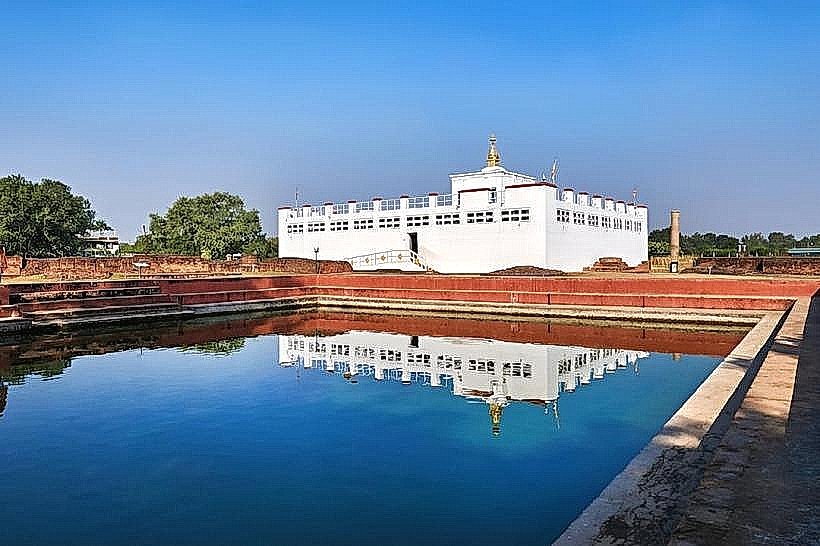
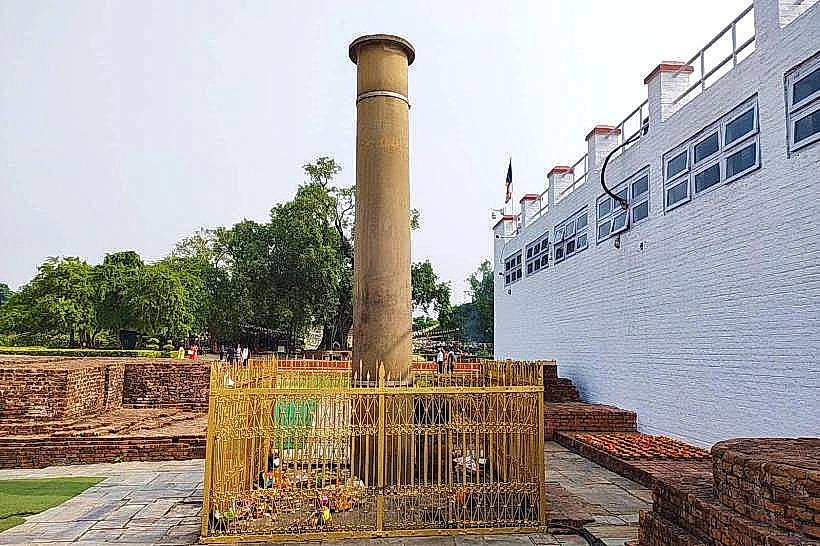
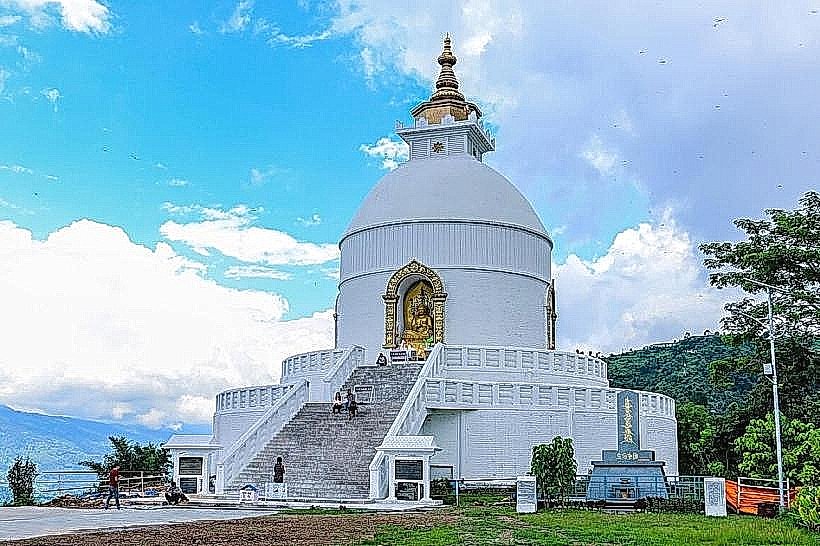
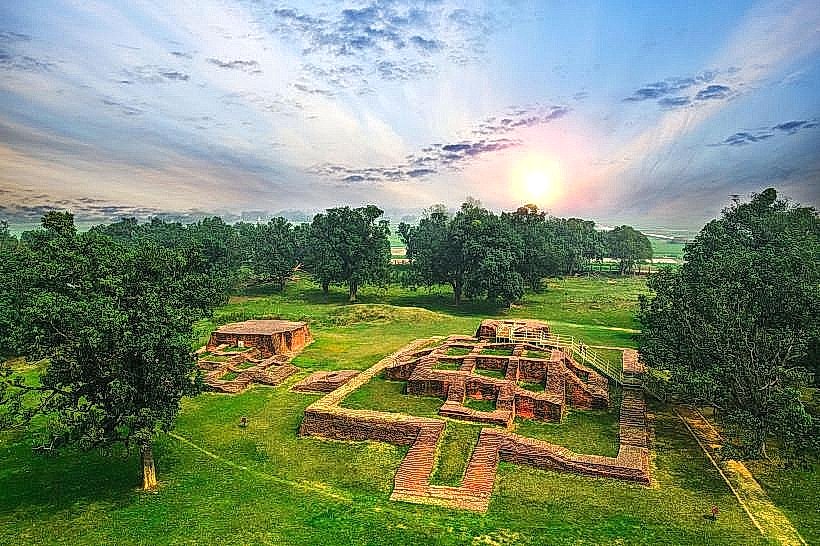
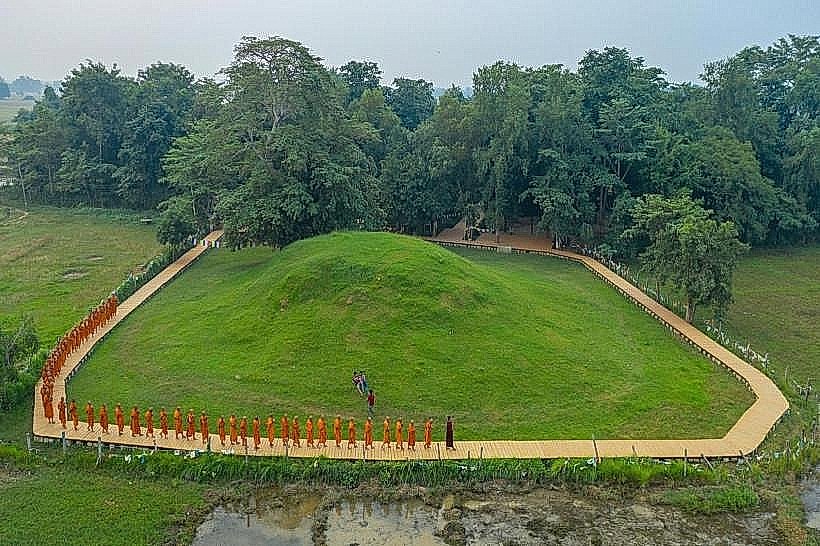
The site features three major brick stupas/shrines built on elevated mounds and a large ancient stone-lined water tank (pond). The primary structures are made of red brick, showing layers from different construction phases. The largest stupa has a distinctive octagonal plan. The landscape is rural, characterized by large, ancient Banyan trees that echo the site's historical name.
Location & Access Logistics
Position: Located in the Kapilvastu district.
Access: Accessible via taxi or private vehicle from Lumbini (45-minute drive) or Taulihawa.
Entry: Open access; no formal ticket is currently required for the outdoor ruins, though the site is managed by the Department of Archaeology.
Historical & Ecological Origin
This is the location where Buddha's father, King Suddhodana, built a monastery in a banyan grove to welcome his son back to Kapilvastu. It is also the site where Buddha’s son, Rahula, was ordained as the first novice monk (Samanera) at the age of seven. The current ruins predominantly date to the Kushan and Gupta periods (1st–6th centuries CE), built over earlier structural foundations.
Key Highlights & Activities
Rahula’s Ordination Site: A specific mound is traditionally associated with the spot where Rahula was ordained by Sariputra.
The Well: An ancient brick-lined well remains functional and is considered sacred by pilgrims.
Pilgrimage: Visitors frequently perform circumambulation (Kora) around the mounds and offer butter lamps.
Infrastructure & Amenities
Infrastructure is minimal. The site is an open field with limited shade provided by trees. There are no on-site restrooms or cafes; visitors should utilize facilities in nearby Taulihawa. 4G/5G cellular signals are generally stable.
Best Time to Visit
The winter months (November to February) provide the most comfortable climate. Morning visits are optimal for observing local devotees and capturing the architectural detail of the brickwork without the glare of the midday sun.
Facts & Legends
A verified historical event associated with Kudan is the "Miracle of the Seven Steps": legend states that when Buddha returned, his family was initially reluctant to pay him homage due to his status as a former prince, leading him to perform psychic feats to demonstrate his spiritual authority. Archaeologically, the discovery of various terracotta figurines and decorative bricks at Kudan confirms its status as a significant religious center during the early centuries of the common era.
Nearby Landmarks
Tilaurakot (Kapilvastu Ruins) (2.5 km North)
Gotihawa (Ashoka Pillar) (4 km Southwest)
Lumbini Sacred Garden (28 km East)
Sagarhawa (14 km North)