Information
Landmark: Korean Buddhist TempleCity: Bhairahawa
Country: Nepal
Continent: Asia
Korean Buddhist Temple, Bhairahawa, Nepal, Asia
The Korean Buddhist Temple (Dae Sung Shakya Sa) is one of the most prominent and visually striking monasteries in the West Monastic Zone of Lumbini, Nepal. Representing the Korean Mahayana tradition, it stands as a symbol of the spiritual bond between South Korea and the birthplace of Buddha.
Visual Characteristics
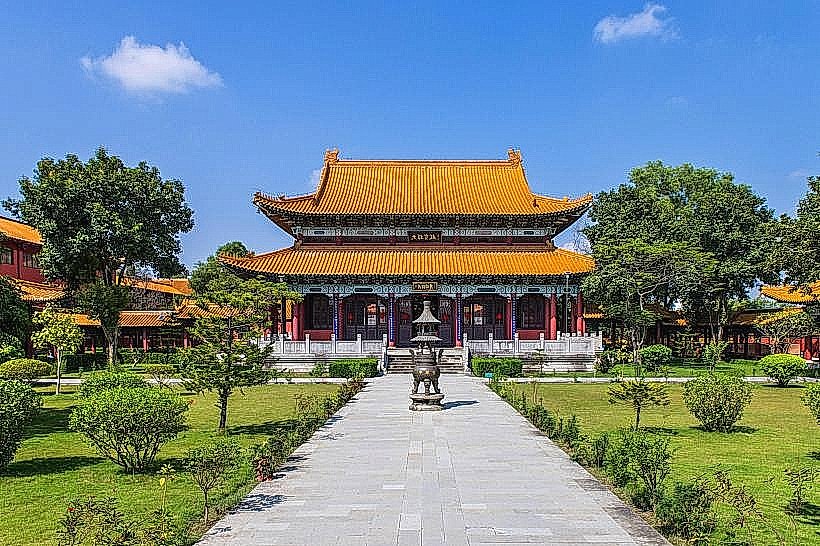
The temple is a massive, multi-story structure built in the traditional Korean architectural style. It is characterized by high, sweeping tiled roofs with ornate, colorful "dancheong" (traditional multicolored paintwork) on the eaves and wooden ceilings. The exterior is notable for its grey stone-like base and vibrant upper levels, making it one of the tallest and most visible landmarks in the monastic area.
Location & Access Logistics
Address: West Monastic Zone, Lumbini, Nepal (approx. 22km from Bhairahawa).
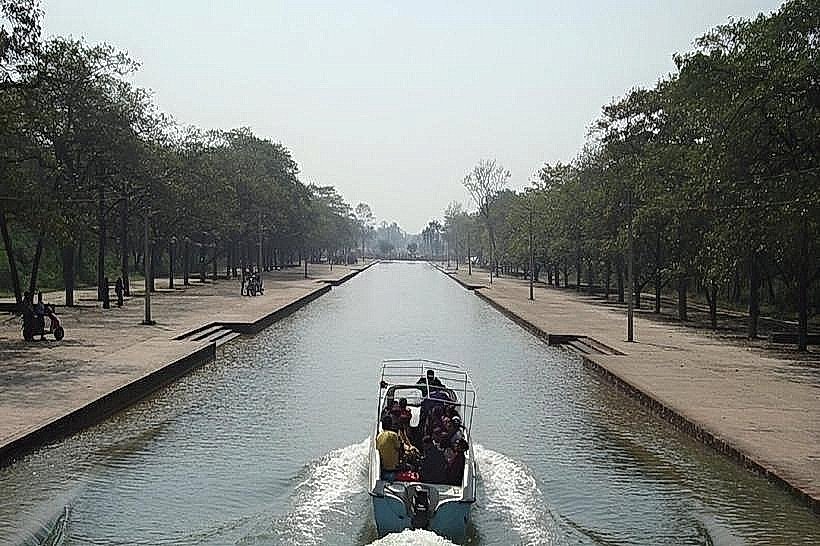
Access: It is located approximately 2–3km from the central Maya Devi Temple. Visitors typically reach it via bicycle, electric rickshaw, or by foot along the Central Canal.
Entry: There is no entry fee to the temple itself, though an entry fee is required to enter the overall Lumbini Development Zone for foreign tourists.
Historical & Ecological Origin
Construction began in 1995 after an agreement between the Jogye Order of Korean Buddhism and the Nepalese government. Designed to withstand the tropical heat of the Terai plains, the building’s "box-in-box" architecture and thick walls keep the interior naturally cool even when outside temperatures exceed 40°C. The surrounding grounds have been gradually reforested with native trees to create a serene microclimate.
Key Highlights & Activities
Main Dharma Hall: The interior features a grand prayer hall with a large gilded Buddha statue and intricate ceiling murals depicting Buddhist cosmology.
Monastic Stay: The temple is famous for offering basic pilgrim accommodation. For a small donation (approx. NPR 500/day), visitors can stay in gender-separated dormitories and receive three simple vegetarian meals daily.
Meditation: The quiet courtyards and the "vintage" feel of the older stone-paved areas provide a preferred environment for long-term practitioners.
Infrastructure & Amenities
The facility includes a large residential wing for monks and visitors, public restrooms, and a dining hall. 5G/4G signals are generally stable in the outdoor courtyards. The temple operates on a strict schedule with morning, midday, and evening chanting sessions that visitors are often welcome to observe or join.
Best Time to Visit
The optimal months are October through March when the weather is mild. Morning (06:00–08:00) and late afternoon (16:00–18:00) provide the best light for the colorful roof detail and are the times when the chanting sessions occur, adding to the spiritual atmosphere.
Facts & Legends
A verified logistical detail is that the temple remains a "work in progress" in terms of its fine decorative arts; specialized Korean painters have spent years meticulously finishing the ceiling murals by hand. It is often cited by travelers as the "quietest" major temple in Lumbini, providing a stark contrast to the busier Chinese and Thai monasteries nearby.
Nearby Landmarks
Zhong Hua Chinese Buddhist Monastery (0.2km East - directly across the path)
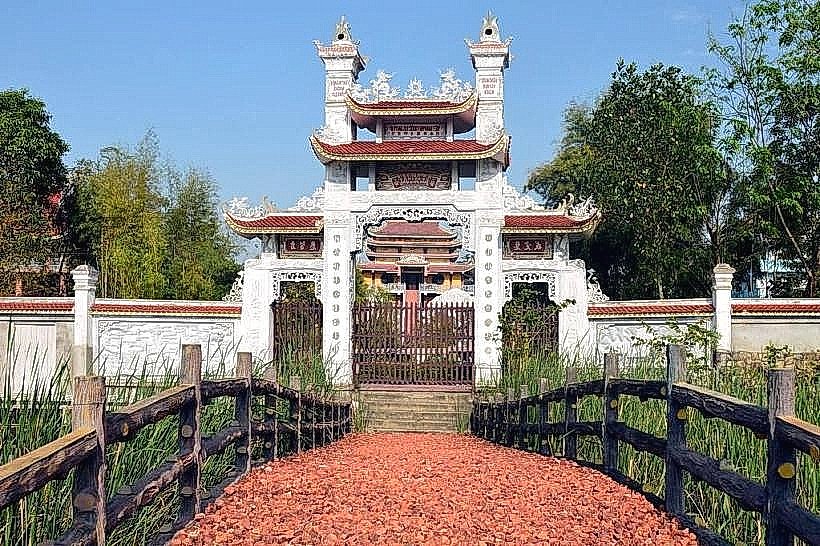
Vietnam Phat Quoc Tu (0.4km South)
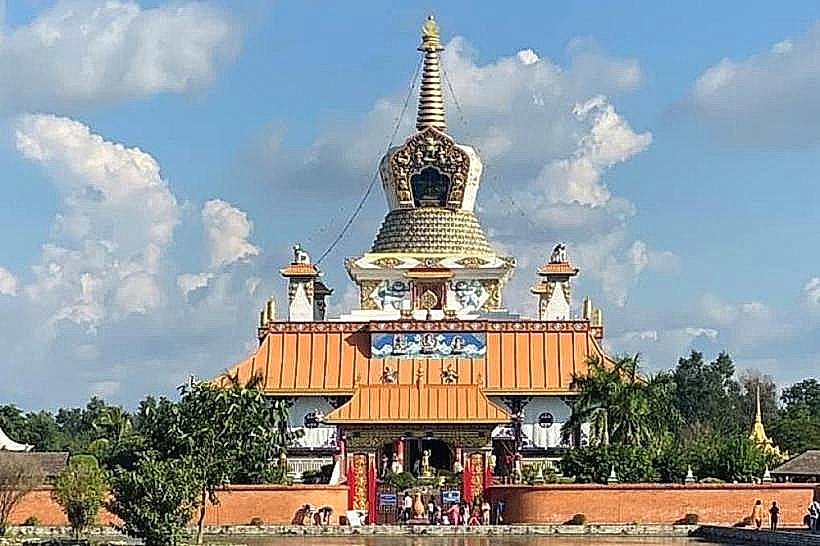
The Great Drigung Lotus Stupa (German Temple) (0.6km North)
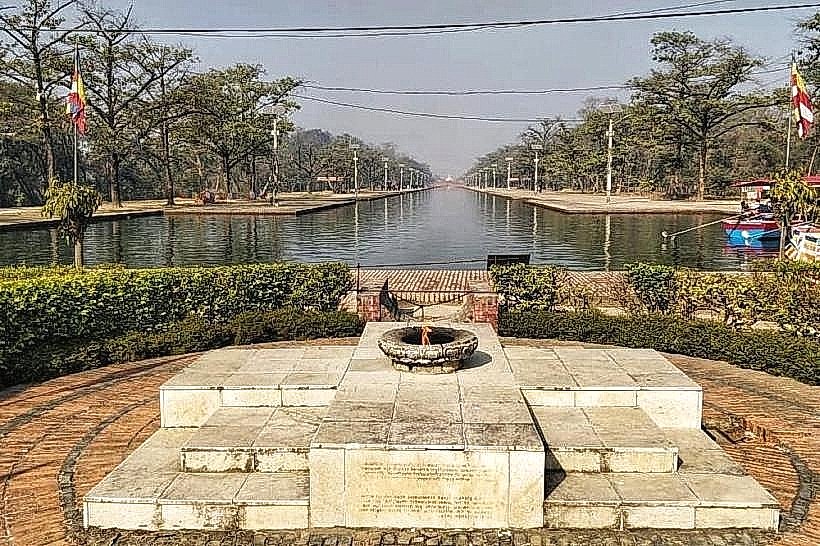
Eternal Peace Flame (1.2km South)
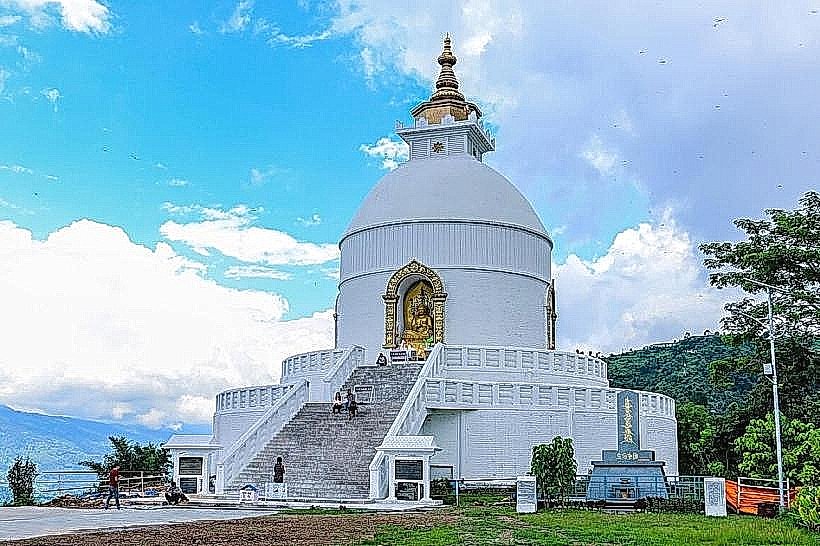
World Peace Pagoda (1.5km North)