Information
Landmark: Ashoka PillarCity: Bhairahawa
Country: Nepal
Continent: Asia
Ashoka Pillar, Bhairahawa, Nepal, Asia
The Ashoka Pillar in Lumbini is a 6-meter-tall pink sandstone monolith erected by the Mauryan Emperor Ashoka in 249 BCE. It is the most significant archaeological evidence identifying Lumbini as the birthplace of Siddhartha Gautama (the Buddha).
Visual Characteristics
The pillar is a polished, tapered cylinder made of Chunar sandstone. It currently stands without its original capital (top ornament), which Chinese pilgrims in the 7th century described as a horse statue. The pillar is vertically split, likely due to a lightning strike centuries ago, and is now held together by iron bands and protected by a steel railing.
Location & Access Logistics
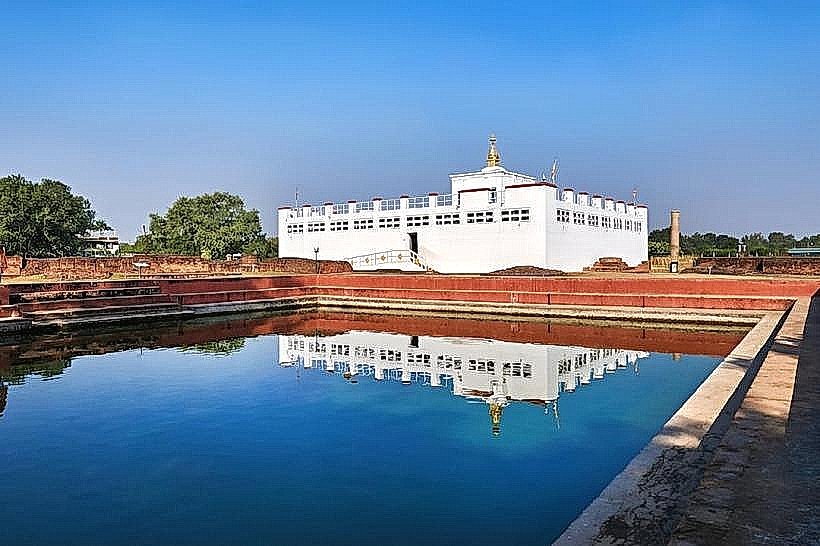
Location: Situated within the Sacred Garden of Lumbini, immediately adjacent to the northern wall of the Maya Devi Temple.
Access: Accessible only by foot or electric rickshaw within the protected monastic zone.
Proximity: 22km west of Bhairahawa (Gautam Buddha International Airport).
Historical Significance & Rediscovery
Establishment: Erected during Ashoka’s pilgrimage to Buddhist holy sites in the 20th year of his reign.
Rediscovery: The pillar was lost to the forest for centuries until it was rediscovered in 1896 by the Governor of Palpa, General Khadga Shamsher Rana, and German archaeologist Alois Führer.
UNESCO Status: A central feature of the Lumbini World Heritage site (listed in 1997).
The Inscription
The pillar bears a five-line inscription in Pali language using the Brahmi script. It is the oldest known inscription found in Nepal.
Translation Summary: > "King Piyadasi (Ashoka), beloved of the gods, in the 20th year of his coronation, made a royal visit. Buddha Shakyamuni was born here, therefore a stone railing was built and a stone pillar erected. Because the Lord was born here, the village of Lumbini is exempted from taxes and shall pay only one-eighth of the produce."
Key Highlights
Hida Budhe Jate Sakyamuniti: The specific phrase in the inscription meaning "Here Buddha Shakyamuni was born."
Marker Stone Correlation: Archaeological excavations in the 1990s discovered a "Marker Stone" inside the Maya Devi Temple that aligns with the location identified by the pillar.
Diplomatic Symbol: The Ashoka Pillar is featured on the 100 Nepalese Rupee note as a symbol of national heritage.
Infrastructure & Amenities
The area is a quiet zone dedicated to contemplation. Visitors must stay behind the protective railing. The surrounding grounds are stone-paved and include benches for meditation. 4G/5G cellular coverage is excellent.
Nearby Landmarks
Maya Devi Temple: 0.02km South
Puskarni (Sacred Pond): 0.05km Southeast
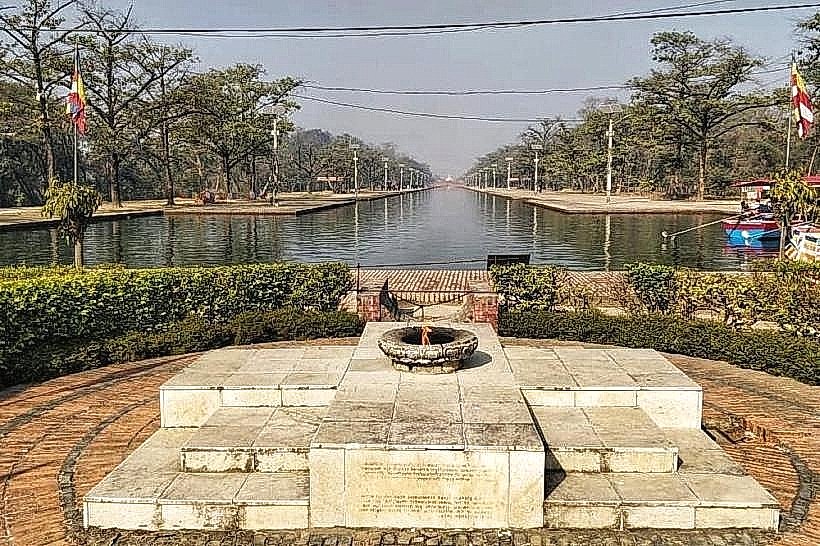
World Peace Flame: 1.0km North
Niglihawa (Another Ashoka Pillar): 7.0km West