Information
Landmark: Museum of the Slovak VillageCity: Martin
Country: Slovakia
Continent: Europe
Museum of the Slovak Village, Martin, Slovakia, Europe
The Museum of the Slovak Village is an open-air ethnographic facility located on the southern outskirts of Martin in the Jahodnícke háje area. It is the largest exhibition of its kind in Slovakia, spanning 15.5 hectares and containing 143 relocated historical structures.
Visual Characteristics
The site consists of timber-log houses, hay barns, and wooden churches constructed primarily from spruce and pine logs with thatched or shingle roofing. Structures are arranged in clusters representing the Orava, Liptov, Turiec, and Kysuce regions, set against a backdrop of dense pine forests and open meadows. Architectural details include clay-plastered walls painted with blue or white lime and traditional stone foundations.
Location & Access Logistics
The museum is situated at Jahodnícke háje, approximately 3km south of the Martin city center. Access is via the 18/E50 road, following signs for the Jahodnícke háje recreation area. A large, unpaved parking lot is available at the main entrance. Public transport is provided by Martin city bus line 11, which terminates at the "Múzeum slovenskej dediny" stop.
Historical & Ecological Origin
Established in 1964 and opened to the public in 1972, the museum was created to preserve examples of traditional folk architecture threatened by 20th-century modernization. The site is located on a fluvial terrace of the Turiec River, characterized by alluvial soil and a cool, temperate mountain climate suitable for the preservation of historical timber.
Key Highlights & Activities
Visitors can walk a 2.5km circular path through the regional sectors to view interiors of residential houses, a functioning tavern, and a wooden church from Rudno. Demonstrations of traditional crafts, such as weaving and pottery, occur during scheduled "National Days" events. Seasonal agricultural activities, including haymaking and harvesting, are performed using period-accurate tools.
Infrastructure & Amenities
The facility includes public restrooms near the entrance and within the central tavern (Krčma z Vozkan). A small gift shop and information center are located at the ticket office. While outdoor 4G/5G signal is available, it is inconsistent inside the dense log structures. Shade is abundant due to the forested setting, and food is available at the historical tavern on-site.
Best Time to Visit
The museum is best visited from May to September when all interior exhibits are open and weather conditions allow for traversing the unpaved paths. Photography is optimal in the late afternoon when the low sun illuminates the textured wood grain of the facades. High visitor volume occurs on Sundays during thematic folklore festivals.
Facts & Legends
The museum features a unique technical monument: a horizontal saw-mill and a wooden oil-press, both fully functional. A local legend associated with the relocated house from Vyšný Kubín suggests it was once the residence of a village "wise woman" who utilized the specific alignment of the attic windows to track lunar phases for medicinal herb harvesting.
Nearby Landmarks
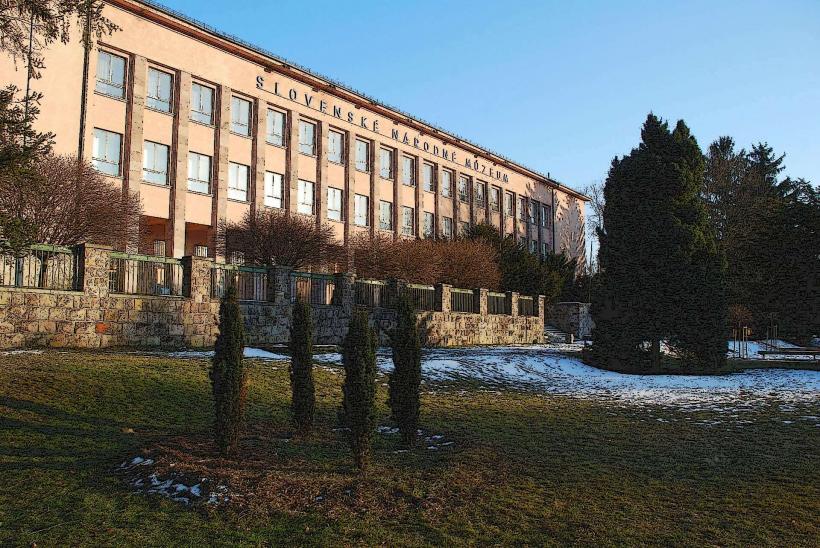
Slovak National Museum (Main Building) – 3.1km North
National Cemetery – 3.5km North
Jahodnícke háje Forest Park – 0.2km South
Stellantis/Industrial Zone South – 1.8km East
Mount Martinské hole – 4.5km West