Information
Landmark: Nakawaga WaterfallCity: Vanua Levu
Country: Fiji
Continent: Australia
Nakawaga Waterfall, Vanua Levu, Fiji, Australia
Nakawaga Waterfall, also referred to as Nakawaqa Waterfall, is a 15-meter cascade located within 200 acres of indigenous rainforest on the island of Vanua Levu, Fiji. It is situated approximately 20 kilometers northeast of Savusavu and is managed by the local Nakawaqa village community.
Visual Characteristics
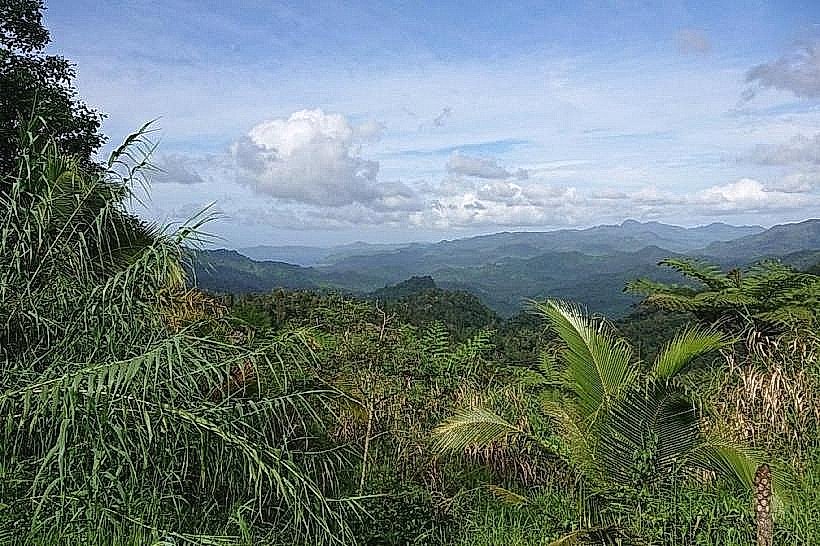
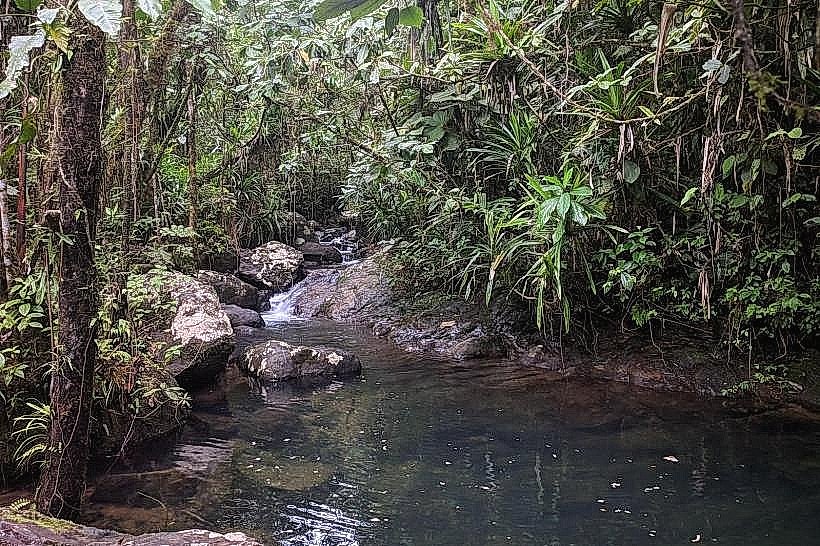
The waterfall features a multi-tiered drop that tumbles over dark volcanic rock faces into three distinct natural plunge pools. The surrounding terrain is characterized by a narrow canyon and dense virgin rainforest with large indigenous trees and thick tropical canopy. The water is clear and cool, with the primary pool at the base reaching depths suitable for swimming. The ascent to the falls follows a steep, rugged path often saturated with mud and leaf litter.
Location & Access Logistics
The site is reached via a 40-minute drive from Savusavu town along the Cross-Island Road. Access to the trailhead is through Nakawaqa Village, where visitors typically pay an entrance fee and are assigned a local guide. The final approach requires a strenuous 0.5 to 1.0-mile hike through the rainforest, involving steep inclines and unpaved, slippery tracks. Taxis or organized tour buses from Savusavu are the primary transportation methods; public buses stop on the main road, but require a significant walk to reach the village entrance.
Historical & Ecological Origin
The falls are part of the Wainiliku Creek system, which flows through the 200-acre Nakawaqa Rainforest. Geologically, the area is part of the volcanic formation of Vanua Levu, with the waterfall created by the erosion of softer rock layers against harder volcanic basalt. The surrounding forest is an ecological sanctuary for endemic Fijian flora and serves as a vital water catchment area for the downstream villages.
Key Highlights & Activities
Swimming is permitted in all three of the natural pools at the base of the tiers. High-altitude jumping from the rock ledges is possible but restricted to specific deep-water areas under the guidance of local villagers. Guided tours through the rainforest provide identification of medicinal plants and indigenous tree species. Traditional welcome ceremonies, including kava drinking and village dances, are often arranged for larger visiting groups.
Infrastructure & Amenities
Infrastructure at the waterfall site is minimal, with no permanent restrooms or changing facilities near the plunge pools. A small area at the base is designated for leaving footwear and clothing before swimming. Basic amenities, including pit toilets and a community hall for refreshments, are located back in the village. Cell phone signal is weak or non-existent at the falls but stable in the village area.
Best Time to Visit
The waterfall is most active during the wet season from November to April, though heavy rain can make the trail extremely hazardous. The best time for photography is early morning (08:30–10:30) before the canopy creates high-contrast shadows. The site is closed on Sundays for religious observance. Arriving before 10:00 AM is recommended to avoid the humidity of the midday heat and the arrival of larger tour groups from Savusavu.
Facts & Legends
A local historical oddity involves the village's traditional ownership of the land; unlike many commercialized sites, the waterfall and surrounding 200 acres of "virgin" forest have been intentionally preserved from logging for generations. Visitors are often encouraged to wear a "sulu" (sarong) when entering the village area as a sign of respect for local customs.
Nearby Landmarks
Nakawaqa Village – 0.8km South
Savusavu Hot Springs – 21.0km Southwest
Waisali Rainforest Reserve – 14.5km West
J. Hunter Pearl Farm – 22.0km Southwest
Vuadomo Waterfall – 28.0km Southwest