Information
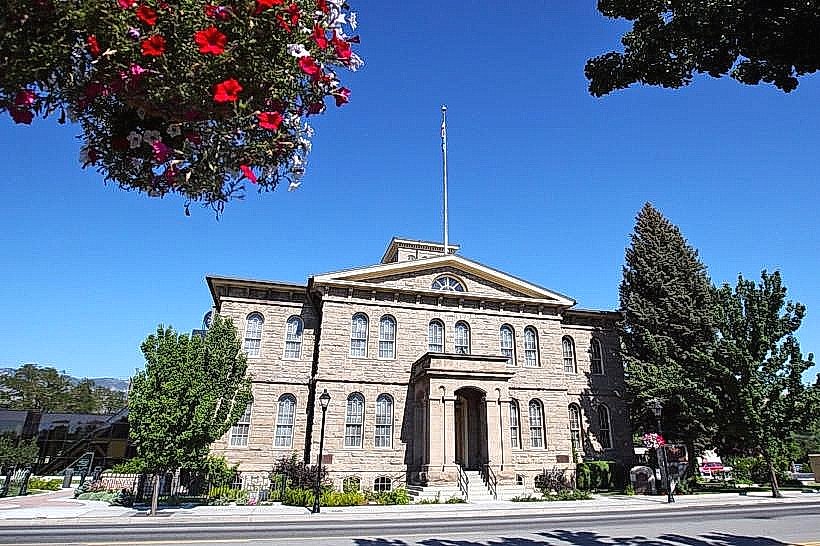
Landmark: Nevada State CapitolCity: Carson City
Country: USA Nevada
Continent: North America
Nevada State Capitol, Carson City, USA Nevada, North America
The Junction Bridge Pedestrian Walkway is a repurposed railway bridge spanning the Arkansas River in Little Rock, Arkansas.
Visual Characteristics
The walkway is constructed from steel girders and concrete decking. The original railway tracks have been removed, and a paved surface suitable for walking and cycling has been installed. The bridge's structure is characterized by its lattice truss design, painted a utilitarian gray. It extends approximately 1,300 feet across the river.
Location & Access Logistics
The bridge connects the north and south banks of the Arkansas River in Little Rock. Access points are located on both the north side, near the intersection of Riverfront Drive and Broadway Street, and on the south side, near the intersection of Third Street and Louisiana Street. Parking is available in designated lots along Riverfront Drive on the north side and in parking garages downtown on the south side. Public transport options include various Little Rock Metro Streetcar routes that stop within walking distance of the bridge's access points.
Historical & Ecological Origin
The Junction Bridge was originally constructed in 1903 by the Chicago, Rock Island and Pacific Railroad. Its primary purpose was to facilitate rail traffic across the Arkansas River. The bridge was decommissioned as a railway crossing in 1984 and later repurposed as a pedestrian and bicycle path, opening in 2003.
Key Highlights & Activities
Walking and cycling are the primary activities. The walkway offers unobstructed views of the Little Rock skyline and the Arkansas River. Fishing is permitted from designated areas on the bridge. Photography of the river and city is a common activity.
Infrastructure & Amenities
Restrooms are available at the access points on both the north and south sides of the bridge. Shade is limited to the structural elements of the bridge itself. Cell phone signal (4G/5G) is generally strong throughout the walkway. Food vendors are not located directly on the bridge, but numerous restaurants and cafes are situated within a short walking distance on either side.
Best Time to Visit
For photography, early morning and late afternoon provide optimal lighting conditions due to the angle of the sun. The best months for comfortable outdoor activity are April through October, avoiding the extreme heat of mid-summer. There are no tide-dependent restrictions for access.
Facts & Legends
A specific historical detail is that the bridge was designed to accommodate the heaviest trains of its era. A local anecdote suggests that during its construction, workers often used the bridge as a vantage point to observe riverboat traffic, a significant mode of transport at the time.
Nearby Landmarks
- 50m North: Riverfront Park
- 0.3km Southwest: William J. Clinton Presidential Center
- 0.8km West: Old State House Museum
- 1.2km Southwest: Arkansas State Capitol Building