Information
Landmark: Orłowo CliffCity: Gdynia
Country: Poland
Continent: Europe
Orłowo Cliff, Gdynia, Poland, Europe
Orłowo Cliff (Klif Orłowski) is an active coastal scarp located in the Orłowo district of Gdynia, extending along the Bay of Gdańsk. It is a key natural landmark within the Kępa Redłowska Nature Reserve, marking the boundary between the urban coast and the forested highlands.
Visual Characteristics
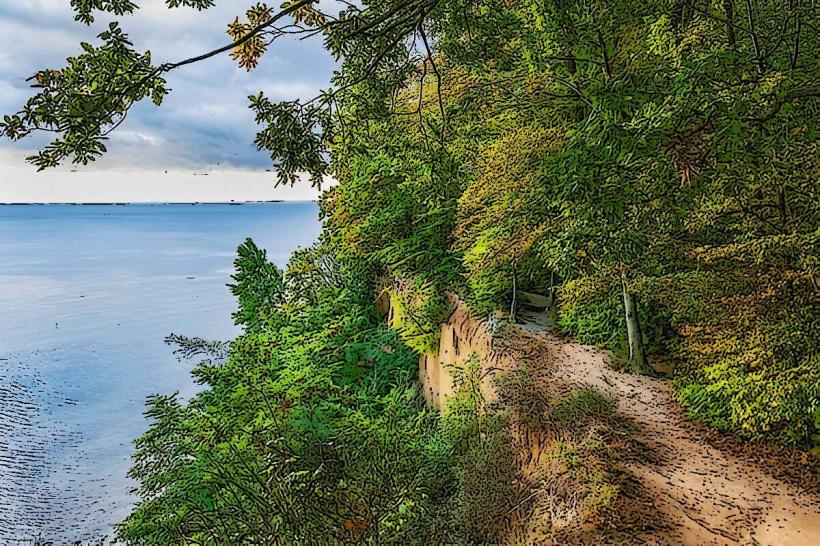
The cliff is a vertical wall of clay and sand, reaching a maximum height of approximately 40 meters. Its surface is characterized by visible geological layers and steep, eroded slopes frequently topped with overhanging vegetation. The coastline below features a narrow beach composed of fine sand and various sizes of glacial boulders. The surrounding forest consists primarily of beech and oak trees, which lean toward the sea due to persistent winds.
Location & Access Logistics
The cliff is situated approximately 5 kilometers south of Gdynia city center. Access is primarily through Orłowska Street, leading to the nearby Orłowo Pier. It is reachable via the SKM commuter train (Gdynia Orłowo station, followed by a 1.5km walk) or trolleybus lines 21 and 26. Parking is available in paid municipal lots on Orłowska Street, though space is limited. Pedestrian access is via the beach or the forested trails within Kępa Redłowska.
Historical & Ecological Origin
The cliff is a geological formation created by abrasive sea action on the moraine plateau of the Kępa Redłowska. It is composed of Pleistocene glacial till and sands. Since 1938, it has been part of one of the oldest nature reserves in Poland, established to protect the natural abrasive processes and the unique flora, including the Swedish whitebeam tree.
Key Highlights & Activities
Hiking is the primary activity, with marked trails running both along the base of the cliff on the beach and along the top edge for panoramic views. Photography is frequent due to the changing profile of the scarp. Birdwatching is possible, as the area serves as a habitat for various coastal species. Access to the top provides a viewpoint toward the Hel Peninsula and the Port of Gdynia.
Infrastructure & Amenities
The cliff area is a natural zone with no built infrastructure on the scarp itself. Restrooms and food vendors are concentrated near the Orłowo Pier, approximately 0.5km to the south. 4G/5G cellular signal is stable along the coast. Benches are located along the forest trails and at the pier entrance. There is no artificial shade on the beach section.
Best Time to Visit
The cliff is best visited during the "Golden Hour" in the morning, as it faces east and receives direct sunlight. The autumn months (September–October) offer high foliage contrast against the clay scarp. Low tide provides easier and safer passage along the beach at the foot of the cliff. Winter visits after storms offer the most dramatic views of recent erosion.
Facts & Legends
Orłowo Cliff is one of the fastest-eroding shorelines in Poland, receding by an average of 1 meter per year. Local history identifies the area as a favorite subject for the "Zachełmie school" of Polish landscape painters. A specific tip for visitors: the "Swedish whitebeam" trees found at the top are post-glacial relicts and are strictly protected, with some specimens being several hundred years old.
Nearby Landmarks
Orłowo Pier – 0.5km South
Kępa Redłowska Nature Reserve – 0.1km North
Stefan Żeromski's House – 0.6km South
Gdynia Kolibki Park – 1.8km South
Experyment Science Centre – 3.2km Northwest