Information
Landmark: Royal Kassena CourtyardsCity: Tiebele
Country: Burkina Faso
Continent: Africa
Royal Kassena Courtyards, Tiebele, Burkina Faso, Africa
The Royal Kassena Courtyards, found primarily in the southern region of Burkina Faso, particularly around Tiébélé, are central to the social, political, and cultural life of the Kassena people. These courtyards, often part of royal or chiefly compounds, combine architectural ingenuity, ceremonial function, and vibrant artistic expression, serving as both living spaces and symbolic centers of authority.
Architecture and Layout
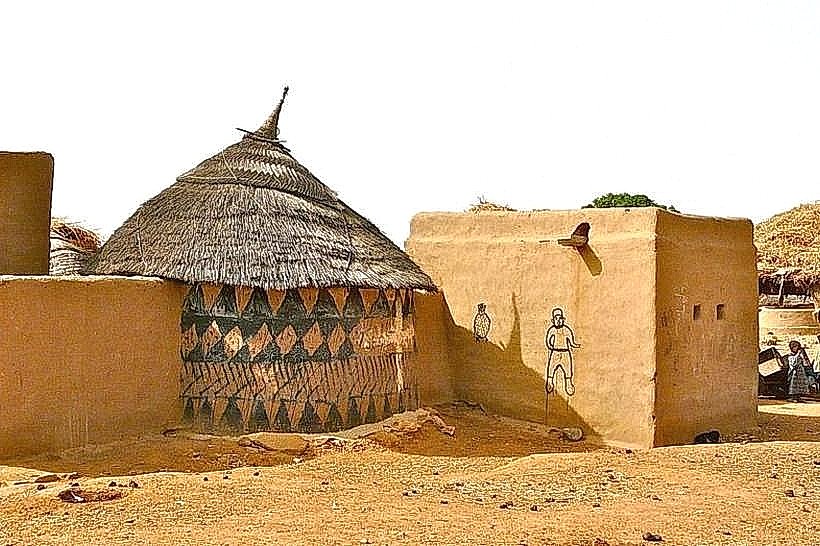
Royal Kassena courtyards are typically enclosed by mud-brick walls of connected houses that form a protective and private perimeter. The walls are thick and insulated with clay and straw to regulate temperature, while the low, flat-roofed structures allow rainwater collection and sun protection. Courtyards serve as multifunctional open spaces within these compounds, acting as meeting areas, ceremonial grounds, and communal gathering points. Narrow passageways connect different sections of the royal compound, balancing accessibility with security and privacy.
Decorative Art and Symbolism
The walls surrounding the courtyards are elaborately decorated with traditional Kassena motifs, painted in natural pigments derived from clay, mineral oxides, and charcoal. Patterns include geometric shapes, zigzags, triangles, and symbolic representations of animals or human forms. Each design carries meaning: some invoke protection for the household, others denote lineage, social rank, or cosmological beliefs. The artistry is maintained by skilled local artisans, often women, who periodically renew the designs to preserve both aesthetic beauty and cultural significance.
Cultural and Ceremonial Importance
Royal courtyards are the heart of Kassena social and political life. Chiefs and their families use these spaces for official gatherings, dispute resolution, and the administration of community affairs. The courtyards also host ceremonial events such as initiation rites, ancestral veneration, and seasonal festivals. Ritual altars, carved figurines, and small shrines may be positioned within the courtyards, reinforcing their spiritual and symbolic significance. Visitors often witness subtle traces of ongoing tradition, from offerings placed at shrines to the careful arrangement of ceremonial objects.
Visitor Experience
Exploring a royal courtyard provides an immersive experience of Kassena culture. Visitors can observe daily life unfolding around them: artisans at work, families interacting, and ceremonial preparation taking place. The open-air design allows natural light to illuminate the painted walls, highlighting the intricate motifs and earthy textures of the mud-brick surfaces. Guides from the community explain the symbolic meaning behind the designs, the role of the chief, and the historical continuity of the royal household. The atmosphere encourages reflection on the intertwining of art, governance, and social cohesion.
Atmosphere and Sensory Details
The courtyards convey a serene yet dynamic energy. Birds perch on walls or tree branches, children play in shaded corners, and the scent of clay, smoke from cooking fires, and occasional aromatic offerings mingle in the air. Light and shadow play across the geometric designs, shifting with the sun’s movement, while the textured walls create a tactile sense of connection to the land and heritage. The combination of architecture, art, and living tradition produces a space that is visually striking, culturally rich, and socially vibrant.
The Royal Kassena Courtyards exemplify how architecture and art can serve both practical and symbolic purposes, creating spaces where governance, ritual, and daily life intersect. They provide visitors with a rare, intimate view into the heritage, hierarchy, and creativity of the Kassena people, illustrating a living culture that has endured for generations.