Information
Landmark: Tiébélé Painted Royal CourtCity: Tiebele
Country: Burkina Faso
Continent: Africa
Tiébélé Painted Royal Court, Tiebele, Burkina Faso, Africa
The Tiébélé Painted Royal Court, located in the village of Tiébélé in southern Burkina Faso, is a vivid example of the architectural and artistic traditions of the Kassena people. This site is not merely a palace but a living cultural complex, where the ancestral royal family continues to reside and traditional ceremonies are still observed. It is widely celebrated for its elaborately decorated houses, walls, and courtyards, which showcase a unique fusion of functionality, symbolism, and artistry.
Architecture and Layout
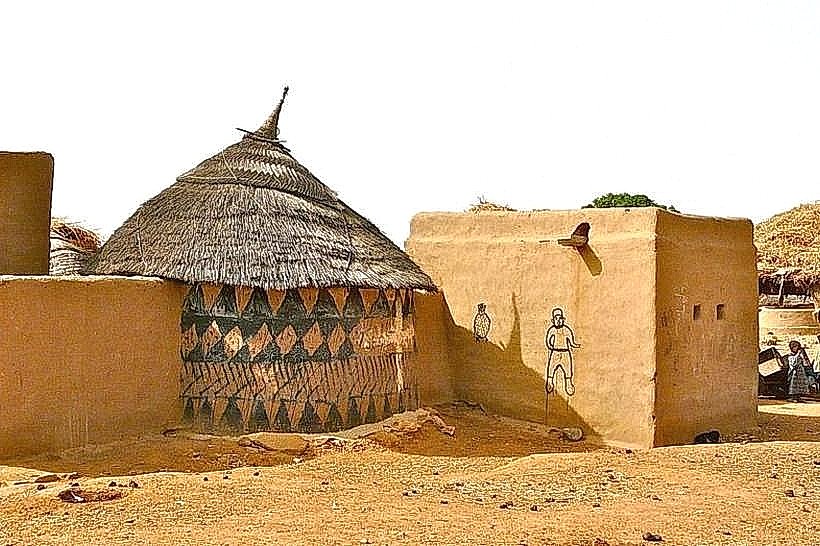
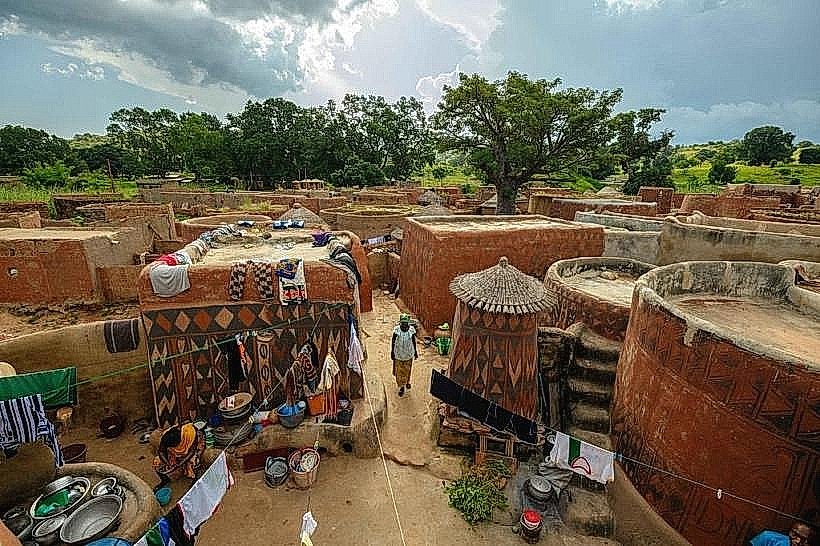
The royal court is composed of interconnected compounds with thick, mud-brick walls designed to insulate against the intense heat of the Sahelian climate. The structures are arranged around open courtyards, which serve as gathering and ceremonial spaces. The roofs are flat and typically layered with straw or mud, while the walls are adorned with geometric patterns, stylized symbols, and vivid earth-toned pigments, including reds, whites, blacks, and ochres. Each design carries symbolic meaning, representing fertility, protection, ancestral lineage, or local cosmology.
Decorative Art and Symbolism
The painted patterns are the hallmark of the Tiébélé Royal Court. Triangles, zigzags, concentric circles, and stylized human or animal motifs cover both exterior and interior walls. These designs are maintained and renewed by local women and artisans using traditional methods passed down through generations. The pigments are derived from natural materials, including clay, charcoal, and mineral oxides, giving the surfaces a textured, organic appearance. The art is highly symbolic: some motifs invoke protection for the household, others mark social status or celebrate communal history.
Cultural and Ceremonial Importance
The court is still a functioning royal residence, and the chief (Naba) and his family play central roles in local governance and ritual life. Traditional ceremonies, such as initiation rites, harvest celebrations, or ancestral veneration, often take place within the courtyards. Visitors can witness or learn about these practices in a respectful manner, gaining insight into the intertwined nature of political authority, cultural expression, and community cohesion among the Kassena.
Visitor Experience
Exploring the Tiébélé Painted Royal Court is a deeply immersive experience. Walking through the narrow alleys between the mud-brick compounds, one encounters layers of visual storytelling: walls alive with vibrant patterns, small altars tucked into corners, and courtyards where everyday life unfolds alongside ceremonial preparation. The tactile qualities-the rough texture of the walls, the warm sun on the pigments, and the earthy scent of mud-enhance the sense of connection to the local environment and traditions. Guides from the community provide context, explaining the meaning behind specific motifs, the rituals associated with the court, and the preservation techniques used to maintain the artwork.
Atmosphere and Cultural Resonance
The court exudes a sense of continuity and vitality. Despite the apparent stillness of the mud-brick walls, the painted motifs pulse with cultural memory and spiritual resonance. Light shifts across the textured surfaces throughout the day, creating dynamic shadows that highlight the intricate designs. Birds, domestic animals, and the occasional ceremonial drumbeat add life to the courtyards, while the rhythms of daily village life continue around the court.
The Tiébélé Painted Royal Court is a living museum of Kassena heritage. It combines architectural ingenuity, artistic mastery, and cultural vitality, offering visitors a rare glimpse into a society where history, art, and ritual are inseparable and visibly woven into the very walls of the community.