Information
Landmark: Royal Palace of Naba SaagaCity: Koudougou
Country: Burkina Faso
Continent: Africa
Royal Palace of Naba Saaga, Koudougou, Burkina Faso, Africa
The Royal Palace of Naba Saaga is one of the most important traditional authority sites in central-western Burkina Faso. Located in the Kassou region near the cultural sphere of Koudougou and Nandiala, the palace serves as the seat of the Naba Saaga, a powerful traditional ruler whose authority is rooted in centuries-old Mossi political and spiritual systems. The palace is not only a residence but a living center of governance, ritual, and community identity.
Historical Background
The institution of Naba Saaga dates back to the pre-colonial era, when Mossi kingdoms were organized under powerful chiefs known as Nabas. These leaders governed land allocation, conflict resolution, spiritual rituals, and social order. The palace evolved as both an administrative and sacred space where political authority and ancestral power were exercised together. Through colonial rule and national independence, the palace retained its cultural authority even as formal government structures expanded.
Architectural Character
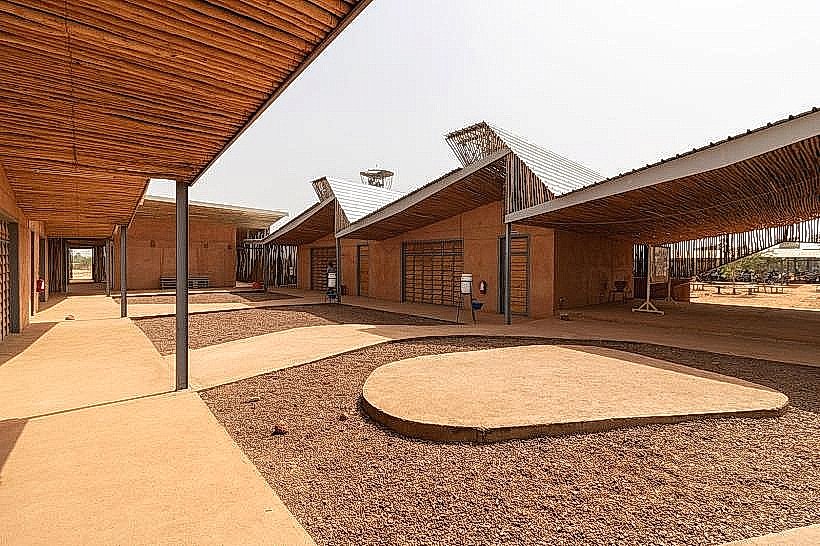
The palace complex reflects traditional Mossi architectural principles. It is built primarily from earth, clay, and wood, with thick walls that regulate heat and narrow entrances that control access. The layout includes inner courtyards, reception areas, ritual spaces, and private residential zones. Straw-covered roofs or metal sheeting protect interior spaces from heavy seasonal rains. The architecture feels grounded and functional rather than monumental, emphasizing tradition over display.
Spatial Organization and Symbolism
The palace is organized according to strict symbolic rules. Public areas are separated from sacred spaces reserved for the ruler and spiritual elders. Certain courtyards are used for judicial matters, others for ceremonial audiences. Sacred objects, ancestral stools, spears, drums, and ritual vessels are housed in protected areas and are only revealed during specific rites. Every spatial boundary carries symbolic meaning tied to rank, purity, and authority.
Political and Judicial Role
The Naba Saaga continues to function as a traditional authority figure in community governance. Disputes over land, family conflicts, inheritance, and social responsibility are brought before the palace for mediation. The ruler’s decisions are based on customary law, oral tradition, and moral authority. Even with modern courts in place, many residents still seek judgment at the palace because of its moral legitimacy and cultural trust.
Spiritual and Ritual Functions
The palace is also a major spiritual center. It hosts ancestral ceremonies, rainmaking rituals, fertility rites, and protective libations tied to the well-being of the people. During major cultural events, drumming, chanting, and symbolic processions take place within the courtyards. The Naba Saaga is regarded not only as a political leader but as a spiritual intermediary between the living community and ancestral forces.
Community Life and Social Authority
The palace plays a central role during festivals, funerals of prominent figures, agricultural transitions, and moments of collective crisis. Elders, lineage heads, and delegations regularly gather there for consultation. The presence of the palace shapes community behavior, reinforcing values of respect, hierarchy, and collective responsibility that continue to structure social life.
Sensory and Atmospheric Experience
Entering the palace grounds brings an immediate shift in atmosphere. Voices soften, movement slows, and the air feels heavier with earth, wood smoke, and dust. The sound of drums occasionally rises from deep within the compound. Sunlight filters unevenly across clay walls and packed-earth floors. The space feels both active and restrained, carrying the weight of authority and continuity.
Cultural Importance in the Kassou and Koudougou Region
The Royal Palace of Naba Saaga stands as one of the strongest surviving expressions of Mossi traditional statehood in central-western Burkina Faso. It complements nearby markets, hills, universities, and civic spaces by preserving a political system that predates modern administration. The palace remains a visible reminder that cultural governance still operates alongside national institutions.
Visitor Experience
For visitors, access to the palace is governed by protocol and permission. Observation is guided and respectful. The experience is not performative or staged but deeply rooted in living tradition. What leaves the strongest impression is not decoration, but the quiet authority of space, gesture, and custom that still actively shapes daily life.
Conclusion
The Royal Palace of Naba Saaga is a living symbol of traditional governance, spiritual authority, and cultural continuity in Burkina Faso. Through its clay walls, ritual courtyards, and enduring political role, it preserves a system of leadership that connects the present generation to ancestral law and long-standing social order. It stands not as a relic of the past, but as an active center of identity, justice, and heritage.