Information
Landmark: Ruins of SumbawangaCity: Mbeya
Country: Tanzania
Continent: Africa
Ruins of Sumbawanga, Mbeya, Tanzania, Africa
The Ruins of Sumbawanga are a collection of historical stone structures located in the Mbeya Region of Tanzania.
These ruins represent remnants of a former settlement, offering insight into past human activity in the area.
Visual Characteristics
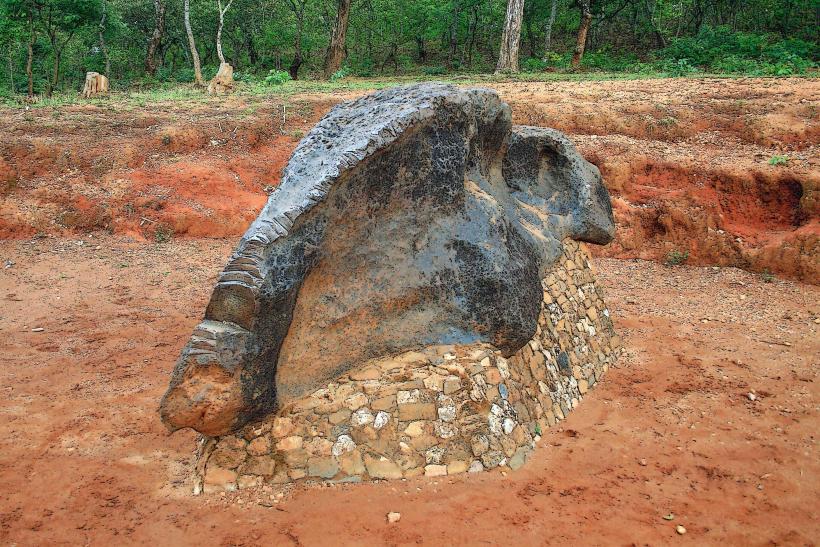
The ruins consist of low-lying stone walls, primarily constructed from rough-hewn, locally sourced granite blocks. The stones are weathered and show signs of erosion. The structures are largely open to the elements, with no intact roofs. Vegetation, including grasses and small shrubs, grows through and around the stone foundations. The overall height of the remaining walls does not exceed 1.5 meters.
Location & Access Logistics
The Ruins of Sumbawanga are situated approximately 15 kilometers west of the town of Sumbawanga. Access is via the unpaved Mbeya-Sumbawanga Road (T10). Turn south onto a track approximately 12 kilometers from Sumbawanga town center. This track is passable by 4x4 vehicles, especially during the dry season (June to October). During the wet season (November to May), the track may become impassable. There is no designated parking; vehicles can be parked at the edge of the track near the ruins. Public transport to Sumbawanga town is available via bus from Mbeya. From Sumbawanga town, local taxis or hired 4x4 vehicles are required.
Historical & Ecological Origin
The exact construction date and original purpose of the Ruins of Sumbawanga are not definitively documented. Archaeological evidence suggests the site was occupied between the 15th and 18th centuries, potentially serving as a settlement or trading post for local communities. The geological origin of the surrounding area is characterized by Precambrian metamorphic rocks, including granite, which provided the building materials.
Key Highlights & Activities
Exploration of the stone foundations is the primary activity. Visitors can walk among the remnants of the structures to observe the construction techniques. Site interpretation is limited, requiring visitors to infer the layout and function of the former settlement. No organized tours are available.
Infrastructure & Amenities
There are no facilities at the Ruins of Sumbawanga. Restrooms, shade, and food vendors are not present. Cell phone signal (4G/5G) is unreliable and generally absent at the site itself. Visitors should carry all necessary supplies, including water and food.
Best Time to Visit
The best time to visit is during the dry season, from June to October, when the access track is most reliable. The late afternoon, between 15:00 and 17:00, offers softer lighting for viewing the stone structures. Avoid visiting during the peak of the rainy season (December to March) due to potential access issues.
Facts & Legends
Local oral traditions suggest the ruins were once part of a larger fortified village, though evidence for significant fortification is scarce. A specific local legend speaks of a hidden well within the ruins that never runs dry, though its location has not been identified.
Nearby Landmarks
- Lake Tanganyika (approx. 60km West)
- Sumbawanga Town Market (approx. 15km East)
- Kalambo Falls (approx. 120km Southwest)
- Mpanda Town (approx. 180km Northwest)