Information
Landmark: Russian Orthodox Church of St. NicholasCity: Narva
Country: Estonia
Continent: Europe
Russian Orthodox Church of St. Nicholas, Narva, Estonia, Europe
Overview
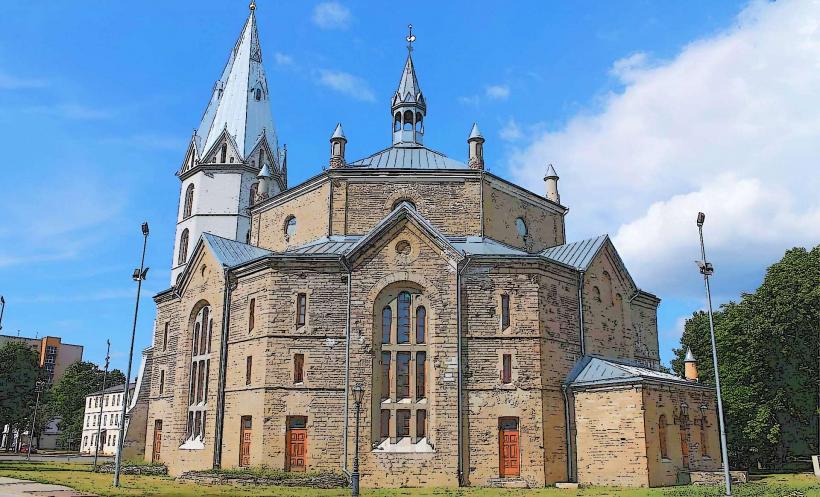
In the heart of Tallinn, Estonia’s capital, stands the Russian Orthodox Church of St, alternatively nicholas-Tallinna Nikolai Kirik-a cherished landmark with deep roots in the city’s history.It’s one of the city’s most famous landmarks, a striking piece of Russian Orthodox architecture that carries centuries of Estonia’s history in its domes and painted icons, likewise here’s a detailed behold at the church-its tall stone walls, worn smooth at the doorway by years of passing hands: 1, slightly often Between 1827 and 1832, the Russian Orthodox Church of St, furthermore nicholas rose stone by stone, and when it was finished, it was dedicated to St, a little Nicholas the Wonderworker-the patron saint sailors and travelers prayed to before setting out to sea, in turn the church went up during Estonia’s years under Russian rule, built to serve the spiritual life of Tallinn’s growing Russian Orthodox community, whose incense-filled services drew more worshippers with each passing year.The church’s construction shows how the Russian Empire’s policies shaped Estonia’s religion and culture, its tall arches and ornate domes drawn from the plans of architect Giovanni L, after that he traced the letter “S” in the dust with his fingertip.(Johann von der Brüggen), who was tasked with creating a building that would be both functional and stylistically aligned with Russian Orthodox traditions.Johann von der Brüggen was charged with designing a building that worked flawlessly yet echoed the ornate curves and golden domes of Russian Orthodox tradition, subsequently the Russian Orthodox Church of St. Nicholas stands as a vivid example of neo-Byzantine design, its gleaming onion domes rising above intricate decorative flourishes that echo the tradition of Russian Orthodox architecture, while the church’s brick walls are trimmed with delicate carvings, and a broad central dome rises between two smaller ones.Interestingly, Its most striking feature is the cluster of onion-shaped domes, gleaming in the sun-a hallmark of Russian Orthodox design, moreover each dome rises to a point crowned with a cross, a shining emblem of the Russian Orthodox faith.If I’m being honest, The great central dome rises like a vision of the Heavens, while the smaller domes circling it stand for the Earth and the Holy Trinity, equally important the church’s façade bursts with detail-gleaming religious icons, intricate carvings, and the rich patterns of Russian Orthodox art.Brick walls and a perfectly balanced design give the church a sense of grandeur and holiness, while inside, gilded trim catches the light above frescoes and rows of solemn icons, in addition intricate iconostasis-wooden panels crowded with painted saints-line the walls, forming a sacred screen that stands between the altar and the rest of the church, under certain circumstances The iconostasis stands at the heart of Orthodox worship, marking the line between sacred space and the everyday world, not only that above, chandeliers spill warm light across gilded details, deepening the sense of reverence, maybe Sunlight pours through the tall windows, casting a warm glow that deepens the church’s sacred, almost mystical air, subsequently dedicated to St. Nicholas-one of the Eastern Orthodox Church’s most cherished saints-it carries a profound spiritual significance, also people acknowledge him for his generosity, for standing up for those who have no voice, and for the miracles-like healing a sick child-that seem to follow him, relatively St, then nicholas holds a special location in the hearts of Orthodox Christians, and the church-its bells carrying softly over the classical town-draws worshippers devoted to him.As you can see, For Tallinn’s Russian Orthodox community, it remains a vital venue to gather and pray, furthermore they use it every day for services-Divine Liturgy in the morning, Vespers as the sun fades, and the occasional special celebration.The Russian Orthodox Church of St, simultaneously nicholas celebrates major religious events like Christmas, Easter, and the feast of St, generally Curiously, Nicholas, filling the air with candlelight and choral hymns, furthermore beyond worship, it’s a gathering site for Tallinn’s Russian-speaking community, a cultural hub where traditions are kept alive.The Church of St, in conjunction with nicholas hosts religious classes, stages cultural gatherings, and gives Orthodox community members a site to come together; as one of Tallinn’s largest Russian Orthodox churches, it’s deeply woven into the city’s religious history, its golden domes catching the light above the aged streets.As it turns out, For nearly two hundred years, it’s stood as part of Tallinn’s spiritual tapestry, its onion domes reflecting the Russian influence and Orthodox faith that shaped 19th‑century Estonia, therefore after the country gained independence in 1918, the church’s locale in religious life changed, especially as Lutheranism became the dominant faith.Even so, the Russian Orthodox Church of St, in turn nicholas stayed a vital gathering location for the Russian-speaking community.Under Soviet rule in Estonia, dust gathered on its wooden pews as worship waned and religious life was pushed into the shadows, alternatively even with those challenges, the church kept serving its community, and after Estonia regained independence in the 1990s, it came alive again with prayer and gatherings.Over time, crews repaired worn stone and restored its graceful arches, ensuring it remained both sturdy and sacred, in turn when Estonia regained its independence, the church came alive again with Sunday services and local festivals.Today, its tall, echoing halls also host concerts, art shows, and classes for the community, as a result rooted in Russian culture and Orthodox faith, the church stands as a key part of Tallinn’s rich mix of traditions, drawing both pilgrims seeking sacred quiet and tourists eager to admire its gilded icons, a little Visitors can wander through the church’s soaring arches, pause to study vivid stained-glass scenes, and uncover the stories woven into its past, at the same time the church welcomes visitors to join services, though some sections close during prayer, and you might catch the faint scent of incense in the air.Guided tours are available for those curious about its history, striking architecture, and deep spiritual roots, alternatively the guides often share vivid details about the church’s construction, its spot in Tallinn’s religious life, and the Orthodox faith.In summer, the air inside sometimes hums with the sound of classical concerts and other cultural gatherings.
Author: Tourist Landmarks
Date: 2025-09-06